
Green Fins and PADI Eco Dive Centers: Protecting Our Oceans Together
The ocean is one of the most incredible ecosystems on Earth. It produces over half of the oxygen we breathe, supports millions of species, provides food and livelihoods for communities around the world, and gives us unforgettable experiences underwater. As divers, we have the privilege of exploring this underwater world, and also the responsibility to protect it.
Programs like Green Fins and PADI Eco Center help dive operators and divers reduce their environmental impact and become active leaders in marine conservation.
What is Green Fins?

Green Fins is an internationally recognized conservation initiative designed to protect coral reefs and marine ecosystems through environmentally friendly diving and snorkeling practices. The program was created by the United Nations Environment Programme (UNEP) and The Reef-World Foundation.
Green Fins works directly with dive centers, snorkel operators, dive professionals, and divers to promote sustainable marine tourism and reduce the damage caused by human activities underwater.
The initiative focuses on education, awareness, and practical actions that help preserve reefs for future generations.
The Goal of Green Fins
The main goal of Green Fins is simple:
Reduce the environmental impact of marine tourism.
Coral reefs are fragile ecosystems that can be damaged by:
Touching or standing on corals
Poor buoyancy control
Anchoring on reefs
Feeding marine life
Marine pollution and plastic waste
Unsustainable fishing practices
Improper waste disposal
Wildlife harassment
Green Fins provides clear environmental standards and guidelines that help dive operators and divers minimize these impacts while promoting sustainable tourism.
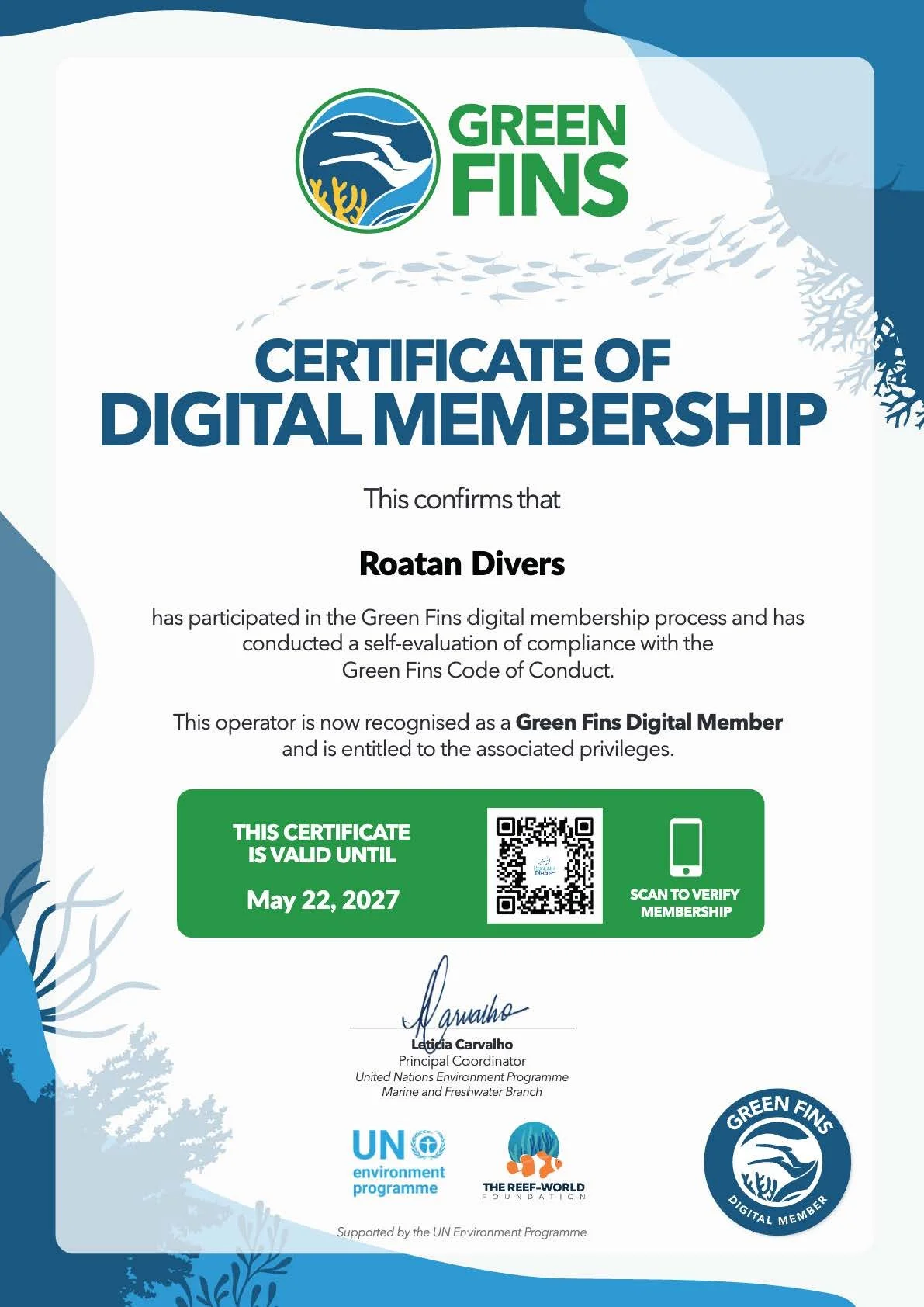
What is the Green Fins Certificate?
The Green Fins Certificate is awarded to dive centers and marine tourism operators that successfully follow Green Fins environmental standards and commit to sustainable business practices.
To achieve certification, operators must:
Follow environmentally responsible diving practices
Educate staff and guests about marine conservation
Reduce single-use plastics and waste
Promote proper marine life interactions
Improve sustainability within daily operations
Participate in conservation initiatives
Continuously improve environmental performance
Being a Green Fins certified operator demonstrates a strong commitment to protecting the ocean and creating a more sustainable future for diving.
For the second year, Roatan Divers has received the Digital Membership Certification, recognizing our commitment to protecting what we love most: the ocean!
What is a PADI Eco Center?
A PADI Eco Center is a dive center recognized by PADI for its commitment to conservation, sustainability, and environmental education.
PADI Eco Centers actively support ocean protection through:
Marine conservation activities
Citizen science programs
Eco-friendly business practices
Environmental education for divers
Participation in conservation projects
Support for local marine ecosystems
These dive centers go beyond teaching scuba diving, hey inspire divers to become ocean advocates.
While not officially an Environmental Protection Agency, PADI was recently recognized as one of TIME’s "10 Most Influential Sustainability Companies of 2026" on the TIME 100 Companies list. This milestone highlights PADI's evolution from solely a dive-training agency into a massive global force for ocean conservation.
Why Environmental Rules Matter?
Even small actions underwater can have a major impact on marine ecosystems. Coral reefs are living organisms that grow extremely slowly and can take decades to recover from damage.
Divers who follow environmentally responsible practices help:
Protect coral reefs
Reduce stress on marine animals
Prevent pollution
Maintain healthy ecosystems
Preserve dive sites for future generations
Support sustainable tourism
When divers understand their impact, they become part of the solution.
Environmental Rules for Divers
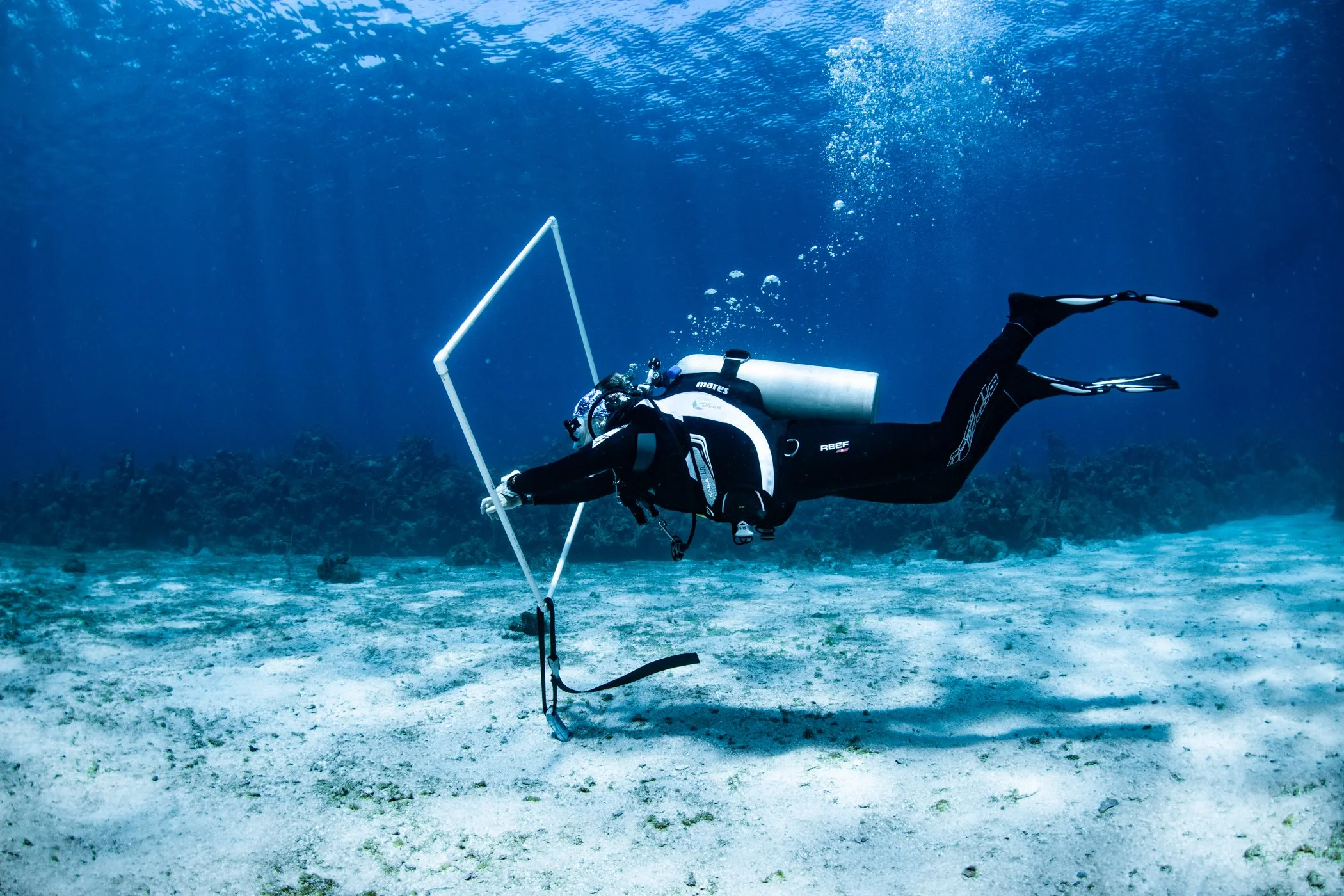
1 - Maintain Good Buoyancy Control
Proper buoyancy is one of the most important diving skills. Poor buoyancy can cause accidental contact with corals, marine life, and the seabed.
Why it matters:
Prevents coral damage
Protects marine habitats
Reduces sediment disturbance
Creates safer and more enjoyable dives
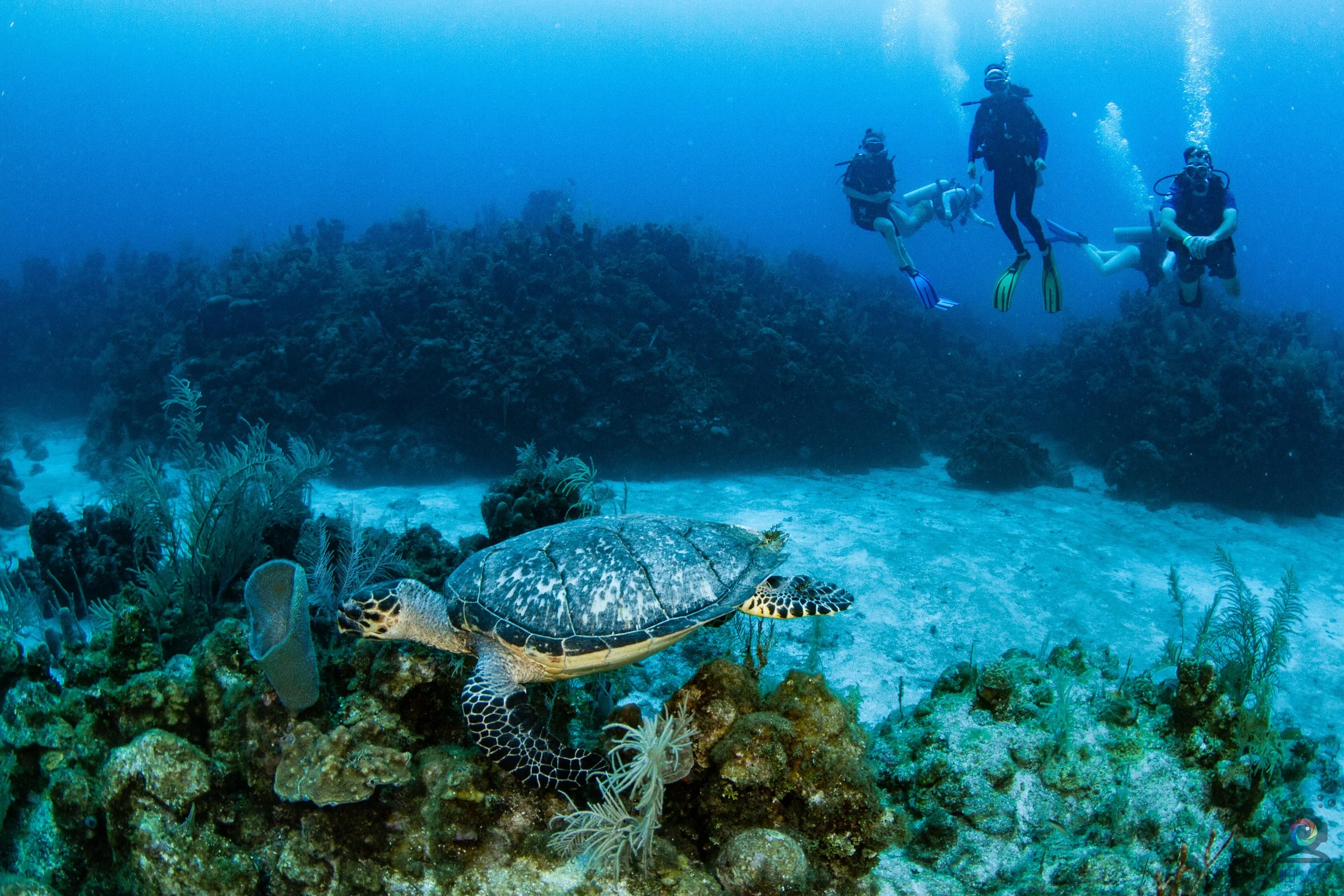
2 - Never Touch Marine Life
Marine animals should be observed respectfully from a distance.
Why it matters:
Touching animals can stress or injure them
Human contact can remove protective coatings from marine species
Some animals may defend themselves when touched
Wildlife behavior changes when disturbed
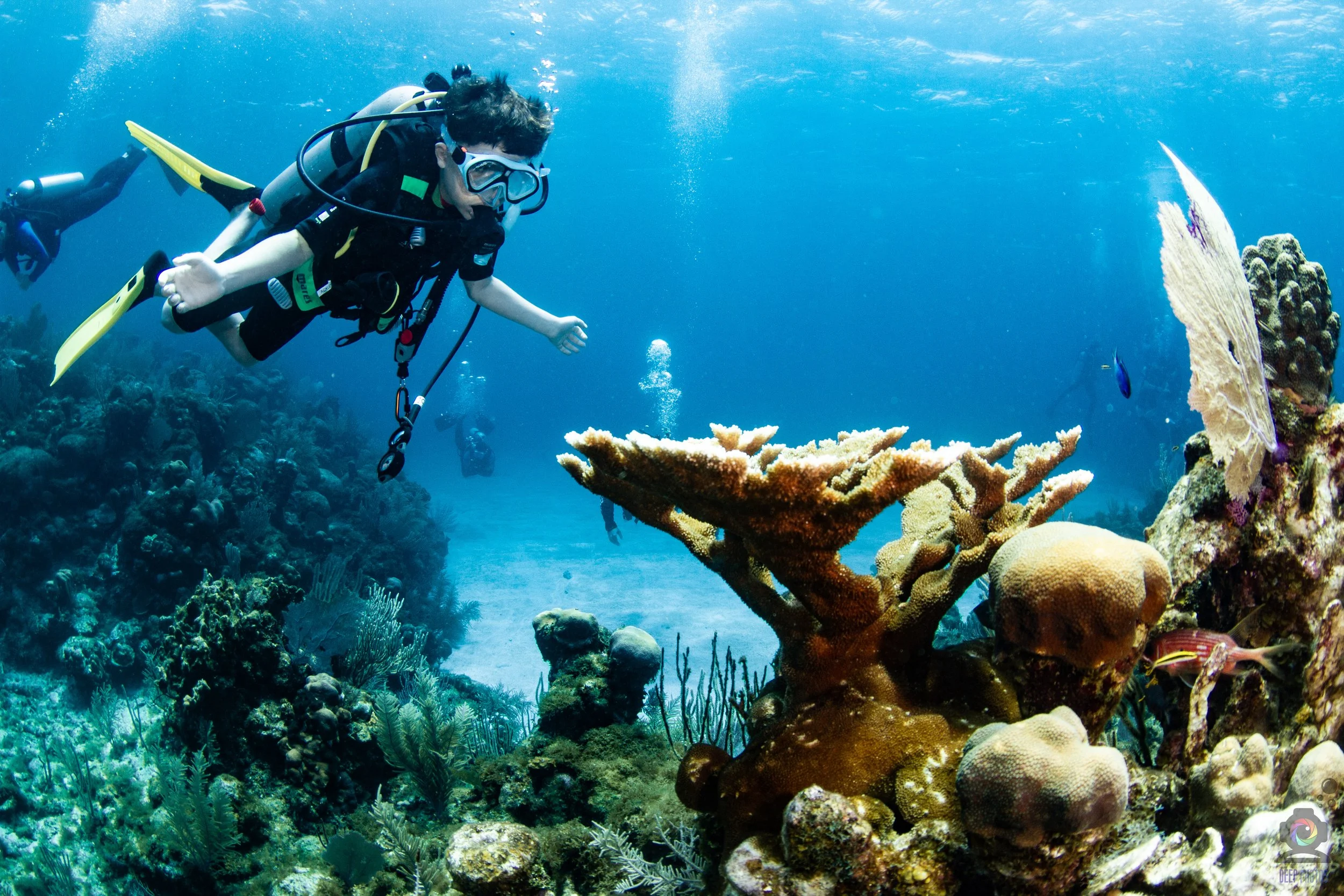
3 - Do Not Touch or Stand on Coral Reefs
Corals are living animals and extremely fragile.
Why it matters:
Coral structures can break easily
Damage may take decades to recover
Healthy reefs provide shelter for marine life
Coral reefs protect coastlines from erosion
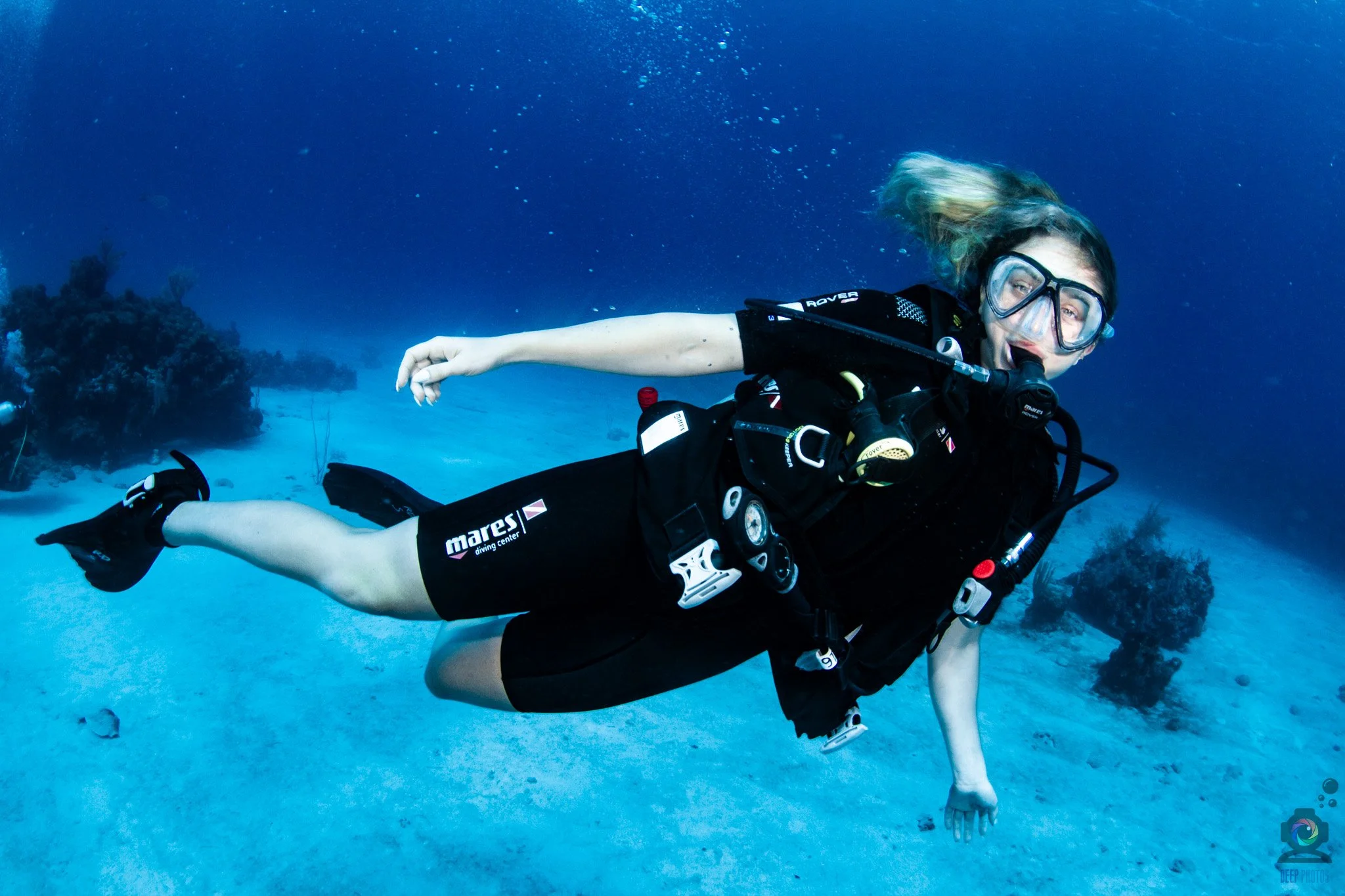
4 - Secure Your Equipment
Dangling gauges, cameras, or accessories can accidentally hit reefs.
Why it matters:
Prevents accidental reef contact
Reduces environmental damage
Improves diver safety and control
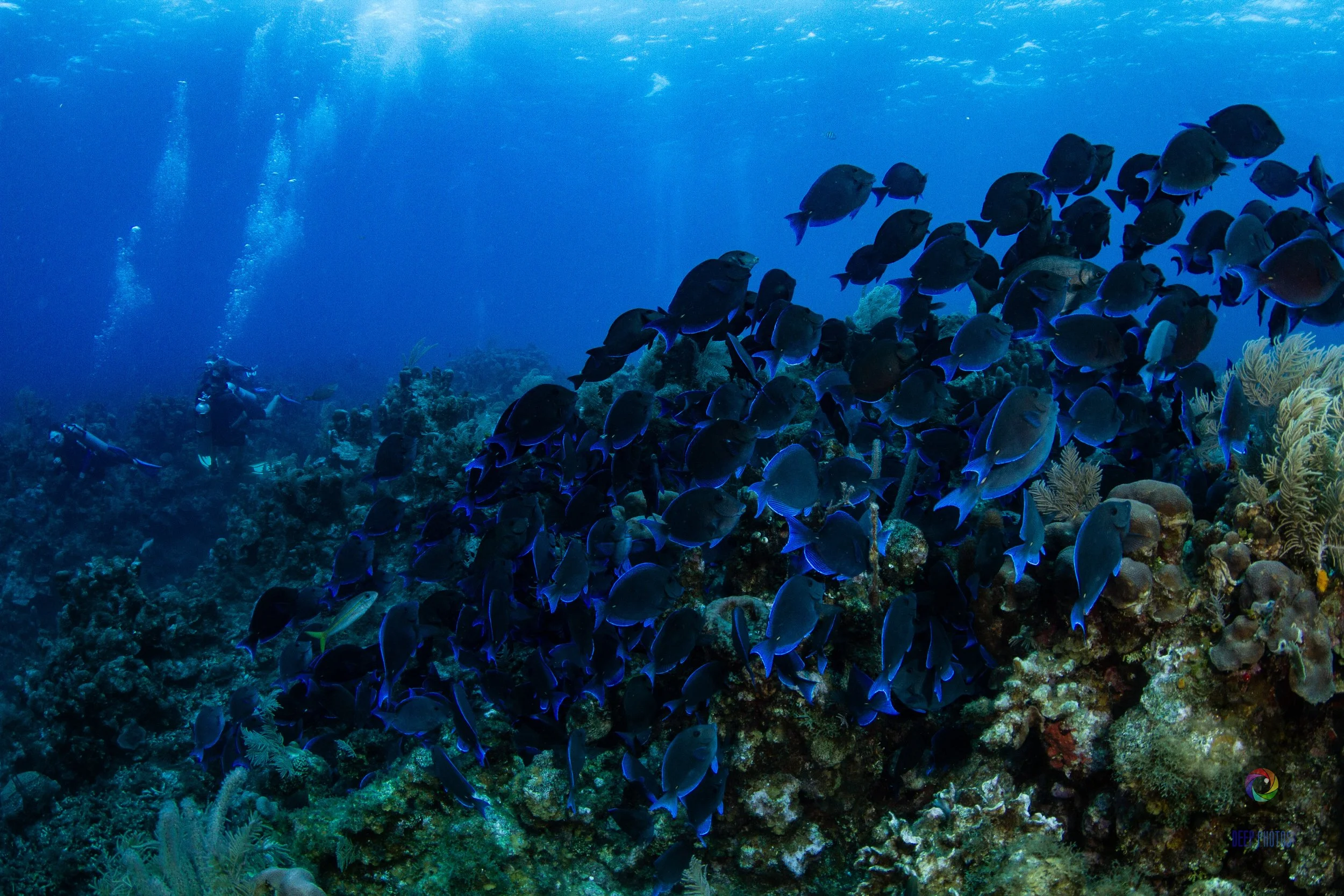
5 - Never Feed Marine Life
Feeding fish or other marine species changes their natural behavior.
Why it matters:
Disrupts natural ecosystems
Can create aggressive animal behavior
Alters feeding patterns
Reduces wildlife health over time
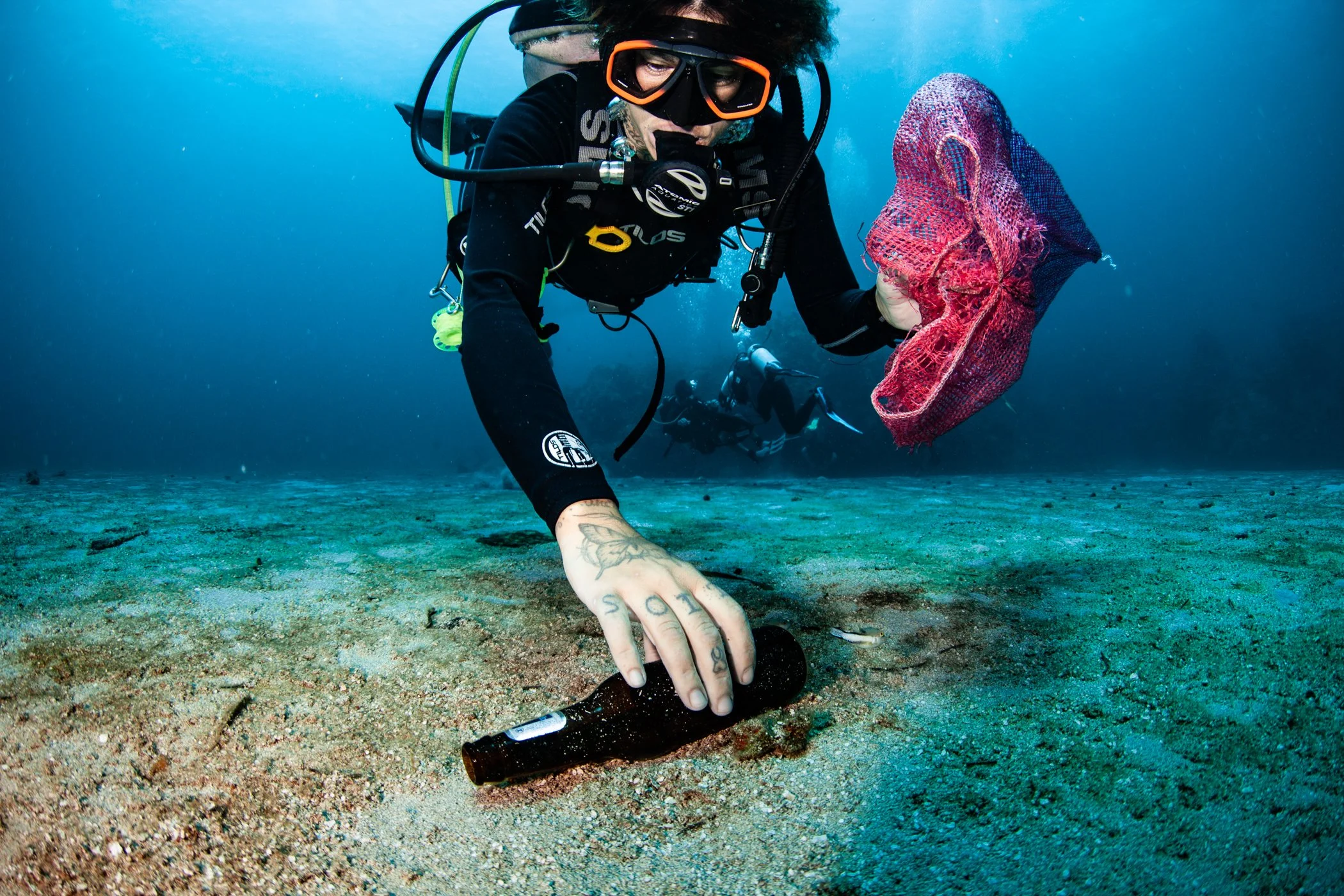
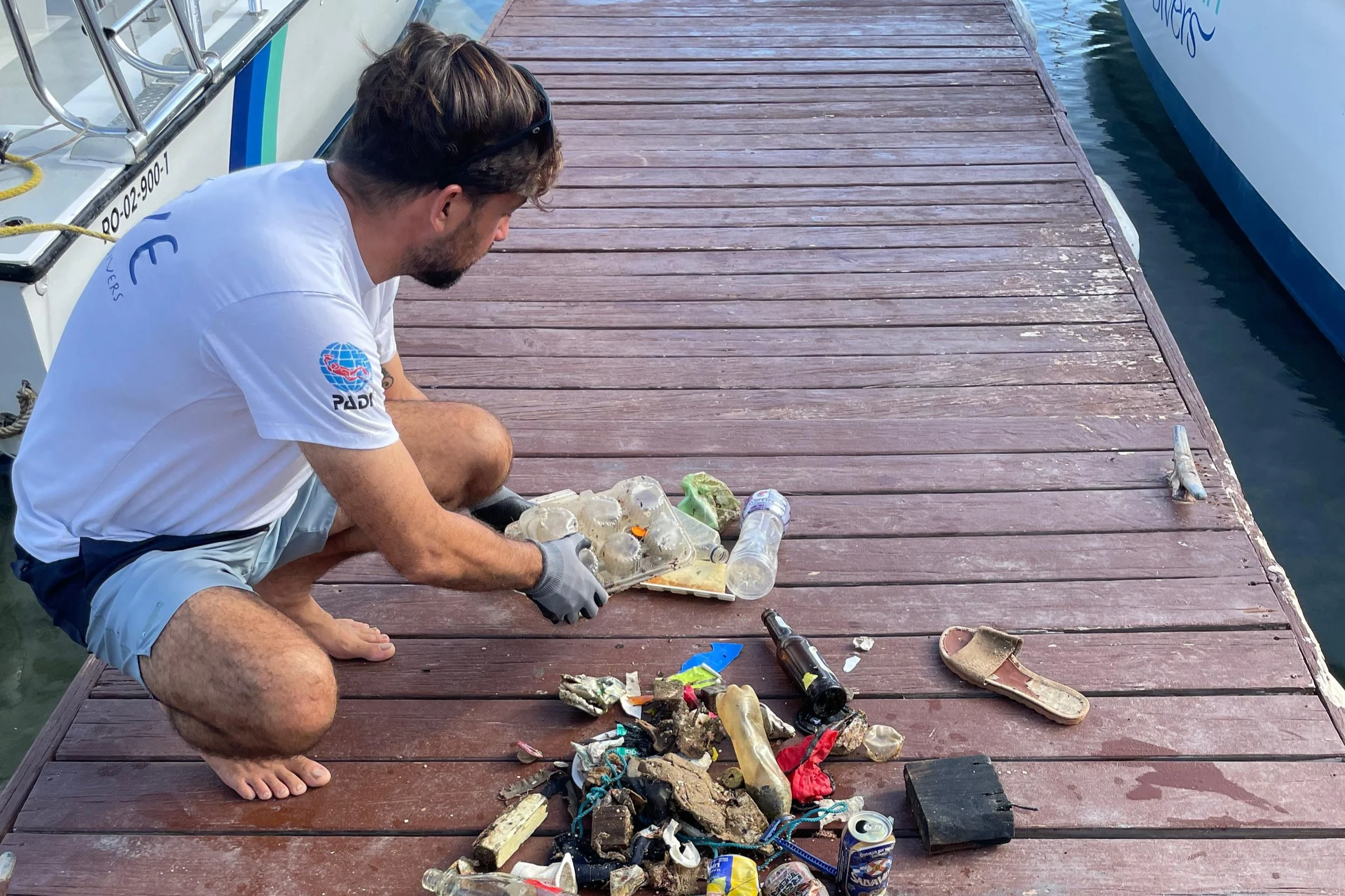
6 - Collect Trash When Possible
If it is safe to do so, remove marine debris during dives.
Why it matters:
Helps protect marine animals from entanglement
Reduces plastic pollution
Keeps dive sites healthier and cleaner
Supports ocean conservation efforts
7 - Reduce Plastic Use
Single-use plastics are one of the largest threats to the ocean.
Why it matters:
Marine animals often mistake plastic for food
Plastic pollution damages ecosystems
Reduces long-term environmental impact
Simple actions like using reusable water bottles and reusable bags make a difference.
8 - Use Reef-Safe Sunscreen
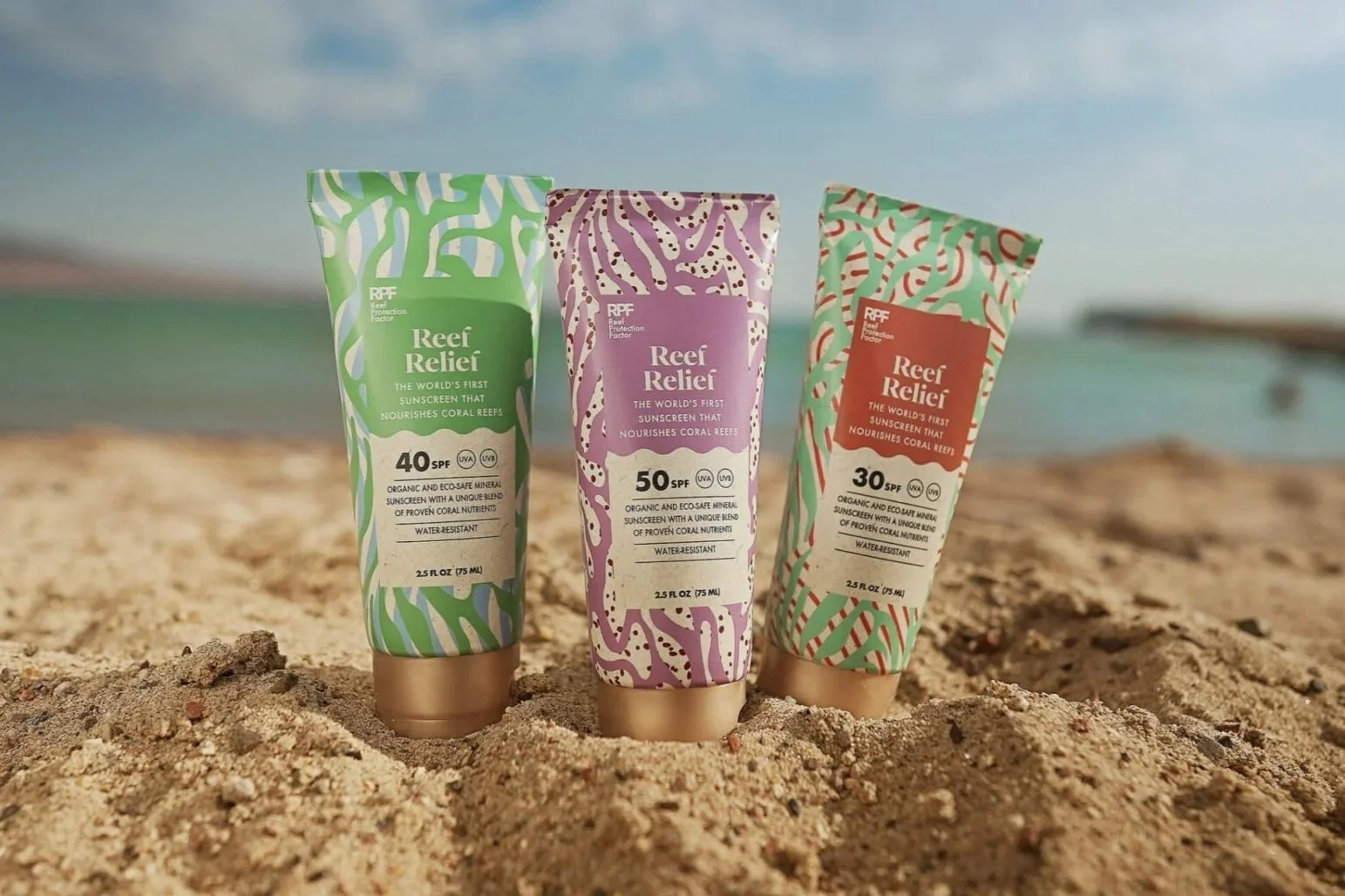
Some sunscreen chemicals can harm coral reefs.
Why it matters:
Helps reduce coral bleaching
Prevents harmful chemicals entering the ocean
Supports healthier marine ecosystems
9 - Respect Local Fishing and Seafood Regulations
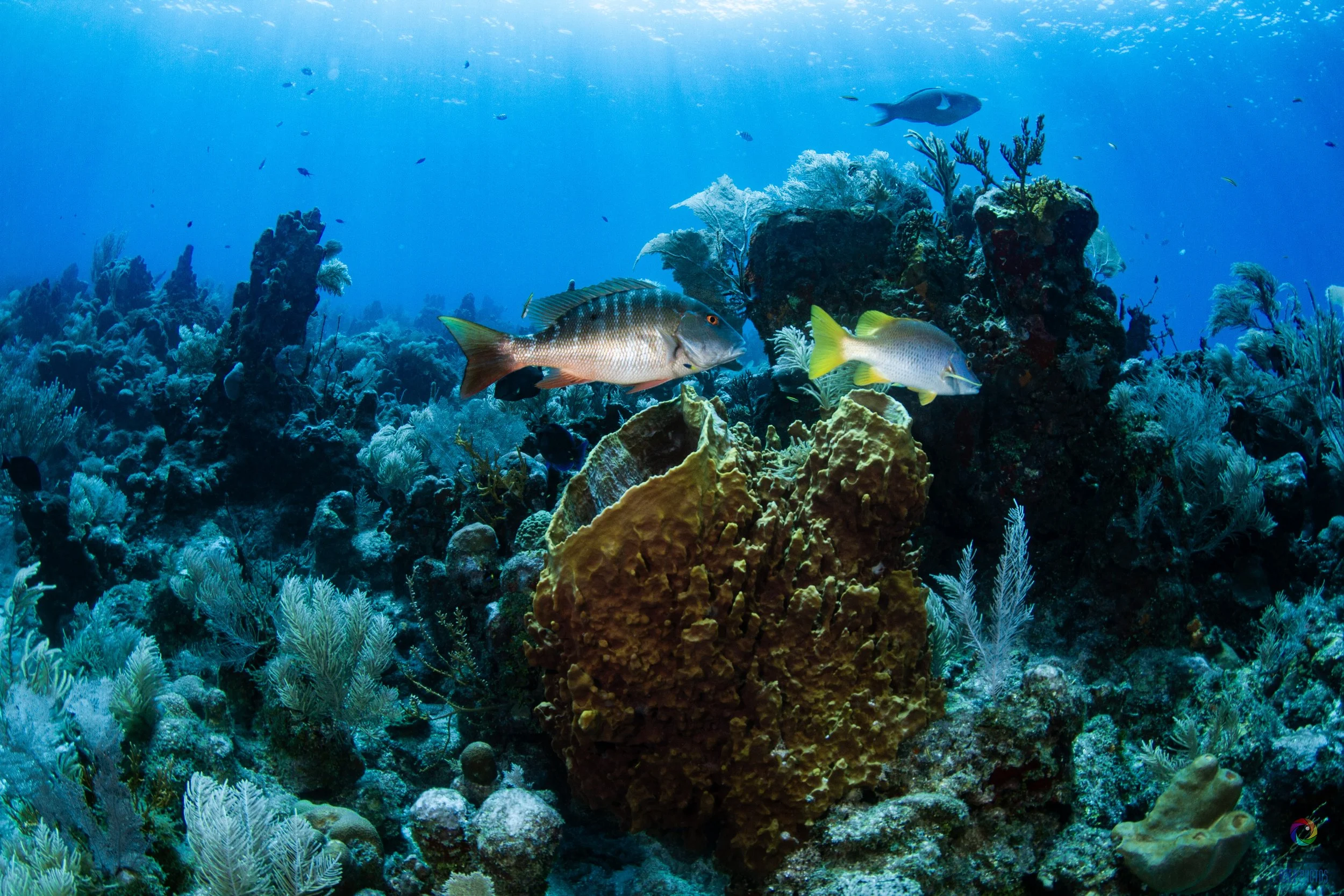
Choose sustainable seafood and avoid consuming endangered marine species.
Why it matters:
Protects vulnerable marine populations
Supports responsible fisheries
Helps maintain balanced ecosystems
Encourages sustainable local communities
Learn more: https://www.roatanmarinepark.org/rsg

10 - Become an Ocean Advocate
Share conservation knowledge and inspire others to protect the ocean.
Why it matters:
Education creates awareness
Awareness leads to action
More responsible divers create healthier oceans
Why We Must Protect the Ocean?
The ocean is essential for life on Earth, because:
Produces oxygen
Regulates the climate
Absorbs carbon dioxide
Supports biodiversity
Provides food and jobs for millions of people
Protects coastlines
Creates incredible opportunities for exploration and tourism
But today, the ocean faces serious threats including:
Climate change
Coral bleaching
Plastic pollution
Overfishing
Habitat destruction
Unsustainable tourism
Protecting the ocean is not only about saving marine life, it is about protecting our own future.
Every diver has the power to make a positive impact.
By supporting initiatives like Green Fins and PADI Eco Centers, improving our diving practices, and encouraging sustainable tourism, we help preserve the beauty and health of our oceans for generations to come.
Final Thoughts
As divers, we are ambassadors for the underwater world. Every dive is an opportunity to protect, educate, and inspire.
The future of our oceans depends on the choices we make today.
Dive responsibly. Protect marine life. Support sustainable operators. And always remember:
Take only memories. Leave only bubbles!
DIVE WITH A PADI ECO CENTER
Dive with a PADI Eco Center committed to protecting the ocean we all love.
Book your dives online and reserve your spot in advance to guarantee availability for your next underwater adventure!
