
Divemaster vs Dive Instructor: What’s The Difference?
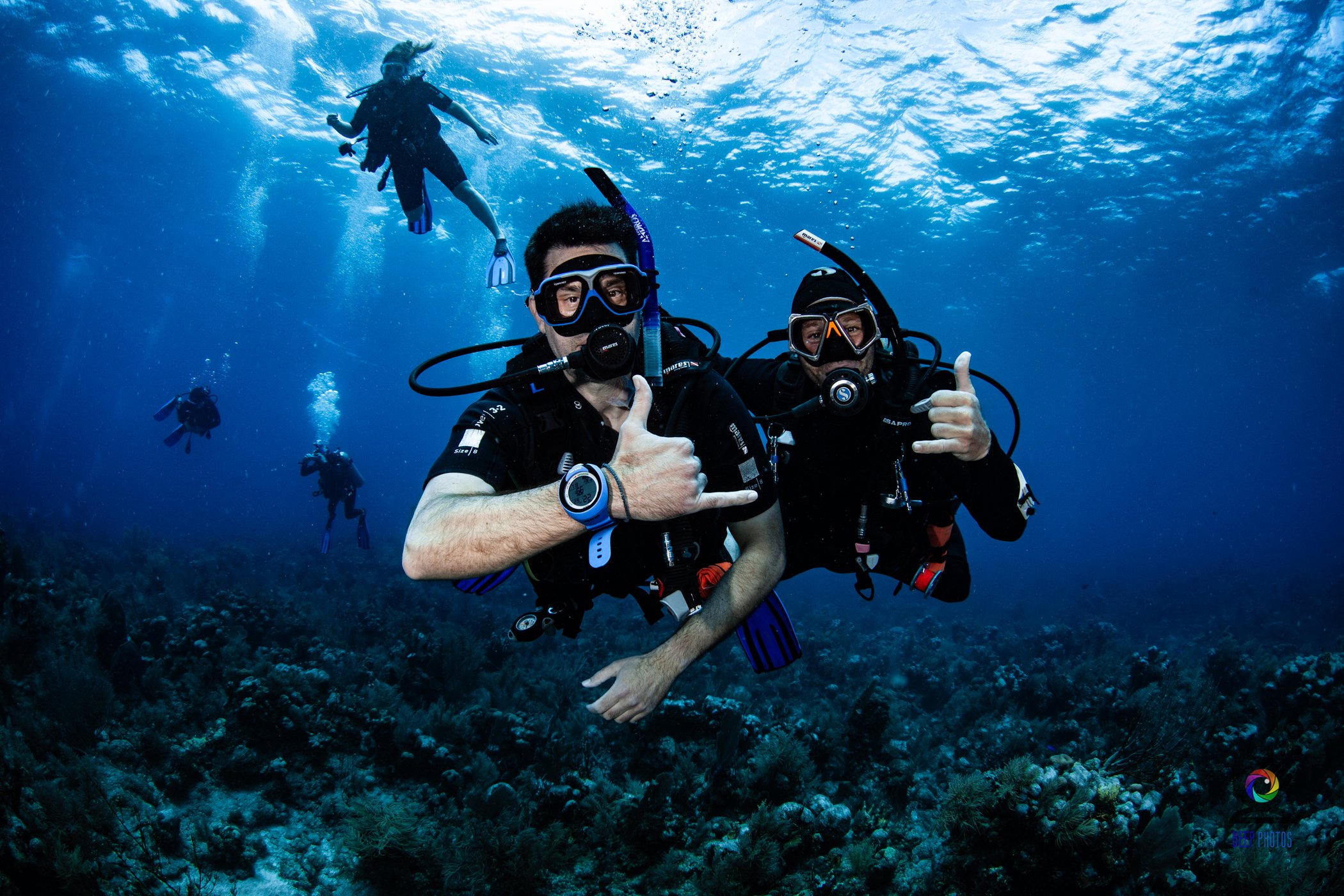
A dive professional’s career has nothing to do with boardrooms, flow charts, dress shirts, or ties. Instead, it offers the opportunity to travel the world, inspire others through diving, and play an active role in ocean conservation.
Within the dive industry, there are different professional levels, each with its own responsibilities, qualifications, and career opportunities. These levels determine not only what a dive professional is qualified to do, but also their versatility and employability within the industry.
So today we answer the age-old question that many starting on the dive pro journey ask…what the heck is the difference between a Divemaster and Dive Instructor?
PADI Professional Levels
A door of opportunity begins to open as you move from recreational to professional diver. In fact, professional achievement in diving extends far beyond becoming either a Divemaster or Instructor. There are a total of 7 different professional levels within the PADI organization:
Specialty Instructor
Master Instructor
Course Director
Becoming a Divemaster is simply the first step on your journey up the PADI Professional. It is only after becoming a Divemaster that you can become an Instructor. Hierarchy aside, what are the fundamental differences between a PADI Divemaster and Instructor?

PADI Divemaster:
Role and Responsibilities
Think of a Divemaster as a “dive supervisor.” Divemasters are qualified to organize and lead recreational divers on fun dives, as well as assist Instructors with training.
If you work in a full-service operation, this could look like:
Setting everyone’s gear on the boat
Briefing and leading the dive
Changing over the tanks
Rinsing and storing the gear at the end of the day
While Divemasters are not qualified to teach courses, they are qualified to conduct the Reactivate Program, which serves as a refresher for divers who have not been diving for more than six months.
Training Duration
Your Divemaster Course in Roatan will take 4 to 6 weeks and you can expect to be at the dive shop 6 days per week from 8:00 AM to 4:00 PM. You also have the option to split this in a couple of trips to Roatan.
PADI Dive Instructor:
Role and Responsibilities
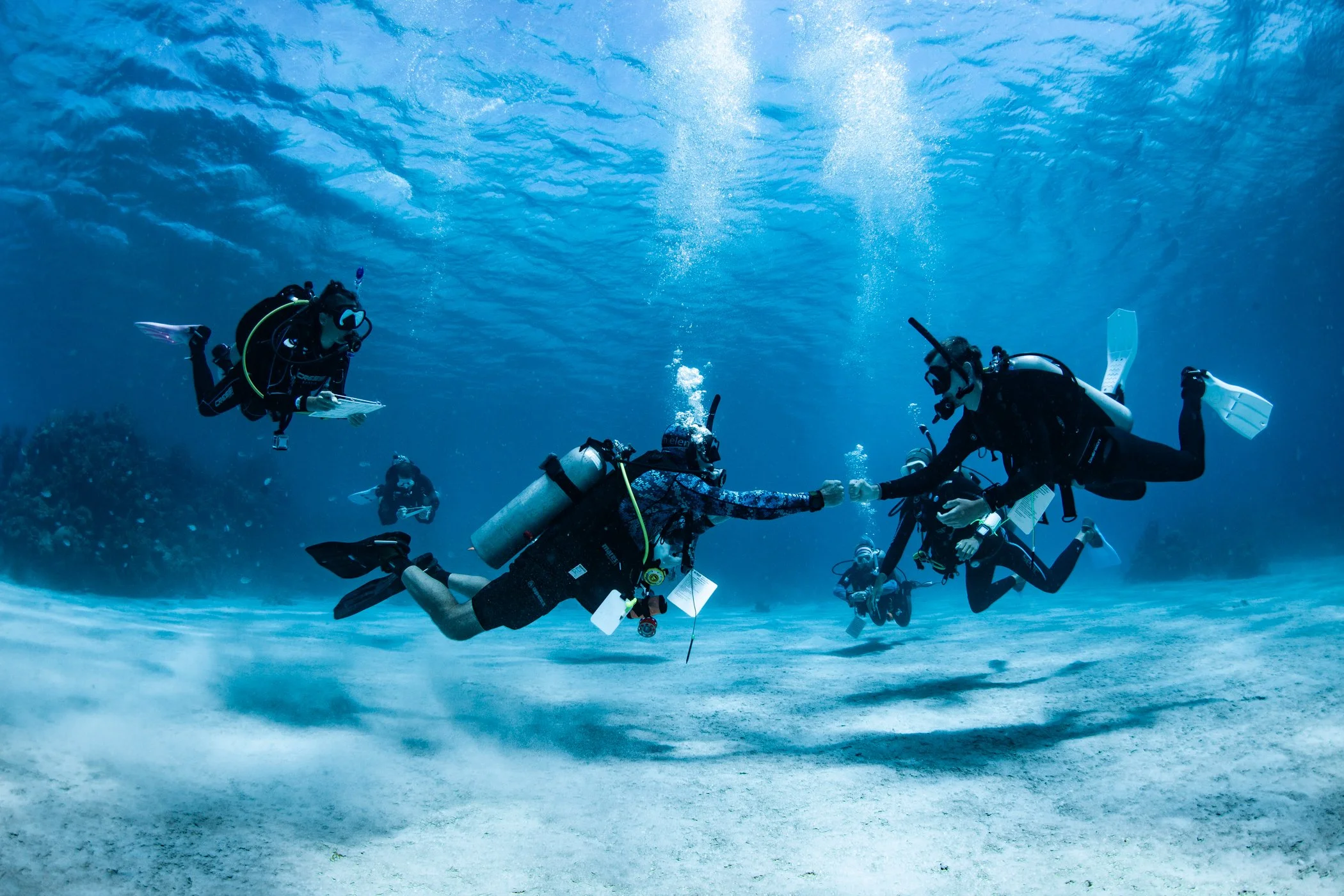
A PADI Instructor can do everything a Divemaster can… and much more. An instructor’s main role is teaching, from conducting the Discover Scuba Diving program for non-divers to teaching certification courses ranging from Open Water Diver all the way through Divemaster training.
PADI Instructors are also automatically qualified to teach several PADI specialty courses, such as Peak Performance Buoyancy. To teach additional specialties like Enriched Air Nitrox, Wreck Diver, or Night Diver, instructors can continue their professional development by becoming Specialty Instructors and eventually earning the MSDT (Master Scuba Diver Trainer) rating.
Because a PADI Instructor can work both as a teacher and as a dive guide, they generally have access to more job opportunities and greater career flexibility than Divemasters.
Training Duration
Your PADI IDC in Roatan will take 14 days and you can expect to be at the dive shop 7 days per week from 8:00 AM to 5:00 PM.
Our PADI IDC & EFRI Program includes:
3 days of IDC Preparation (optional)
12 days intensive Instructor Development Course including Oxygen Provider Instructor Specialty
2 days for Emergency First Response Instructor (EFRi) Course
After completing your IDC, you will need to take the two-day PADI Instructor Exam (IE).
Divemaster vs Dive Instructor: Which Is Right For Me?
For those who are looking to get away for a few months, or see themselves working on the science side of the industry, a Divemaster certification is more than sufficient.
For those who are truly looking to transform their day to day life, we recommend completing your IDC and soaring from there.
No matter which tier you decide to go for, remember that professional, in-depth training is essential for success. Do your research, and don’t be afraid to pop by different shops for a fun dive to figure out which one feels like a fit for you!
Most of all, avoid programs which offer training in exchange for work. Remember, the priority of these programs is free labor. Working without the proper training and supervision can lead to a lot of mistakes along the way, without fully understanding why things are done the way they are. The proper training is well worth the initial investment.
Send us your Divemaster or
Instructor questions today!
Whether you’re just getting started or are gearing up
to begin your Divemaster Training, we can help.
