
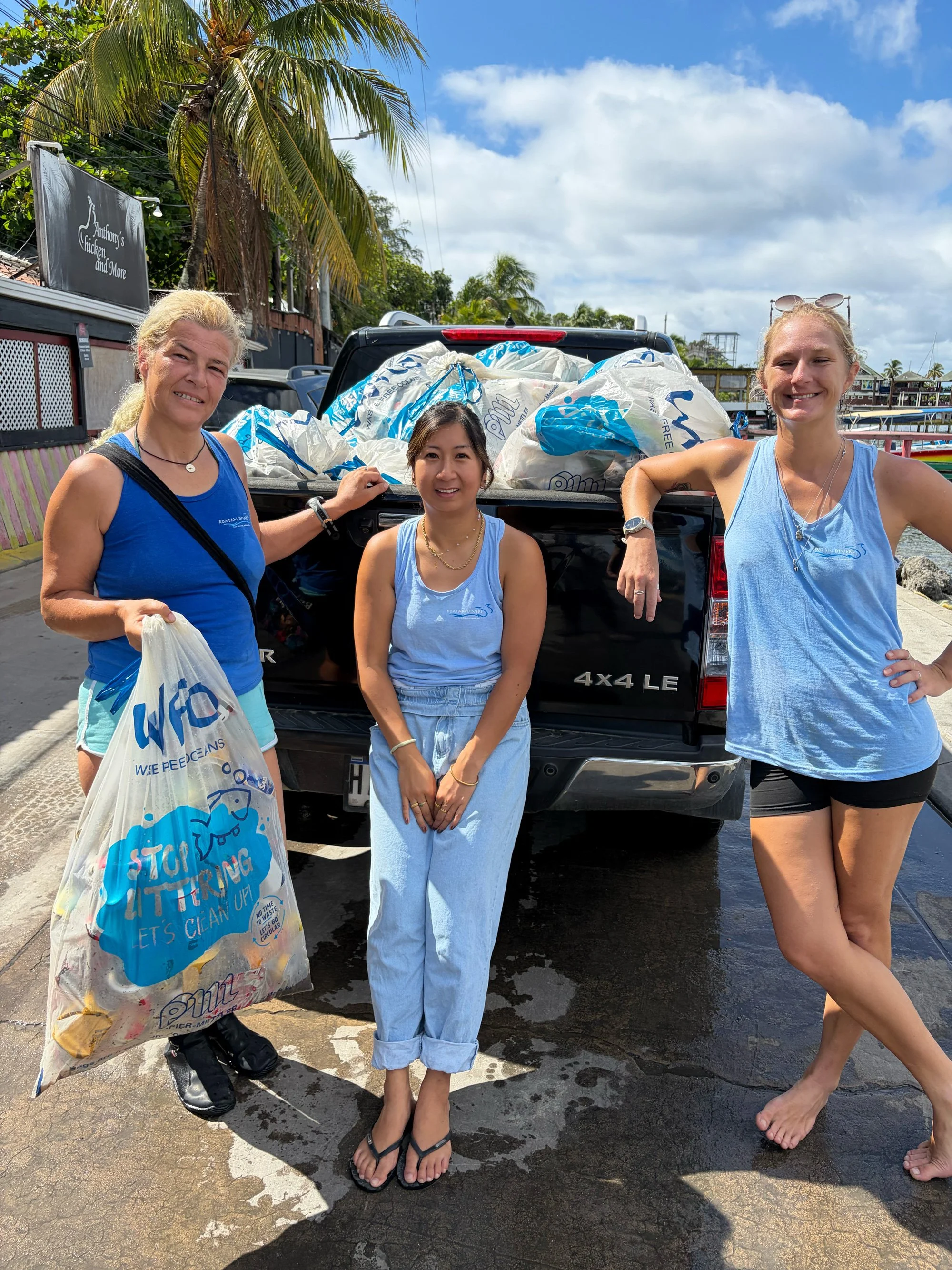
32 Volunteer
130 kg of Trash
On September 19, as part of PADI AWARE Week, we joined forces with BICA and Roatán Marine Park for a major West End Beach Clean-Up, bringing our community together to protect the beautiful island we proudly call home.
But what is PADI AWARE Week, and why does it matter?
PADI AWARE Week is a global initiative that brings together divers, dive centers, and ocean lovers to take action for marine conservation. Organized by the PADI AWARE Foundation, it encourages people to protect the ocean through beach and underwater clean-ups, marine wildlife monitoring, education, and other conservation activities. It is a reminder that protecting the ocean takes more than admiring its beauty: it takes action, awareness, and collective responsibility.
From Brisas del Mar to Sundowners, 32 passionate participants joined forces, including the Roatán Divers team and volunteers from BICA’s youth leadership initiative, Islanders for Change. Our office staff, instructors, captains, Divemaster candidates, and community volunteers rolled up their sleeves and worked together to collect an incredible 130 kg (approximately 287 lbs) of trash!
We are proud to work alongside BICA (Bay Islands Conservation Association), a local conservation nonprofit dedicated to protecting the fragile marine and coastal ecosystems of the Bay Islands through environmental education, research, restoration, and community engagement. Their work helps connect local communities with the protection of the natural resources that make Roatán so special.
A huge shout-out to WFO (Waste Free Oceans), an international nonprofit organization working to reduce marine litter by supporting clean-ups, raising awareness, and helping turn recovered plastic waste into new products. Thank you for providing biodegradable bags and supporting our initiative. Your contribution helped us make this clean-up more environmentally conscious!
What happens to our trash when it enters the environment?
During the clean-up, we collected common items such as beer bottles, cans, and small plastic bags used for chips and candy. These everyday items might seem harmless when discarded individually, but their environmental impact can last for years.
Trash left on the ground can be carried by wind, rain, stormwater, and rivers into the sea. Once in the ocean, currents can transport it far from where it was originally discarded. Plastic packaging can break into tiny pieces called microplastics, which persist in the environment and can be ingested by marine organisms. Larger debris can entangle wildlife, while discarded items can damage sensitive coastal habitats. Glass can also remain in the environment for extremely long periods.
And the problem doesn't stop at the shoreline. Pollution can affect marine ecosystems, fisheries, tourism, and the health and well-being of coastal communities. The best solution is to prevent waste from entering the environment in the first place by reducing single-use plastics, disposing of trash responsibly, reusing materials, and recycling whenever possible.
Every bag collected is a step toward a cleaner coastline, a healthier ocean, and a brighter future for Roatán.
A heartfelt THANK YOU to everyone who showed up, got involved, and helped make a difference. Together, we protect what we love: our ocean, our island, and our community. 💙
How Long Does Our Trash Stay in Nature?
Ever wondered how long the trash we leave behind will remain on our beaches and in our oceans? Some natural materials break down in weeks, but everyday items can persist for decades, centuries, or even longer.
Here are some estimated decomposition times for common types of waste:
🍌 Banana peel: 2–5 weeks
📰 Newspaper: Around 6 weeks
🚬 Cigarette butt: Approximately 1–10 years, depending on its materials and conditions
🛍️ Plastic bag: Around 10–20 years or longer
🥫 Aluminum can: Approximately 200 years
🧃 Plastic beverage bottle: Around 450 years
🍾 Glass bottle: Potentially thousands to a million years or more
These are estimates, not exact deadlines. Sunlight, temperature, moisture, and whether an item is buried, exposed on a beach, or submerged in seawater can all affect how quickly it breaks down.
And here's the important part: breaking down doesn't always mean disappearing. Plastic bags, bottles, and snack wrappers can fragment into tiny pieces called microplastics, which remain in the environment and can enter marine food webs. Glass may remain in the environment for an extremely long time, while metals can corrode but may still leave residues behind.
Think about it: a plastic snack wrapper dropped on the beach today could outlast generations of people who visit Roatán. That's why picking up litter matters, and why preventing waste from reaching the environment is even better.
The best trash is the trash that never reaches the beach. Choose reusable items, avoid unnecessary packaging, dispose of waste responsibly, and recycle whenever possible.
