

Kann ich in Roatán ohne Tauchschein tauchen?
Du hast schon viel darüber gehört, wie toll das Tauchen auf Roatán ist – das heißt, du musst es unbedingt ausprobieren. Aber kannst du auf Roatán tauchen, wenn du keinen Tauchschein hast? In unserem neuesten Blogbeitrag beantworten wir alle deine Fragen zum Tauchschein und vieles mehr!

Die Planung Ihres Tropenurlaubs auf Roatán ist eine aufregende Zeit! Schließlich gibt es dort so viele unglaubliche Aktivitäten zu erleben. Vom Faulenzen an weißen Sandstränden bis hin zum Spielen mit Faultieren und Affen … undvergessen Sie nicht die beliebteste Freizeitbeschäftigung der Insel – das Tauchen! Für diejenigen, die mit diesem Sport noch nicht vertraut sind, klingt es so einfach, als müsste man nur die Tauchausrüstung anlegen und ins Wasser gehen, oder? Nicht ganz.
Tauchen erfordert bestimmte Fähigkeiten, Kenntnisse und ein Verständnis der Ausrüstung, der Sicherheitsvorkehrungen und der damit verbundenen potenziellen Risiken.
Glücklicherweise hat PADI es allen, die sich für das Tauchen interessieren, leicht gemacht, genau das zu tun. Auch wenn man ohne Tauchschein nicht einfach auf ein Boot steigen und in Roatán tauchen kann, stehen einem dennoch mehrere Möglichkeiten zur Verfügung.
Option 1: PADI Discover Scuba Dive
Das „Discover Scuba Dive“-Programm (DSD) ist ideal für Abenteuerlustige, die nur wenig Zeit haben oder einfach nur „die Zehen ins Wasser tauchen“ möchten. Ein DSD ist ein halbtägiges Erlebnis, das aus einer Einführung in die Tauchausrüstung und die Tauchtheorie besteht, gefolgt von Übungen zu den Grundfertigkeiten in Half Moon Bay und abschließend Ihrem ersten Tauchgang im Meer bis zu einer Tiefe von 40’.
Zwar erhält man durch einen „Discover Scuba Dive“-Kurs kein Zertifikat, aber er ermöglicht es Ihnen, einen Eindruck davon zu gewinnen, was das Tauchen auf Roatán ausmacht – ohne den zeitlichen und finanziellen Aufwand eines vollständigen Open-Water-Kurses. Wenn Ihnen das Tauchen jedoch Spaß macht und Sie die Zeit dafür haben, können Sie anschließend die vollständige PADI Open Water- oder PADI Scuba Diver-Zertifizierung absolvieren.

Option 2: Hol dir dein PADI-Zertifikat!
Wenn Sie sich entschieden haben, dass Sie auf jeden Fall einen Tauchschein erwerben möchten, können Sie sich während Ihres Aufenthalts auf Roatan PADI-zertifizieren lassen. Derzeit bieten wir zwei Tauchkurse für Anfänger an: PADI Scuba Diver und PADI Open Water.
Der PADI Scuba Diver-Kurs dauert etwa zwei volle Tage und berechtigt Sie anschließend dazu, in Begleitung eines Tauchlehrers bis zu einer Tiefe von 40 Fuß zu tauchen. Der PADI Open Water-Kurs erfordert etwas mehr Zeit und Aufwand; er dauert 2,5 bis 3 Tage. Im Anschluss daran sind Sie jedoch berechtigt, in Begleitung eines Tauchpartners oder eines Tauchlehrers bis zu einer Tiefe von 60 Fuß zu tauchen.
Egal, für welchen Kurs du dich entscheidest – beide befassen sich mit Themen wie Tauchplanung, Umgang mit der Ausrüstung, Tauchphysik, Physiologie, Unterwasserkommunikation und Tauchsicherheit. Und das alles, während du die wunderschöne Unterwasserwelt von Roatan erkundest!
Voraussetzungen für das Tauchen auf Roatán
Ganz gleich, ob Sie es nur ausprobieren oder eine vollständige Zertifizierung anstreben – es gibt einige Voraussetzungen, die Sie beachten müssen, bevor Sie in Roatan tauchen können. Sie müssen:
Um an einem der oben genannten Programme teilnehmen zu können, muss man mindestens 10 Jahre alt sein.
Bei guter körperlicher Verfassung und über ausreichende Schwimmkenntnisse verfügen
Ansonsten brauchst du nur eine positive Einstellung und Abenteuerlust! Ach ja, und korallenschonende Sonnencreme.
Bist du bereit, in Roatán tauchen zu gehen?

6 Tierarten, auf die Naturliebhaber auf Roatán achten sollten
Roatán ist zwar für seine Korallenriffe bekannt, doch auch über Wasser gibt es jede Menge Tierwelt zu entdecken. Schauen Sie sich diese 6 Tierarten an, auf die Naturliebhaber bei einer Reise nach Roatán besonders achten sollten!
Die winzige Insel Roatán, die zufällig die größte der Bay Islands ist, strotzt nur so vor Naturreichtum und einer reichen Geschichte. Auch wenn viele der Meinung sind, dass der Großteil von Roatáns Reichtum in ihren Korallenriffen liegt, gibt es für Naturliebhaber auch über Wasser noch viel zu bestaunen. Lesen Sie weiter und entdecken Sie die sechs wichtigsten Arten, auf die Naturliebhaber auf Roatán besonders achten sollten!

Agouti auf der Insel Roatán; Foto: Joel Amaya
Roatan-Aguti (Dasyprotcta ruatanica)
Was war das für ein schneller brauner Schatten, der über den Weg huschte? War das ein Meerschweinchen mit Hufen? Nein! Es war das auf der Insel Roatán heimische Aguti – von den Einheimischen auch als „Watusa“ bezeichnet. Das Roatan-Aguti, das etwas kleiner ist als das mittelamerikanische Aguti, ist bekannt für sein sattes orange-braunes Fell und hat meist einen weißen Fleck am Kinn sowie einen gelblichen Fleck am Bauch. Dieses scheue und liebenswerte Inselkaninchen ist sowohl tagsüber als auch nachts aktiv und hält sich im Busch auf, wo es gerne Mandeln, Kokosnüsse und Hibiskus nascht.
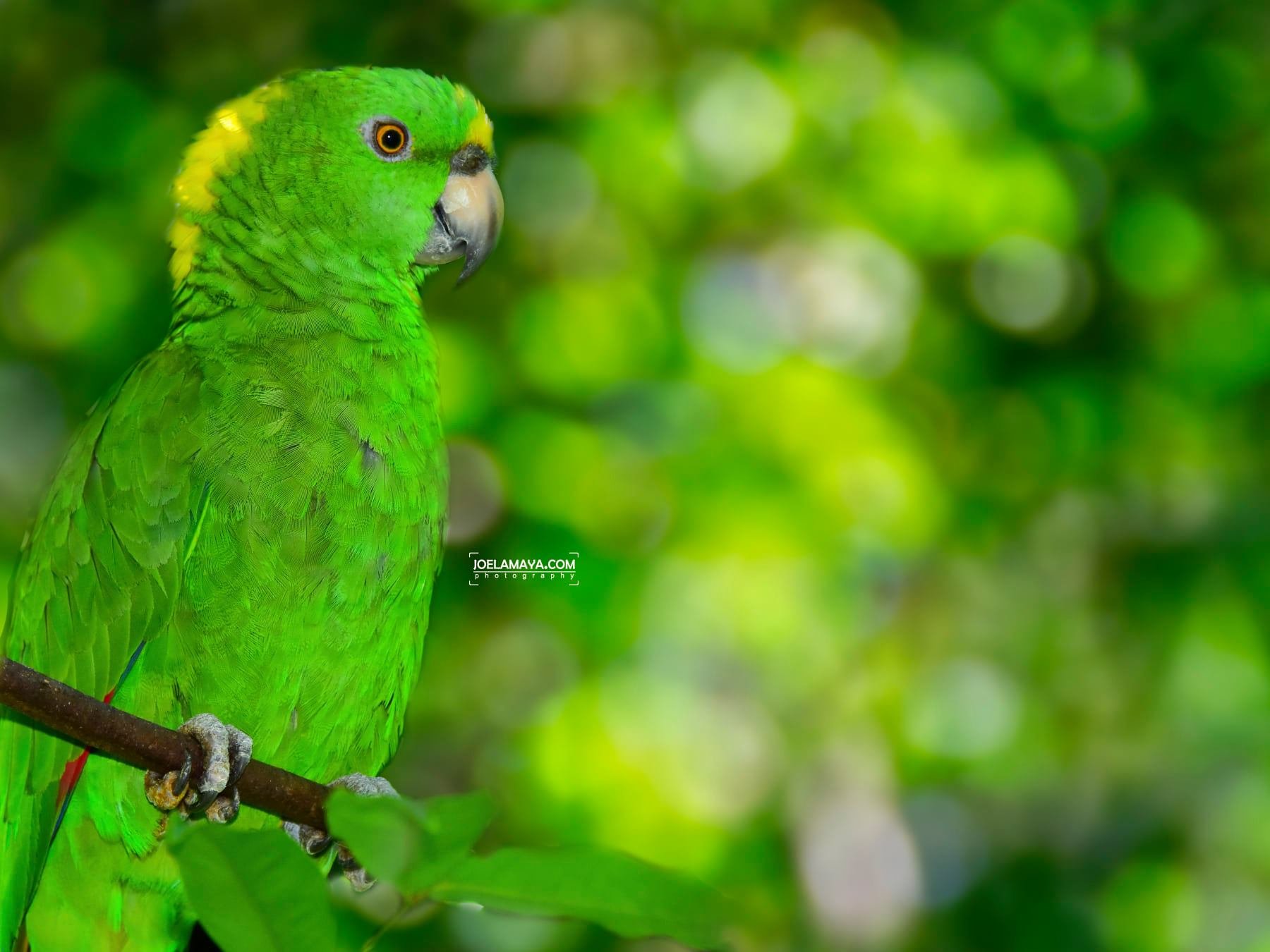
Gelbnackenpapagei; Bild: Joel Amaya
Gelbnackenpapagei (Amazona auropalliata)
Es ist früh am Morgen, die Sonne kommt gerade zum Vorschein, und in den Bäumen herrscht reges Vogelgezwitscher. Wenn Sie genau hinhören, können Sie vielleicht das Krächzen des endemischen Gelbnackenpapageis vernehmen. Diese wunderschönen Vögel sind bekannt für den gelben Streifen, der sich über ihren Nacken zieht, und ihre leuchtend grüne Kopfkrone. Leider haben die Abholzung der Wälder und der illegale Handel mit Haustieren dazu beigetragen, dass diese Art auf der Roten Liste der IUCN als „vom Aussterben bedroht“ eingestuft wurde. Einer der besten Orte, an denen man noch einen Blick auf den Gelbnackenpapagei erhaschen kann, ist das Blue Harbor Tropical Arboretum.

Roatan-Stachelschwanzleguan; Foto: Joel Amaya
Roatan-Stachelschwanz-Leguan (Ctenosaura oedirhina)
Wenn Sie nach Roatan kommen, sollte die Beobachtung des endemischen Stachelschwanz-Leguans unbedingt auf Ihrer Liste stehen! Dieser schwarz-weiß gestreifte Leguan zeichnet sich durch seine abgerundete Schnauze aus und wurde 1987 endlich als eigene Art anerkannt. Von den Einheimischen als „Garrobo“ bezeichnet, sind diese Leguane in Mangroven, an der „Iron Shore“ und sogar in städtischen Gebieten wie dem Grand Roatan in West Bay anzutreffen. Der Roatan-Stachelschwanzleguan gilt jedoch aufgrund der Bejagung als Nahrungsquelle, der Prädation durch Katzen und Hunde sowie des Lebensraumverlusts als gefährdet. Derzeit leben etwa 4.500 Leguane auf der Insel.
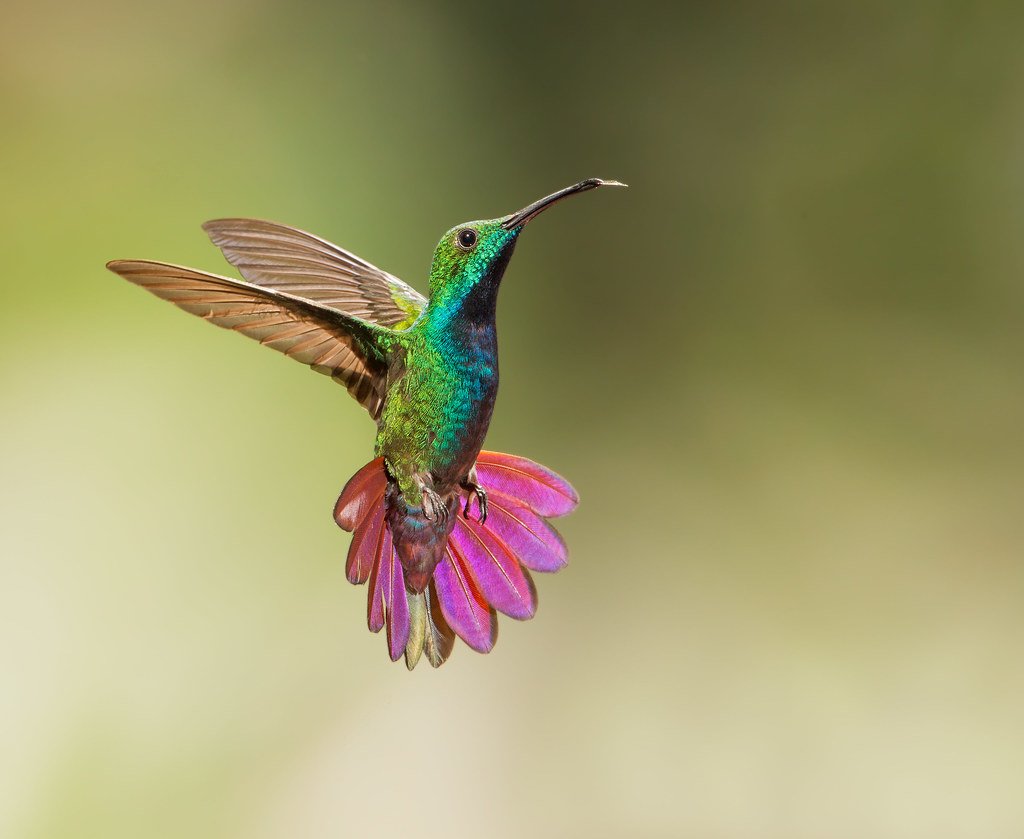
Grünbrust-Mango; Bild: Yamil Saenz
Grünbrust-Mango-Kolibri (Anthracothorax prevostii)
Man sagt, große Dinge stecken in kleinen Hüllen – wie der Grünbrust-Mango! Diese entzückenden Kolibris lieben es, die heimische Flora zu bestäuben und süßen Nektar zu schlürfen; sie leben buchstäblich den Traum. Die Männchen sind bekannt für ihr tiefgrünes Gefieder, ihre blaue Kehle und ihre violetten und orangefarbenen (na klar, Mango!) Schwanzfedern. Zwar sind sie auf der ganzen Insel leicht zu entdecken, doch im La Sirena am East End erwartet Sie ein ganz besonderes Erlebnis am Wasser – dank der gezielt platzierten Vogelfutterhäuschen tummeln sich hier zahlreiche Kolibris, während Sie ein fantastisches Essen genießen.

Goldstirn-Specht; Foto: Darren Clark
Goldstirn-Specht (Melanerpes aurifrons)
Ach, der Wecker der Insel Roatán. Nein, wir meinen nicht die Hühner – wir meinen den Goldstirnspecht! Wenn Sie schon einmal eine Nacht auf Roatan verbracht haben, haben Sie wahrscheinlich schon das frühe morgendliche Klopfen dieses wunderschönen Vogels vor Ihrem Fenster gehört. Mit ihrem leuchtend gelben Nacken und Unterbauch sehen weibliche Goldstirnspechte aus, als wären sie mit Gold bestreut. Die Männchen, die sich stets selbst übertreffen, krönen ihr Gefieder mit einer goldenen Stirn und einer leuchtend rot-orangefarbenen Krone.

Roatan-Korallenschlange; Bild: Joel Amaya
Roatan-Korallenschlange(
, Micrurus ruatanus)
Kennen Sie den Reim „Rot auf Gelb, tötest du einen Kumpel, Rot auf Schwarz ist ein Freund von Jack“? Nun ja … nicht ganz. Die auf Roatán heimische und leider vom Aussterben bedrohte Roatán-Korallenschlange ist bekannt für ihr scheues Wesen und ihre abwechselnd schwarzen und roten Streifen. Obwohl ihr Körper kein Gelb aufweist, hat die Untersuchung ihres Giftes ergeben, dass es sich um eine toxinreiche Substanz handelt, die für Mäuse tödlich ist. Tatsächlich wurde ihre hohe Wirksamkeit als eine der tödlichsten in Mittelamerika eingestuft! Die Roatan-Korallenschlange ist in der Regel im westlichen Teil der Insel anzutreffen, wo sie unter Kokosnussblättern oder in Feuchtgebieten Schutz findet.
Diese Liste umfasst nur einen kleinen Ausschnitt der unglaublichen Tierwelt, die Sie auf der Insel erleben können. Um die gesamte Artenvielfalt, die Roatán zu bieten hat, in vollem Umfang zu erleben, sollten Sie am besten einen einheimischen Führer engagieren – genau wie beim Tauchen! Joel Amaya von „Roatán Wildlife“ ist ein solcher Führer, der nicht nur der wahr gewordene Traum eines jeden Vogelbeobachters ist, sondern auch Pionierarbeit in den Bereichen Umweltbildung, Dokumentation und Artenschutz auf Roatán leistet.
Also, worauf wartet ihr noch, Naturliebhaber?
Geh raus und genieße die Natur!


6 Tipps für sicheres Tauchen in Zeiten von COVID!
Im März 2020 sahen sich Roatan Divers – wie fast der Rest der Welt auch – gezwungen, eine sehr lange und unerwartete Oberflächenpause einzulegen.

Im März 2020 waren Roatan Divers – wie fast der Rest der Welt auch – gezwungen, eine sehr lange und unerwartete Oberflächenpause einzulegen. Nach fünf Monaten der Entsättigung hat Roatan nun endlich seine Grenzen für internationale und inländische Flüge wieder geöffnet. Wenn Sie bereit sind, Ihre Flossen wieder ins Wasser zu tauchen, werfen Sie einen Blick auf diese 6 Tipps für sicheres Tauchen während der Corona-Pandemie, bevor Sie deine Reise bei uns buchst!
1. Wir kümmern uns um die Ausrüstung.
Wir bei RD bieten einen Rundum-Service an – überlassen Sie uns also gerne den Auf- und Abbau sowie die Desinfektion der gesamten Ausrüstung. Wir haben neue Desinfektionsmaßnahmen eingeführt, darunter das individuelle Ausspülen der Mundstücke, um sicherzustellen, dass alles ordnungsgemäß gereinigt wird.
2. Sei nicht egoistisch, trage eine Maske!
Das RD-Team kann es kaum erwarten, eure strahlenden Gesichter zu sehen … und wir müssen einfach darauf vertrauen, dass ihr genau das unter eurer Maske tut. Unsere Masken schützen euch, eure Masken schützen uns, und Plus 1 Masks schützen euch und die Bedürftigen auf Roatán (falls ihr auf der Suche nach einem stylischen COVID-Souvenir seid, mit dem ihr etwas Gutes tun könnt).
3. Mach es wie eine Putzgarnele und wasch dir die Hände!
Es gibt Dinge, deren Berührung wir vermeiden können, wie zum Beispiel Meereslebewesen. Andere Dinge lassen sich jedoch nicht vermeiden, wie zum Beispiel Türklinken. Waschen Sie sich unbedingt die Hände oder verwenden Sie Handdesinfektionsmittel (das wir an strategisch günstigen Stellen im Geschäft bereitgestellt haben), nachdem Sie Oberflächen mit hohem Berührungsaufkommen berührt haben.
4. Respektiere den persönlichen Freiraum deines Kumpels … und seine Privatsphäre
Gib deinem Tauchpartner Platz für den Froschschwung! Social Distancing ist wichtig, um das Übertragungsrisiko zu verringern. Und auch wenn es höchst unwahrscheinlich ist, kann es doch vorkommen, dass ihr euch in einer Situation befindet, in der ihr die gleiche Luft atmen müsst. Anstatt während der Sicherheitsüberprüfung vor dem Tauchgang aus deiner Zweitluftflasche zu atmen, lass einfach die Luft ab, während du aus deiner ersten Stufe atmest!
5. Pass auf, wohin du diese Seifenblasen bläst!
Und dieser Schleim aus deiner Nase. Achte darauf, wo du im Wasser deinen Schnorchel reinigst oder deine Maske ausspülst, und vermeide es, diese … Flüssigkeiten … in der Nähe anderer Taucher auszuspucken.
6. Tauchen Sie nicht, wenn Sie COVID-Symptome haben.
Sollten bei Ihnen oder einer Person, mit der Sie Kontakt hatten, COVID-Symptome auftreten, begeben Sie sich bitte umgehend in Isolation und wenden Sie sich an medizinisches Fachpersonal. Das wunderschöne Riff von Roatán wartet auf Sie, sobald es Ihnen wieder besser geht!
Möchten Sie mehr über sicheres Tauchen nach COVID erfahren? Schauen Sie sich die Informationen von DAN auf deren Website an.
Die 3 wichtigsten Tipps zum Schutz Ihrer Ohren beim Tauchen
Ohren.
Wir brauchen sie zum Hören, wir brauchen sie zum Druckausgleich beim Tauchen, und sie lassen unser Gesicht weniger seltsam aussehen. Alles wichtige Funktionen, nicht wahr? Unsere Ohren erfüllen unglaublich wichtige Aufgaben für uns, und obwohl sie widerstandsfähig und robust sind, ist es wichtig, dass wir sie gut pflegen. Beim Tauchen ist es sogar noch wichtiger, dass wir die Nachsorge richtig durchführen, damit wir im Laufe der Woche keine Probleme mit dem Druckausgleich oder Schmerzen bekommen.
Also, ohne lange Umschweife: Hier sind unsere drei wichtigsten Tipps, wie du beim Tauchen auf deine Ohren achtest!
Ohren.
Wir brauchen sie zum Hören, wir brauchen sie zum Druckausgleich beim Tauchen, und sie lassen unser Gesicht weniger seltsam aussehen. Alles wichtige Funktionen, nicht wahr? Unsere Ohren erfüllen unglaublich wichtige Aufgaben für uns, und obwohl sie widerstandsfähig und robust sind, ist es wichtig, dass wir sie gut pflegen. Beim Tauchen ist es sogar noch wichtiger, dass wir die Nachsorge richtig durchführen, damit wir im Laufe der Woche keine Probleme mit dem Druckausgleich oder Schmerzen bekommen.
Also, ohne lange Umschweife: Hier sind unsere drei wichtigsten Tipps, wie du beim Tauchen auf deine Ohren achtest!
Spülen Sie Ihre Ohren nach dem Tauchen mit warmem Wasser aus
Sie wissen doch, dass ein salziges Handtuch nie richtig trocknet? Genauso kann Salzwasser im Ohr verbleiben, wenn Sie Ihr Ohr nach einem Tauchgang nicht mit Süßwasser ausspülen, und so die perfekte Umgebung für das Wachstum von Bakterien und Pilzen schaffen. Wenn du in der Nähe einer Dusche bist, halte deine Ohren in Richtung der Dusche und spüle sie mit warmem Wasser aus. Wenn du auf einem Tauchsafari-Boot oder einem Tagesausflugsboot bist und keinen Zugang zu einer Dusche hast, mische kaltes und heißes Wasser aus der Getränkestation in einem Becher und gieße es in jedes Ohr, um es auszuspülen.
Verwenden Sie auf keinen Fall – ich wiederhole: auf keinen Fall – Wattestäbchen
Wie viel deutlicher können wir das noch sagen? Ohrenärzte (auch bekannt als HNO-Ärzte, für alle, die es gerne hochtrabend mögen) und Tauchlehrer werden euch gleichermaßen raten, niemals Wattestäbchen zum Reinigen der Ohren zu verwenden. Wir verstehen, dass es seltsamerweise ein erfrischendes Gefühl ist, sich damit die Ohren zu reinigen, aber wusstet ihr, dass sie mehr Schaden als Nutzen anrichten? Wattestäbchen können das Ohrenschmalz tatsächlich tiefer ins Ohr hineindrücken, anstatt es zu entfernen, und so den Gehörgang verstopfen. Auch das Trommelfell ist mit einem Wattestäbchen erreichbar, sodass zu starkes Drücken es tatsächlich durchstechen kann. Das Ausspülen der Ohren mit warmem Wasser ist genauso wirksam, da es das Ohrenschmalz aufweicht und löst, ohne dass die Gefahr besteht, die Ohren zu schädigen. Hört also auf den Arzt und verzichtet auf Wattestäbchen.
Essig und Reinigungsalkohol eignen sich am besten als Tropfen
Wenn warmes Wasser nicht ausreicht, um Ihre Ohren gesund zu halten, hilft unsere selbstgemachte Ohrentropfenmischung! Sie können natürlich gerne Ohrentropfen in der Apotheke kaufen, doch diese sind nicht so kostengünstig wie eine selbstgemachte Mischung und enthalten in der Regel Glyzerin, das einen öligen Rückstand hinterlassen kann. Wir mischen gerne zu gleichen Teilen Essig und Reinigungsalkohol. Reinigungsalkohol trocknet die Haut aus, während der Essig den pH-Wert ausgleicht, sodass Sie Ihre Ohren trocknen können, ohne sie auszutrocknen. Die meisten Menschen haben beide Zutaten ohnehin zu Hause. Stellen Sie also vor Ihrer nächsten Reise eine kleine Menge her, füllen Sie sie in eine reisefreundliche Flasche – und voilà! Saubere, glückliche, gesunde Ohren.
Das war’s also! Auch wenn dies definitiv nicht unser sexyester Blogbeitrag ist, ist er doch ein wichtiger. Wir hoffen also, dass ihr etwas gelernt habt, und freuen uns darauf, euch bald auf Roatán zu sehen, damit ihr diese Tipps in die Praxis umsetzen könnt!

3 wichtige Regeln für den richtigen Umgang am Strand
Sprechen wir über die richtigen Verhaltensregeln am Strand! Wenn du ein wenig Achtsamkeit walten lässt und diese drei wichtigen Regeln für den richtigen Umgang mit Strand und Riff beachtest, kannst du als verantwortungsbewusster Tourist (oder Einwohner) deinen Teil dazu beitragen, dass unsere Insel weiterhin so wunderschön bleibt!
Der Tourismus ist Segen und Fluch zugleich. Inseln wie Roatán sind wirtschaftlich stark vom Tourismus abhängig, und die Tourismusbranche kann dazu beitragen, Naturschutzinitiativen zum Schutz des Naturerbes voranzutreiben. Ein großer Zustrom von Menschen, die sich der richtigen Verhaltensregeln nicht bewusst sind, kann jedoch mehr Schaden als Nutzen anrichten. Da die Welt immer kleiner wird, ist es wichtig, dass Besucher aus aller Welt verantwortungsvollen Tourismus praktizieren und jeden Ort in einem besseren Zustand hinterlassen, als wir ihn vorgefunden haben. Du bist an einen Ort gereist, weil er schön und interessant war – sollten dann nicht auch andere dieses Privileg genießen dürfen?
Lassen Sie uns das Thema auf Roatán lenken und über die richtigen Verhaltensregeln am Strand und am Riff sprechen! Wenn Sie ein wenig Achtsamkeit walten lassen und diese drei wichtigen Regeln für das richtige Verhalten am Strand und am Riff befolgen, können Sie als verantwortungsbewusster Tourist (oder Einwohner) Ihren Teil dazu beitragen, dass unsere Insel weiterhin so wunderschön bleibt!
1. Das Betreten des Riffs ist verboten

Auf dem Riff zu stehen ist absolut verboten. Ganz gleich, ob Sie vom Boot aus oder vom Ufer aus schnorcheln: Wenn Sie müde werden und eine Pause brauchen, sollten Sie sich entweder auf den Rücken legen und treiben lassen, um neue Kraft zu tanken, oder auf dem Sand stehen. Korallen sind lebendig; sie sind lebende, atmende Tiere, und wenn man auf ihnen steht, kann das irreparable Schäden verursachen. Wenn Sie sich beim Schnorcheln unwohl fühlen, wenn Sie nicht auf etwas stehen können, tragen Sie eine Schwimmweste, die Ihnen hilft, sich über Wasser zu halten.
Sie sollten es außerdem vermeiden, durch Seegras zu laufen. Im Seegras leben viele kleine Tiere wie Nacktschnecken, Krabben und Jungfische, daher ist es ein wichtiges Ökosystem auf Roatán. Halten Sie einen angemessenen Abstand zu Korallen und Seegras ein, damit unsere Unterwasserwelt weiterhin gedeihen kann.
2. Nicht anfassen!

+5 Punkte, wenn du diese Anspielung auf „Arrested Development“ verstehst!
Aber im Ernst: Nicht anfassen. Kein Anfassen, kein Aufheben und kein Sammeln von Meereslebewesen. Alles unter Wasser – von einer kleinen, leeren Muschel bis hin zu einem Grashalm – kann ein Zuhause oder Nahrung für ein Meerestier sein. Bitte hebt daher nichts vom Strand auf und nehmt nichts aus dem Wasser mit. Egal wie klein es auch sein mag: Jedes Leben ist kostbar und verdient es, ohne Belästigung durch uns zu leben.
Noch ein Hinweis: Achten Sie darauf, was Sie kaufen. Auch wenn Sie die Gegenstände nicht selbst aus dem Wasser holen – der Kauf von Souvenirs aus dem Meer, wie beispielsweise Muschelschalen, Seepferdchen und Korallen, ist strengstens verboten. Informieren Sie sich unbedingt über den illegalen Handel mit Wildtieren und über Nachhaltigkeit, denn Unwissenheit ist keine Entschuldigung.
3. Sammle deinen Müll ein

In der Hochsaison, insbesondere zu Zeiten wie der Semana Santa, sind unsere Strände in der Regel mit Plastiktüten, Take-away-Behältern und Getränkeflaschen übersät. Diese gelangen schließlich ins Meer, wo sie sich in Schildkröten und Fischen verfangen oder diese ersticken können – oder in deren Mägen landen. Vermeiden Sie die Verwendung von Einwegplastik, indem Sie Ihre eigenen wiederverwendbaren Gegenstände mitbringen, und werfen Sie Ihren Müll immer in den Mülleimer, falls Sie doch einmal Einwegplastik verwenden sollten.
Da wir wissen, dass es schwierig sein kann, auf Reisen eigene wiederverwendbare Behälter mitzunehmen, sollten Sie versuchen, Restaurants zu besuchen, die Alternativen zu Plastik anbieten. Viele Restaurants bieten dank des Roatan Marine Park Take-away-Behälter aus Papier an, die die Umwelt weniger belasten als Plastik. Es gibt sogar biologisch abbaubare Optionen auf pflanzlicher Basis! Denken Sie daran: Auch wenn Sie Alternativen zu Plastik verwenden, ist das Wegwerfen von Abfällen weiterhin verboten.
Das waren sie also, drei einfache und wichtige Regeln für den richtigen Umgang am Strand und am Riff! Ganz gleich, ob ihr weit weg reist oder näher an der Heimat bleibt – verantwortungsbewusster Tourismus trägt dazu bei, eine bessere Zukunft für unseren Planeten zu sichern. Ich wünsche euch einen schönen Sommer und hoffe, dass ihr alle bald unsere kleine Insel genießen könnt.

Wie viel kostet ein einwöchiger Aufenthalt in West End auf Roatán?
Du kommst also für etwa eine Woche nach Roatán – fantastisch! Was die Reisekosten wie Essen, Transport, Unterkunft und Aktivitäten angeht, möchten viele Reisende gerne wissen, wie viel sie einplanen sollten. Eines solltest du beachten: Die Kosten hier auf Roatán entsprechen möglicherweise nicht deinen Erwartungen.
Du kommst also für etwa eine Woche ins West End auf Roatán – fantastisch! Wenn es um Reisekosten wie Verpflegung, Transport, Unterkunft und Aktivitäten geht, möchten viele Reisende gerne eine Vorstellung davon haben, wie viel sie einplanen sollten. Spoiler-Alarm! Hier im West End läuft es vielleicht anders, als du es erwartest.
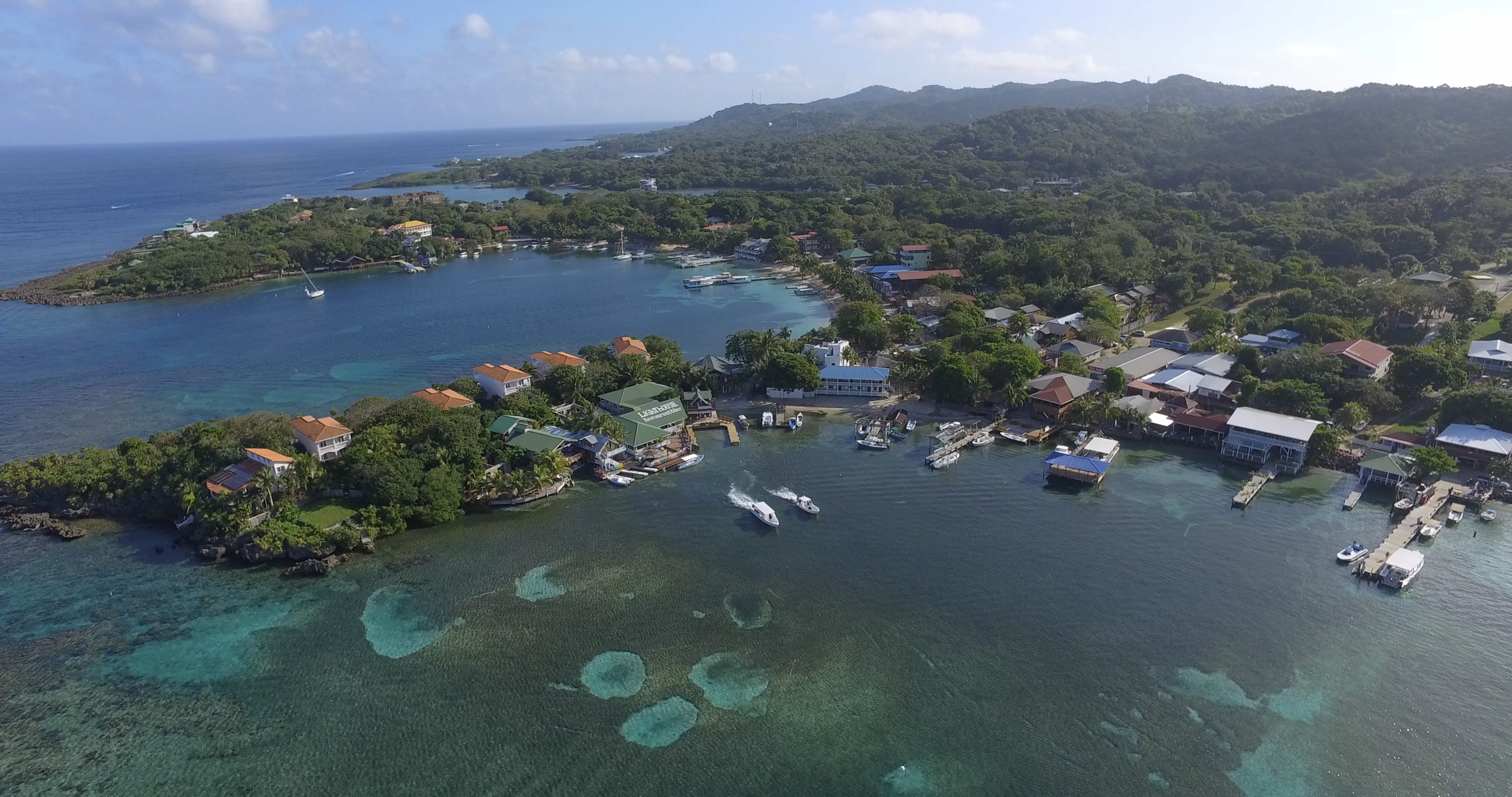
Wenn man bedenkt, dass Roatán zu Honduras gehört, gehen viele Reisende davon aus, dass hier alles sehr günstig ist, da wir uns ja in Mittelamerika befinden. In Wirklichkeit ist Roatán jedoch eine Insel, und fast alles, was hier konsumiert wird, wird importiert. Unsere Lebensmittel, Produkte und Vorräte mussten einen viel längeren Transportweg zurücklegen, um auf unsere „glückliche Insel“ zu gelangen, was die Preise für so gut wie alles in die Höhe treibt.
Schauen wir uns kurz die gängigsten Reisekosten für einen Besuch im West End auf Roatán an. Denken Sie daran: Im Vergleich zu anderen Inseln und deren Preisniveau schneidet Roatán in puncto Erschwinglichkeit und Preis-Leistungs-Verhältnis nach wie vor sehr gut ab.
Kosten für Essen und Getränke
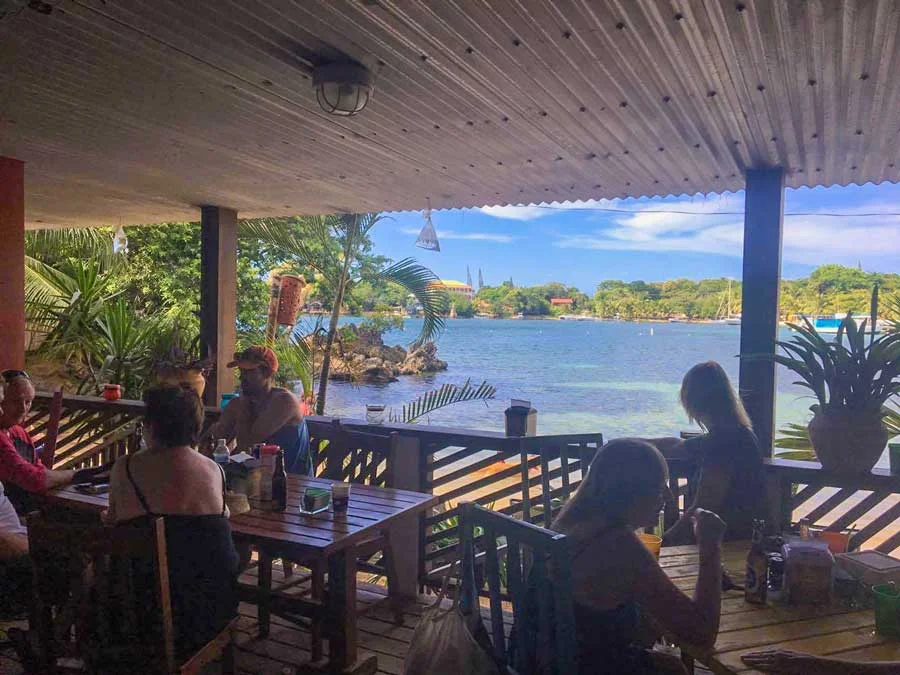
Der Blick vom „Ginger’s Caribbean Grill“ auf den Strand gegenüber von „Roatan Divers“
Ganz gleich, ob Sie in einem Restaurant essen gehen oder Lebensmittel einkaufen – rechnen Sie damit, dass die Preise in etwa denen entsprechen, die Sie normalerweise in den Vereinigten Staaten zahlen würden. In Coxen Hole und French Harbor gibt es große Supermärkte, die viele der gängigen amerikanischen Marken führen, die die meisten Touristen kennen. Im Durchschnitt kosten diese Waren genauso viel oder sogar mehr als in Ihrem örtlichen Supermarkt.
Wenn Sie in den meisten Restaurants im West End essen gehen, sollten Sie mit Kosten von etwa 8 bis 13 Dollar pro Person rechnen (ohne Trinkgeld). In einigen der gehobeneren Lokale kann das Essen etwa 15 bis 20 Dollar pro Person kosten . Weitere Informationen zu Trinkgeldregeln und anderen häufig gestellten Fragen hier auf der Insel finden Sie hier in einem hilfreichen Leitfaden.
Und klar, je nachdem, was man gerne isst (man denke an Frittiertes und jede Menge Kohlenhydrate), findet man auch günstigere Essensmöglichkeiten! Hier im West End gibt es lokale Straßenverkäufer, die typisch honduranische Gerichte wie Baleadas und „platos típicos“ (Fleisch, Bohnen und Reis) für etwa 5 Dollar anbieten.
Wir wissen es, wir wissen es – die wichtigste Frage, die Sie beschäftigt, ist, wie viel ein Bier kostet, oder? Viele von uns beurteilen die Erschwinglichkeit eines Reiseziels gerne anhand der Bierpreise. In Roatán liegt der Durchschnittspreis für ein einheimisches Bier bei etwa 3 Dollar, für Wein und Importbiere (z. B. US-Biere) bei 5 Dollar und für Cocktails zwischen 5 und 7 Dollar.
Unterkunft
Das West End erstreckt sich über eine Länge von knapp 1 Meile, und in diesem Gebiet gibt es eine Vielzahl von Unterkunftsmöglichkeiten für Reisende. Ganz gleich, ob Sie ein etabliertes Hotel im Herzen des West Ends bevorzugen oder lieber ein Haus oder eine Eigentumswohnung am Stadtrand mieten möchten, wenn Sie es mögen, etwas abseits der ausgetretenen Pfade zu sein – es gibt immer eine Unterkunft, die Ihren Bedürfnissen entspricht.
Hotels
Die Preise für Hotels im West End reichen von 35 bis 200 Dollar pro Nacht (Hostels ausgenommen), sodass für jedes Budget etwas dabei ist. Wichtige Faktoren, die Sie bei der Auswahl Ihres Hotels berücksichtigen sollten, sind die Jahreszeit (Preise in der Hochsaison im Vergleich zu denen in der Nebensaison) sowie die Frage, ob Klimaanlage vorhanden ist oder ob Mahlzeiten im Preis inbegriffen sind. Die Hotels hier sind in der Regel recht klein und tragen wesentlich zu dem Charme und dem familiären Ambiente bei, das die Menschen an Roatán so lieben.
Es ist wichtig zu beachten, dass es in West Bay zwar All-inclusive-Angebote gibt, die Hotels in West End diese jedoch nicht anbieten. Bei den meisten Hotels ist auch das Frühstück nicht inbegriffen. Denken Sie also unbedingt daran und lesen Sie das Kleingedruckte sorgfältig durch, wenn Sie nach einer Unterkunft suchen.
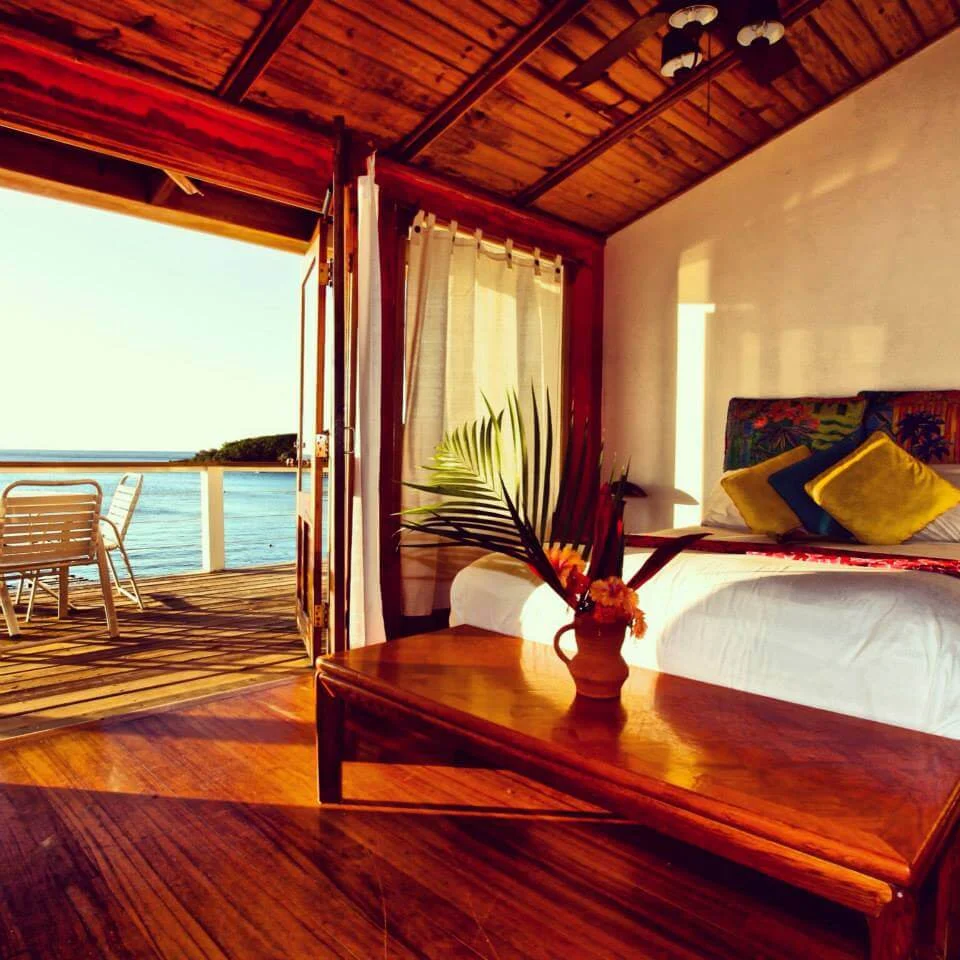
Ein Blick ins „The Beach House Roatan“
Welche schönen Hotels gibt es?Das „Beach House Roatan“ ist ein luxuriöses Boutique-Hotel im Zentrum von West End, direkt an der Half Moon Bay gelegen. Die Preise beginnen bei 175 $ pro Nacht zuzüglich 19 % Steuer und beinhalten das Frühstück. Reisende, die eine günstigere, einfache Unterkunft suchen, laden wir ein, sich die Anderson Sunset Villas anzusehen. Dort werden Studiozimmer und Apartments mit zwei Schlafzimmern zu Preisen zwischen 45 und 75 $ pro Nacht angeboten.Kontaktieren Sieuns bezüglich der Verfügbarkeit.
Ferienwohnungen
Je nach Größe Ihrer Gruppe könnte eine Ferienwohnung oder ein Ferienhaus genau das Richtige für Sie sein. Mit Preisen zwischen 600 und 1.200 US-Dollar pro Woche für Unterkünfte mit 1, 2 oder 3 Schlafzimmern können Sie durch eine Ferienwohnung Ihre Unterkunftskosten senken (eine Ferienwohnung mit 2 Schlafzimmern kann günstiger sein als zwei Hotelzimmer) und haben zudem die Freiheit, selbst zu kochen. Caribbean Colorsbietet eine Vielzahl von Unterkünften im West End und der Umgebung an, die sich durch moderne Ausstattung, hervorragende Lagen und erstklassigen Service auszeichnen.
Verkehr
Wenn Sie im West End übernachten, ist das Tolle daran, dass Sie praktisch alles zu Fuß erreichen können! Unterkünfte, Tauchzentren, Restaurants und Bars liegen alle auf kleinem Raum. Wenn es jedoch um den Transfer zum Flughafen oder um Fahrten nach Coxen Hole oder in die östlichen Teile der Insel geht, benötigen Sie ein Fahrzeug. Taxis sind eine tolle und sichere Option. Ein privates Taxi ist zwar teurer, aber wenn es dir nichts ausmacht, die Fahrt mit anderen zu teilen, kannst du ein „Collectivo“ bestellen. Da die Taxis hier keine Taxameter haben, vereinbarst du in der Regel einen Preis, bevor du einsteigst und losfährst. Der Preis hängt vom Zielort und der Anzahl der Fahrgäste ab. Denk daran, Kleingeld mitzunehmen, da Taxifahrer hier selten Wechselgeld dabei haben!
Aktivitäten

Entdecken Sie bei Go Blue Bay Islands einige unterhaltsame Aktivitäten auf den Inseln
Roatan bietet eine Vielzahl von Aktivitäten, aber natürlich sind wir vor allem für unser Tauchen bekannt! Die Kosten für das Tauchen auf Roatan gehören zu den günstigsten weltweit, insbesondere wenn man bedenkt, wie gesund und lebendig unser Riff ist und wie viele Tauchplätze wir zu bieten haben.
Auch andere Aktivitäten wie Seilrutschen, Schnorcheln, Wellness, Angeln, Golf oder Bootsausflüge stehen zur Auswahl. Die Kosten variieren je nach Anbieter, aber wir empfehlen Ihnen, auf verantwortungsvollen Ökotourismus zu achten. Weitere Informationen zur Unterstützung umweltbewusster Unternehmen finden Sie bei Go Blue Bay Islands, die Sie gemeinsam mit National Geographic zu Anbietern und Veranstaltern führen können, die sich nachweislich für den Umweltschutz engagieren. Die sind echt klasse!
Hoffentlich konnten wir Ihnen einen guten Überblick darüber verschaffen, wie die Preise hier im West End aussehen, und Ihr Interesse an einem Aufenthalt auf unserer wunderschönen Insel wecken! Weitere Informationen zur Währung auf Roatan finden Sie in unserem anderen Beitrag „5 Dinge, die Sie über die Währung auf Roatan wissen sollten“. Wie bereits erwähnt, ist Roatan zwar vielleicht nicht das günstigste Reiseziel, bietet aber dennoch ein hervorragendes Preis-Leistungs-Verhältnis, wenn man die Gesamtkosten einer Reise hierher berücksichtigt – verbunden mit dem unglaublichen Erlebnis, Teil einer kleinen Inselgemeinschaft zu sein, die eine schöne Mischung aus modernem und rustikalem Flair bietet.
Möchten Sie mehr erfahren? Wir helfen Ihnen gerne bei der Planung Ihres nächsten Urlaubs auf Roatán – schreiben Sie uns einfach eine Nachricht. Wir freuen uns schon darauf, von Ihnen zu hören!

5 gute Gründe, auf Roatán tauchen zu gehen
Roatan wird wegen seiner vielen beeindruckenden Vorzüge – der üppigen, hügeligen Landschaft, dem azurblauen Wasser, den freundlichen Menschen und der vielfältigen und reichen Kultur – oft als das Juwel der Karibik bezeichnet. Dank direkter internationaler Flüge von Houston, Miami, Atlanta, den Kaimaninseln und San Salvador war es noch nie so einfach, dieses Paradies zu erreichen. Hier sind 5 gute Gründe, warum Sie unserer Meinung nach auf Roatan tauchen sollten!
Roatan wird aufgrund seiner vielen beeindruckenden Vorzüge – der üppigen, hügeligen Landschaft, des azurblauen Wassers, der freundlichen Menschen und der vielfältigen und reichen Kultur – oft als das Juwel der Karibik bezeichnet. Dank direkter internationaler Flüge aus Houston, Miami, Atlanta, von den Kaimaninseln und aus San Salvador war es noch nie so einfach, ins Paradies zu gelangen! Roatan ist natürlich vor allem für seine atemberaubenden Riffe und seine Unterwasserwelt bekannt. Daher sollte Tauchen ganz oben auf Ihrer „To-do“-Liste stehen, wenn Sie die Insel besuchen. Selbst wenn Sie schon andere beliebte Tauchziele bereist haben, ohne dort zu tauchen, finden Sie hier 5 gute Gründe, warum Sie unserer Meinung nach auf Roatan tauchen sollten!
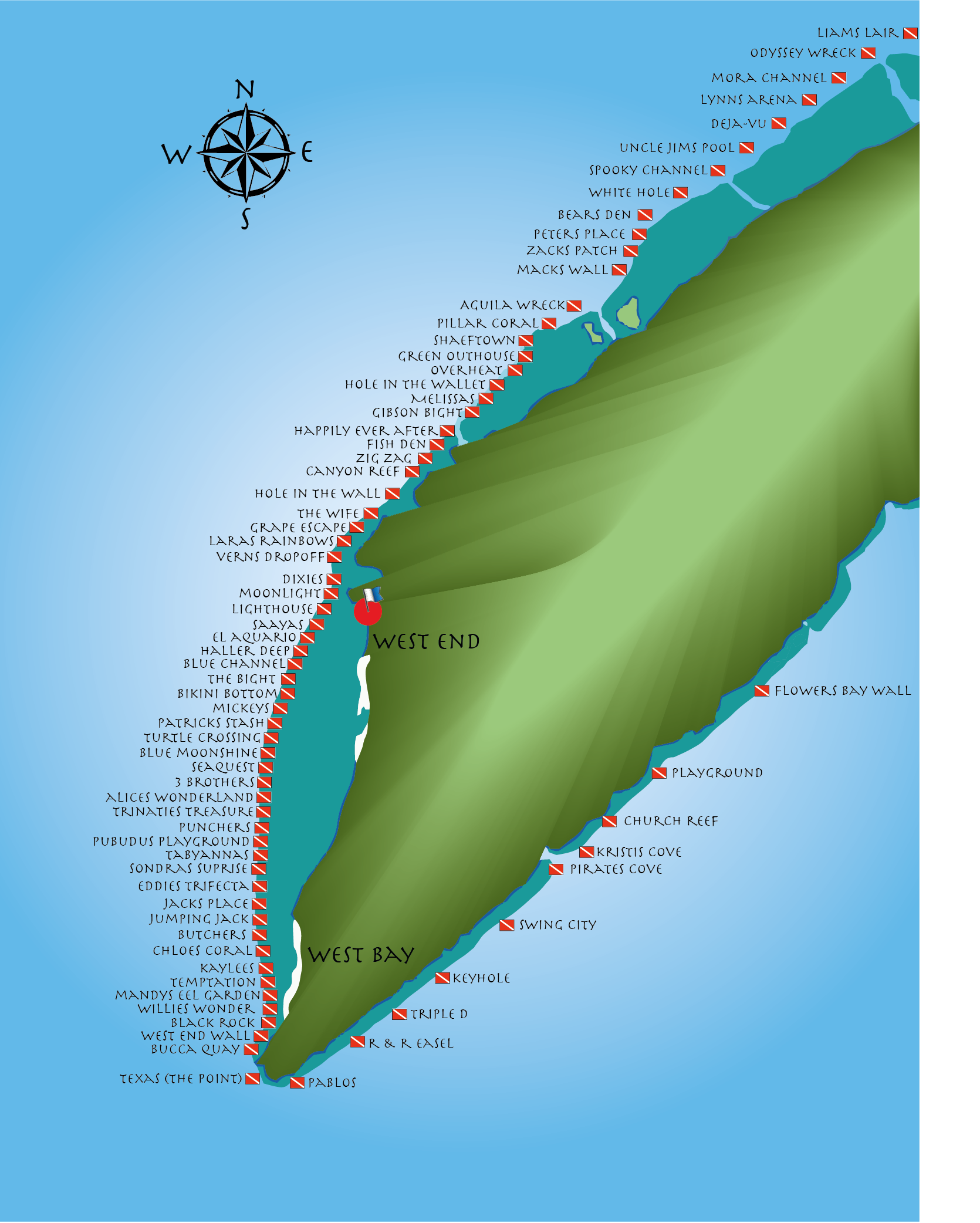
Das sind nur einige der Tauchplätze im West End von Roatán – wenn wir versuchen würden, sie alle aufzunehmen, bräuchten wir eine viel größere Karte!
Grund 1: Die Tauchplätze liegen ganz in der Nähe
Da das Riff bereits wenige hundert Fuß vom Land entfernt beginnt, ist die gesamte Insel im Grunde ein einziger riesiger Tauchplatz. Allein vom West End aus erreichen wir über 30 Tauchplätze innerhalb einer 10-minütigen Bootsfahrt – das bedeutet weniger Zeit auf dem Boot und mehr Zeit im Wasser! Da die Tauchplätze so nah an den Tauchzentren liegen, bieten die meisten Tauchzentren Touren mit nur einer Flasche an. So hast du die Wahl zwischen einem, zwei oder drei Tauchgängen pro Tag und kannst deine Oberflächenpausen gemütlich am Strand verbringen – mit einer kalten Limonade (oder einem Bier, aber erst nach dem Tauchen!) in der Hand.
Grund 2. Das ist zwar schön, aber man muss sie nicht zweimal machen
Der Vorteil, so viele Tauchplätze in unmittelbarer Nähe zu haben, besteht darin, dass man einen Tauchplatz nicht wiederholen muss, es sei denn, man wünscht es ausdrücklich. Wenn man 50 Tauchgänge vom West End aus unternimmt, wird man natürlich einige Tauchplätze wiederholen, aber es ist sehr einfach, Abwechslung in das Taucherlebnis zu bringen. Die Gegend um West Bay ist voller Sandrinnen, Korallenplateaus und kleiner Steilwände, während man in Richtung Sandy Bay coole Schluchten und tiefe Steilwände vorfindet – es gibt also jede Menge coole Landschaften und Sehenswürdigkeiten zu entdecken.
Grund 3: Tauchen an einem intakten Riff in einem geschützten Meerespark
Der Roatan-Meerespark entstand vor zehn Jahren als Bürgerinitiative, um das bereits von der honduranischen Regierung eingerichtete Meeresschutzgebiet zusätzlich zu schützen. Die letzten zehn Jahre waren ein langer Kampf für den Roatan-Meerespark, doch die Früchte dieser Arbeit zeigen sich nun deutlich. Im „Healthy Reefs 2015 Report Card“-Bericht zum Mesoamerikanischen Riff belegte Roatan den ersten Platz in den Kategorien Korallengesundheit und Fischbestände. Viele andere berühmte Tauchziele, wie das Great Barrier Reef, hatten nicht so viel Glück.
Die kontinuierliche Arbeit des Roatan Marine Park im Bereich des Naturschutzes trägt dazu bei, unser wunderschönes Riff noch viele Jahre lang zu erhalten. Unterstützen Sie den Park daher unbedingt, indem Sie eine Tageskarte für 3 Dollar oder ein Jahresarmband für 10 Dollar erwerben.
Grund 4. Ruhige, klare Bedingungen mit schwachen Strömungen

Ein trächtiger Zackenbarsch
Fast das ganze Jahr über genießen wir relativ ruhiges, glattes Wasser an der Oberfläche, wobei die Sicht unter Wasser im Durchschnitt bei etwa 100 Fuß/30 Metern liegt. Auch wenn die Strömungen von Tag zu Tag variieren können, herrschen in der Regel nur leichte Strömungen, die das Tauchen zu einem viel entspannteren und angenehmeren Erlebnis machen.
Wenn das Wetter auf der Nordseite der Insel einmal unruhig wird, haben viele Tauchschulen in Roatán die Möglichkeit, auf der Südseite der Insel zu tauchen, wo wieder ruhige, flache Bedingungen zum Tauchen herrschen. Diese Art von Flexibilität ist in den meisten beliebten Tauchdestinationen so gut wie unbekannt. Wir arbeiten mit einem Partner-Tauchzentrum zusammen, sodass wir unseren Gästen auf beiden Seiten der Insel das gleiche hochwertige Taucherlebnis bieten können.
Grund 5. Vielfältige Meeresfauna
Auch wenn unsere farbenprächtige Unterwasserwelt eng mit Grund Nr. 3 zusammenhängt, konnten wir nicht umhin, die Unterwasserbewohner von Roatán besonders hervorzuheben. Ganz gleich, ob Sie sich für die größeren Lebewesen begeistern oder lieber die kleineren, versteckteren Wirbellosen entdecken möchten – bei uns finden Sie alles! Ein gesundes Riff zieht seinerseits eine Vielzahl von Fischen, Krebstieren, Bodenbewohnern, Garnelen und pelagischen Fischen in diese warmen karibischen Gewässer an.
Das sind sie also, die 5 tollen Gründe, auf Roatán tauchen zu gehen! Auch wenn Sie noch kein zertifizierter Taucher sind, gibt es zahlreiche Möglichkeiten, die Unterwasserwelt zu erkunden – sei es beim Schnorcheln oder mit dem PADI „Discover Scuba Diving“-Programm. Auch unser Leben an Land hat einiges zu bieten. Planen Sie also noch heute Ihre Reise nach Roatán und erleben Sie den Urlaub Ihres Lebens!
4 coole Souvenirs aus Roatán
Wir möchten Ihnen unsere besten Geschenkideen vorstellen, mit denen Sie ein Stück Roatán mit nach Hause nehmen können – und dabei verantwortungsbewusst einkaufen und lokale Künstler und Unternehmen unterstützen.
Das Wort „Souvenir“ lässt viele von uns zusammenzucken, da wir dabei an kitschige Plastikartikel denken, die man an fast jedem Reiseziel finden kann. Genau wie jedes andere Reiseziel haben auch wir eine lange Liste an Geschäften und Kleinigkeiten zur Auswahl. Einige der hier zum Verkauf angebotenen Artikel wurden möglicherweise – ohne dass Sie es wissen – illegal gewildert und verstoßen gegen lokale Gesetze und Vorschriften. Wie können Sie ein bedeutungsvolles Andenken finden, das gleichzeitig etwas Gutes bewirkt?
Wir möchten euch unsere besten Geschenkideen vorstellen, mit denen ihr ein Stück Roatán mit nach Hause nehmen könnt – und das alles, während ihr verantwortungsbewusst einkauft und lokale Künstler und Unternehmen unterstützt. Ohne weitere Umschweife und in KEINER bestimmten Reihenfolge…
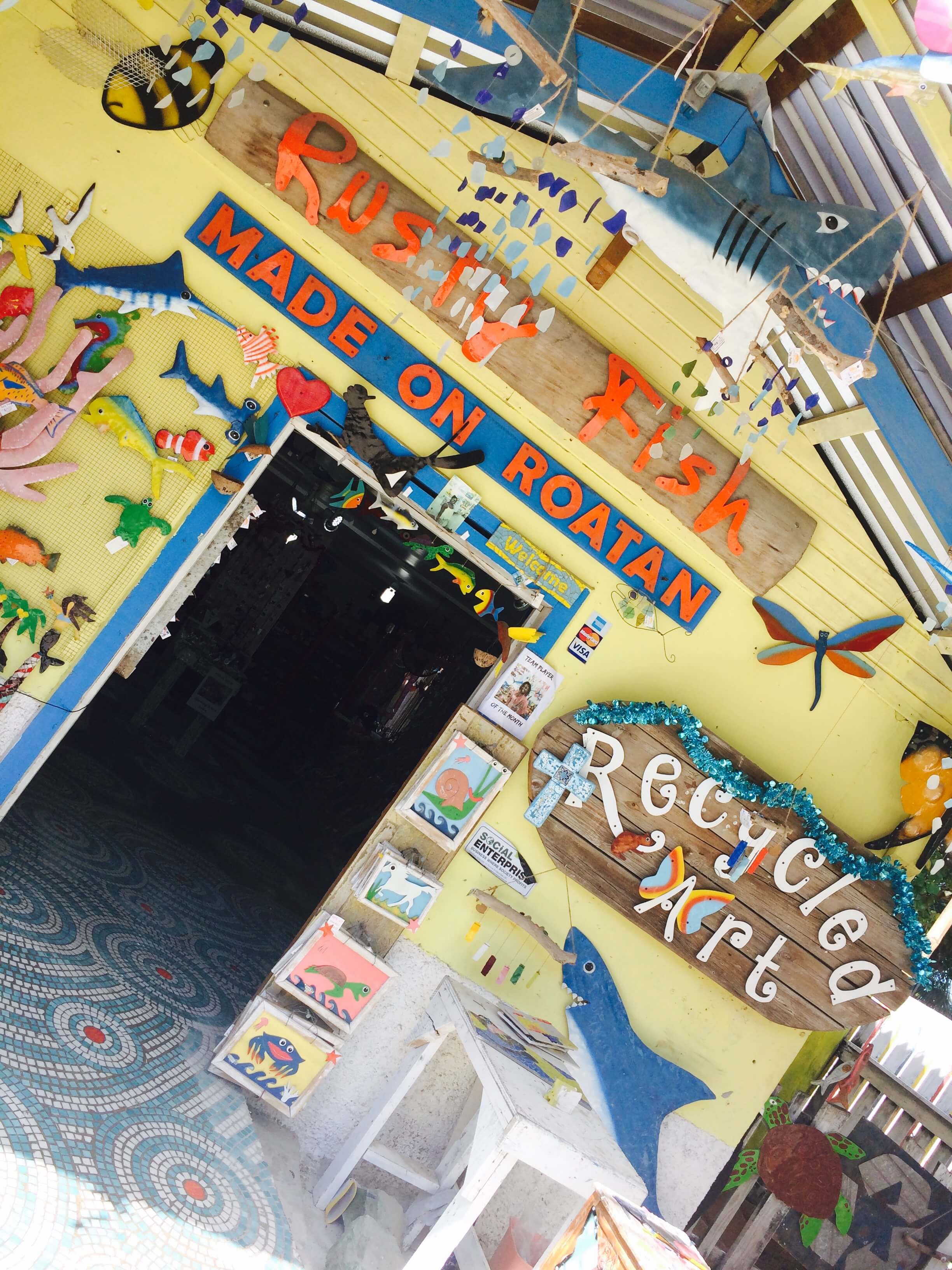
Rusty Fish – Kunst aus recycelten Materialien von der Insel
„Wir haben nichts aus China!“ , wird an jedem ihrer zahlreichen Standorte hier auf Roatán stolz verkündet . Wir finden es toll, dass dieses lokale Unternehmen einen stilvollen und erschwinglichen Weg gefunden hat, den Müll des einen in den Schatz des anderen zu verwandeln! Sie stellen Kunsthandwerk und Kunstwerke aus recyceltem Metall, Holz, Kunststoff und Glas her. Von Wanddekorationen über Magnete bis hin zu Schmuck und vielem mehr – sie bieten eine großartige Auswahl. Ein Großteil ihrer Kunstwerke ist von unserer lokalen Unterwasserwelt inspiriert. So kannst du eine Erinnerung an die wunderschöne grüne Schildkröte, die du im Meer gesichtet hast, mit nach Hause nehmen! Mit Filialen in West End, West Bay und an beiden Kreuzfahrthäfen ist dieser Ort leicht zu erreichen, selbst wenn du nur für einen Tag hier bist.
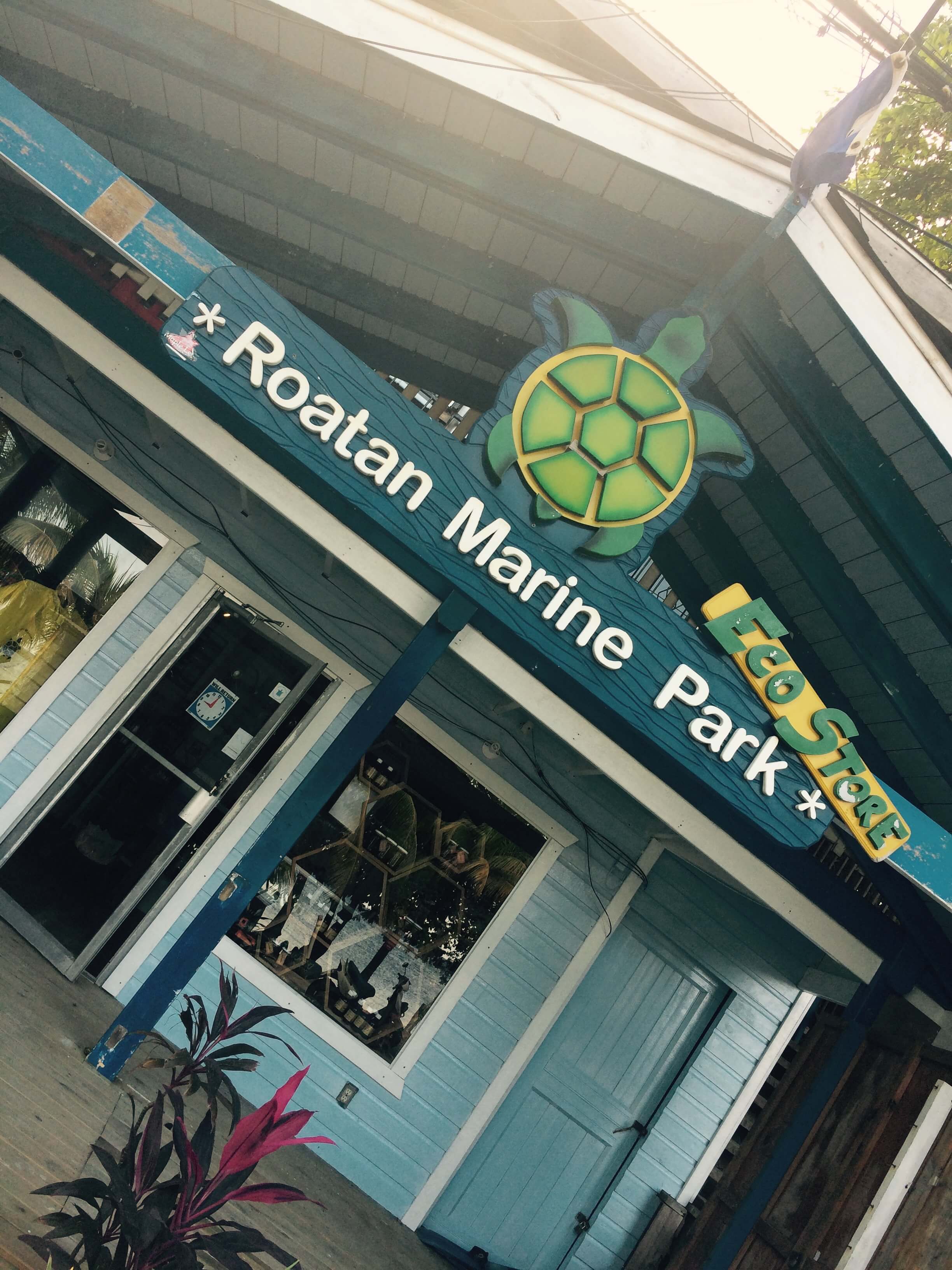
Roatan-Meerespark – Öko-Laden
Neben der großartigen Arbeit, die sie leisten, um unser Riff gesund und schön zu erhalten, bietet der Roatan Marine Park Eco Store eine Auswahl an Merchandise-Artikeln und umweltfreundlichen Produkten aus der Region an. Die Einnahmen aus diesen Verkäufen fließen zurück in den Marinepark und unterstützen dessen lokale Naturschutzbemühungen. Im Angebot sind farbenfrohe T-Shirts, Tank-Tops und sogar Langarm-Hoodies, die sich perfekt für eine luftige Nacht hier auf der Insel eignen. Außerdem gibt es lokal hergestellten Honig, Kaffee, Marmeladen, Gelees, umweltfreundliche Mückenschutzmittel und sogar scharfe Soße zu kaufen!

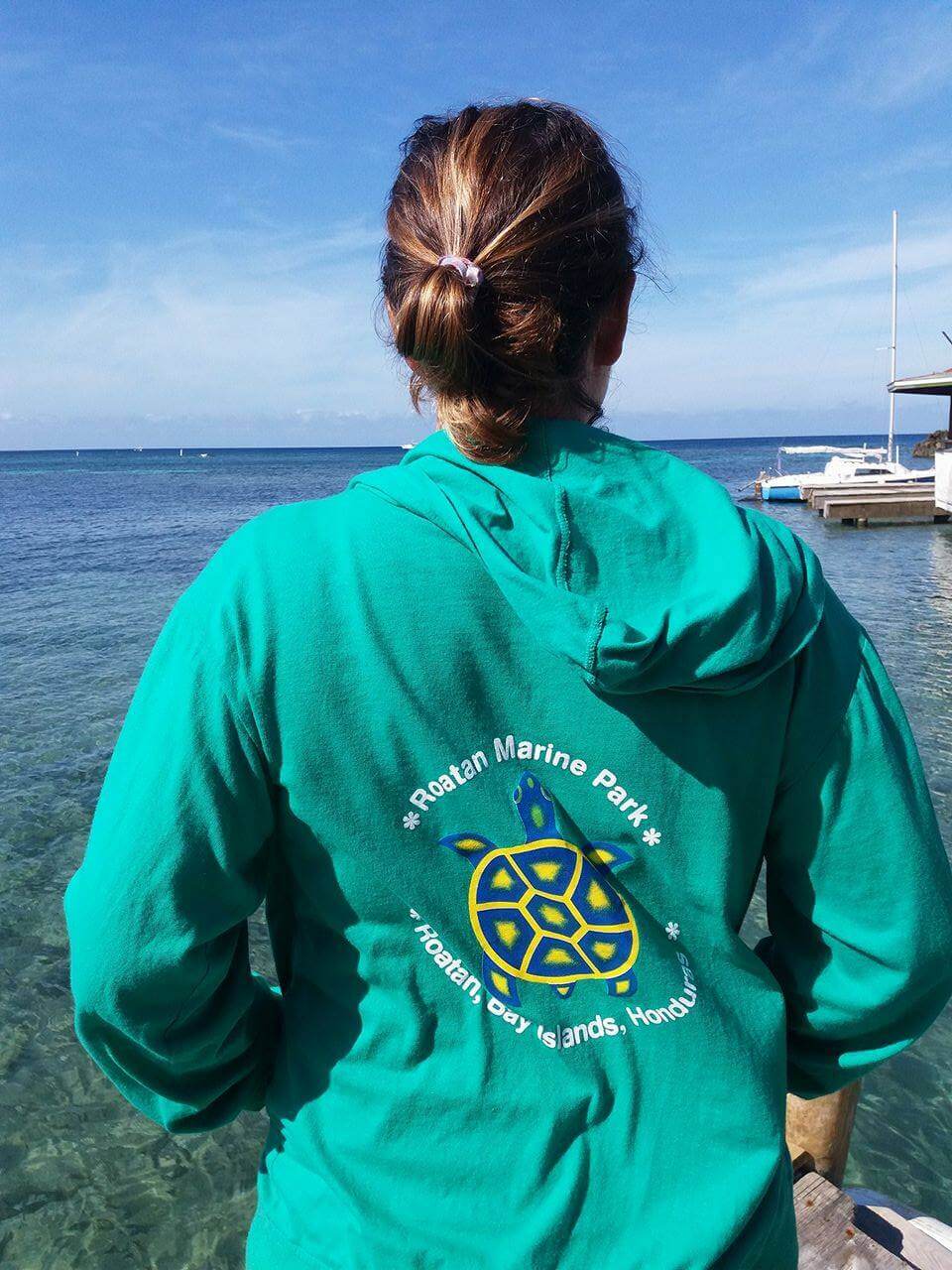
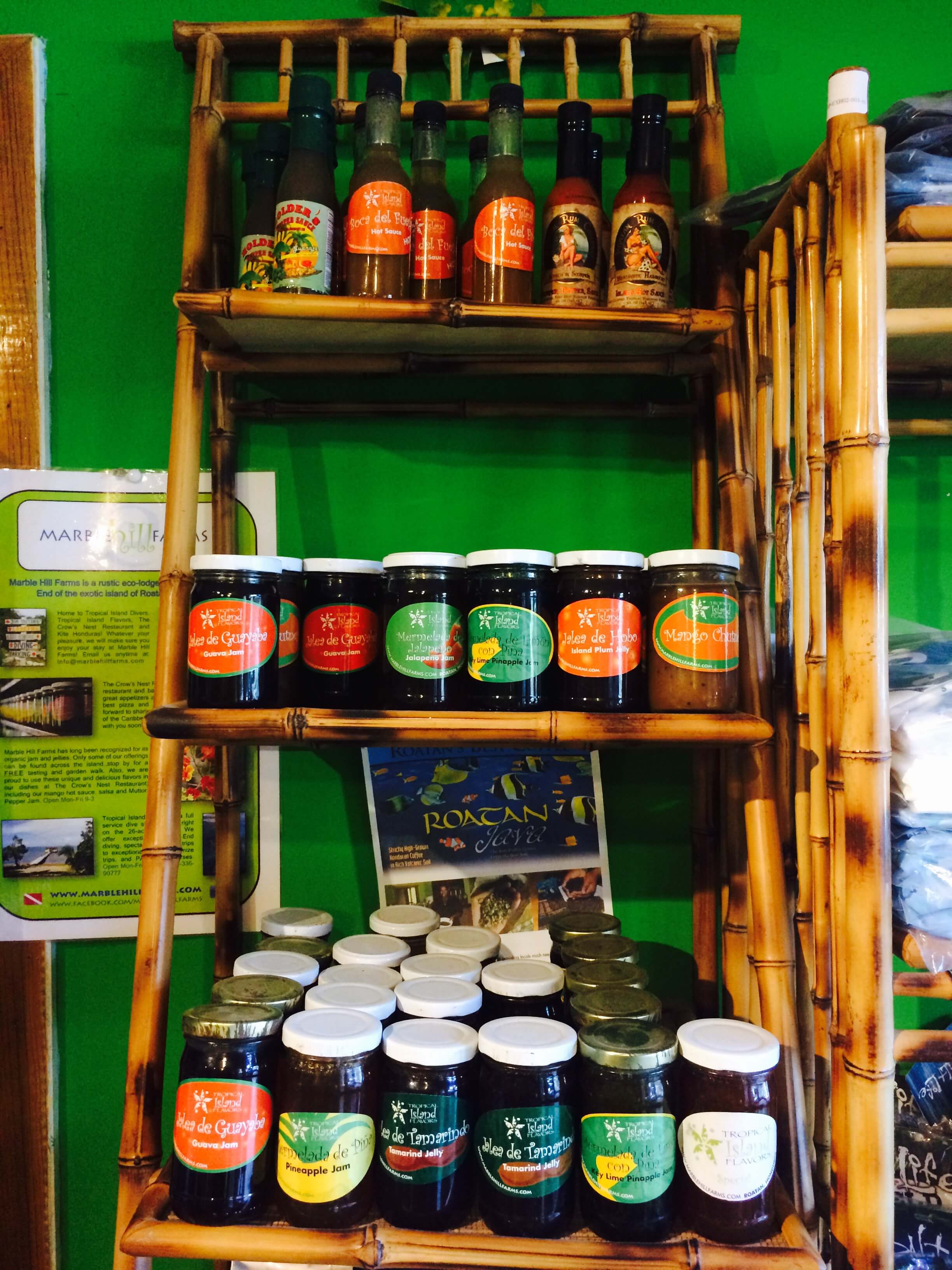
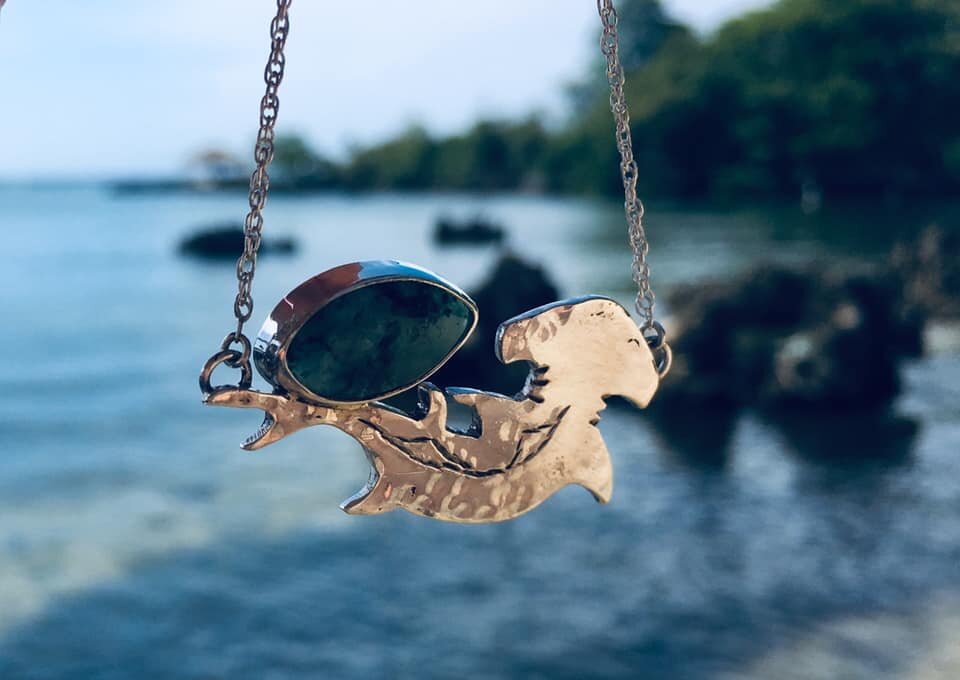
Ein wunderschönes, individuell angefertigtes Schmuckstück von Pink Ginger Jewelry
Lokale Künstler
Ein wirklich schönes Souvenir zum Mitnehmen ist ein vor Ort handgefertigtes Kunstwerk oder Schmuckstück. In der Regel trifft man auf lokale Händler, die auf den Straßen oder an den Stränden Halsketten, Ohrringe und Armbänder für Männer und Frauen anbieten. Wunderschöne Steine und aufwendig gearbeitete Flechtmuster machen diese Schmuckstücke zu echten Unikaten.
Wenn Sie sich für Kunst interessieren, finden Sie hier Drucke, Gemälde und Leinwandbilder in leuchtenden, wunderschönen Farben, die Sie an die Karibik erinnern.
Das Leben an den karibischen Riffen

Nach fast jedem Tauch- und Schnorchelausflug sieht man dieses Buch in den Händen der Menschen, wenn wir auf die farbenfrohe und lebendige Unterwasserwelt zurückblicken, die wir hier auf Roatán erleben. Ein absolutes Muss für jeden Fischliebhaber, der Freude an den Bestimmungsfotos des lokalen Fotografen Mickey Charteris hat. Die aktuelle Ausgabe enthält über 1.000 Arten in Vollfarbe sowie Beschreibungen zu jeder einzelnen Art. Alle Fotos wurden hier auf den Bay Islands aufgenommen. Ohne zu wissen, welche Lebewesen unter Wasser leben, ist es schwer, das Riff und seine Bewohner wirklich zu schützen und sich um sie zu kümmern. Das Buch eignet sich hervorragend als Bildband oder als Andenken an Roatan!
Nicht auf Roatán?
Keine Sorge! Die meisten unserer Lieblingsgeschenkideen können Sie online kaufen. Besuchen Sie die jeweilige Website oder wenden Sie sich direkt an den Anbieter, um zu erfahren, wie Sie sich und Ihren Freunden ein Stück Roatán zusenden lassen können.