

Fliegen vor und nach dem Tauchen
Ein wichtiger Punkt, den Sie bei der Planung Ihres Tauchurlaubs berücksichtigen sollten, sind Ihre Flugdaten und -zeiten, da diese Ihren Tauchplan bestimmen.
Wenn man nicht gerade unglaubliches Glück hat (so wie wir), muss man mit dem Flugzeug reisen, um tauchen zu gehen. Ein wichtiger Punkt, den man bei der Planung seines Tauchurlaubs berücksichtigen muss, sind die Flugdaten und -zeiten, da diese den Tauchplan bestimmen. Beim Tauchen sammelt sich Stickstoff im Körper an, und man muss sicherstellen, dass man ihn bis auf ein gesundes Maß abgebaut hat, bevor man in die Höhe steigt. Wir erhalten viele E-Mails zu diesem Thema, und oft herrscht Verwirrung über die Regeln. Deshalb wollen wir das Ganze ganz einfach erklären, um dir die Urlaubsplanung noch leichter zu machen (ein kleiner Tipp zu den Richtlinien: Sie sind lockerer, als du denkst)!


Regel Nr. 1: Du brauchst 18 Stunden, bevor du in die Höhe gehst.
Verschiedene Organisationen geben unterschiedliche Empfehlungen hinsichtlich der erforderlichen Wartezeit an Land vor einem Flug in die Höhe, doch PADI gibt derzeit an, dass man vor einem Flug 12 Stunden warten muss, wenn man einen Tauchgang absolviert, und 18 Stunden, wenn man mehrere Tauchgänge über mehrere Tage hinweg durchführt. Das bedeutet: Wenn Sie eine Woche lang getaucht haben und um 13 Uhr abfliegen, können Sie am Vortag bis 19 Uhr sicher tauchen.
Viele Leute nehmen sich gerne 24 Stunden Zeit, um auf Nummer sicher zu gehen, und weil sie an ihrem letzten Urlaubstag einfach ein bisschen Zeit damit verbringen möchten, am Strand zu entspannen – und natürlich kannst du dir so viele Stunden nehmen, wie du möchtest. Aber wenn du ein Tauchfanatiker bist, reichen 18 Stunden völlig aus, selbst wenn du von einem Tauchsafari-Schiff aus viel tauchst. Achte jedoch wie immer darauf, konservative Tauchpraktiken anzuwenden und deine Dekompressionsgrenzen beim Tauchen nicht zu überschreiten.
Regel Nr. 2: Höhe bedeutet nicht nur Fliegen
Wenn Sie tauchen und anschließend vorhaben, in die Berge zu fahren, um Ihr nächstes Ziel zu erreichen, gilt dies ebenfalls als Höhenlage. Alles, was über 300 Meter/1.000 Fuß liegt, gilt als Höhenlage, da der Luftdruck dort abnimmt. Berücksichtigen Sie dies also bei der Planung Ihrer Weiterreise nach dem Tauchen. Wenn Sie über die Colorado Rockies fahren müssen, um nach Hause zu kommen, planen Sie vor der Fahrt ausreichend Zeit ein, um Ihre Sicherheit zu gewährleisten.
Regel Nr. 3: Du kannst direkt nach dem Fliegen tauchen
Es gibt ein weit verbreitetes Missverständnis, dass man – ähnlich wie vor einem Flug – auch nach einem Flug eine Wartezeit einhalten muss. Der Grund, warum man nicht direkt nach dem Tauchen fliegen sollte, ist die Stickstoffanreicherung im Körper; diese tritt jedoch nicht auf, wenn man gerade aus dem Flugzeug gestiegen ist. Man kann buchstäblich direkt aus dem Flugzeug ins Wasser springen, wenn man möchte – obwohl wir davon abraten würden, es sei denn, man ist ein professioneller Stuntman.
Das war’s also – die drei supereinfachen Regeln, die man beim Fliegen und Tauchen beachten sollte. Ganz einfach, oder? Wir wünschen euch einen tollen Tauchurlaub und hoffen, dass wir eines Tages mit euch allen tauchen können.
Viel Spaß beim Tauchen!
Komm und tauche mit Roatan Divers!

Freizeittauchgang
Bist du ein zertifizierter Taucher? Dann komm doch zu uns zum Tauchen. Als kleines Tauchzentrum richten wir uns an kleine Gruppen und legen Wert auf individuelle Betreuung.

Open-Water-Kurs
Möchtest du tauchen lernen? In nur 3 Tagen kannst du deinen PADI Open Water-Kurs absolvieren und zertifizierter Taucher werden.

Spezialkurse
Möchtest du ein besserer Taucher werden? Nimm einen Spezialkurs in deinen Urlaub mit, erweitere dein Wissen und lerne neue Fähigkeiten.
8 einfache Tipps zur Vorbereitung auf einen Sturm
Die Vorbereitung auf einen Sturm ist unerlässlich, um einen Sturm (mit Stil) zu überstehen. Nach drei Jahren mit Stromausfällen aufgrund von Stürmen haben wir endlich den Schritt gewagt und einen Generator gekauft, was uns ungemein geholfen hat. Auf solche Ideen werden wir jedoch verzichten, da wir uns hier ausschließlich auf erschwingliche und einfache Möglichkeiten konzentrieren, sich auf einen Sturm vorzubereiten. Los geht’s!
Nun, der Hurrikan Earl ist gekommen und wieder gegangen, und glücklicherweise hat sich seine Zugbahn in letzter Minute geändert, sodass Roatán einen Großteil der vorhergesagten Schäden vermeiden konnte. Die Insel hat zwar dennoch Schaden genommen, aber nicht in dem Ausmaß, wie wir alle befürchtet hatten, und dafür sind wir dankbar. Andere Teile Mittelamerikas hatten nicht so viel Glück, und wir wünschen ihnen alles Gute bei ihren weiteren Wiederaufbaubemühungen.
Seit wir vor drei Jahren nach Roatán gekommen sind, haben wir schon so manche Stürme erlebt, aber da Roatán unterhalb des Hurrikan-Gürtels liegt, ist dies das erste Mal seit mehreren Jahren, dass auch nur die Möglichkeit bestand, dass ein Hurrikan die Küste von Roatán erreichen könnte. Wir hatten diesen Hurrikan bereits eine Woche lang kommen sehen, und die Vorhersagen hatten sich in den drei Tagen vor Earls Ankunft verschlechtert, sodass wir reichlich Zeit hatten, uns vorzubereiten. Und obwohl das Schlimmste des Sturms an uns vorbeizog und wir nicht alle getroffenen Vorbereitungen umsetzen mussten, war es ein guter Testlauf, um zu sehen, wie wir die nächste Regenzeit bewältigen würden und ob noch Änderungen erforderlich sind.
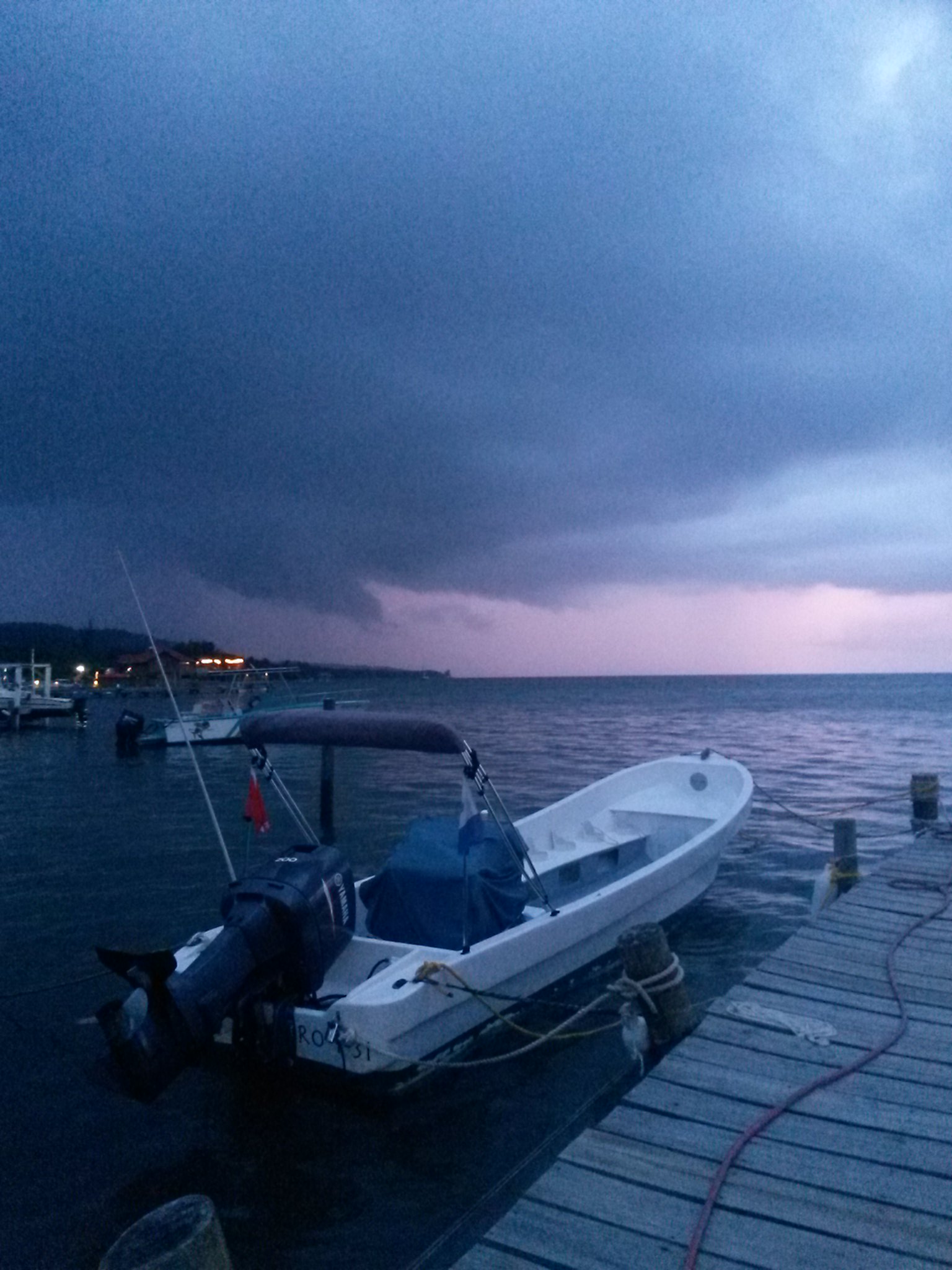
Die Vorbereitung auf einen Sturm ist unerlässlich, um einen Sturm (mit Stil) zu überstehen. Nach drei Jahren mit Stromausfällen aufgrund von Stürmen haben wir endlich den Schritt gewagt und einen Generator gekauft, was uns ungemein geholfen hat. Auf solche Ideen werden wir jedoch verzichten, da wir uns hier ausschließlich auf erschwingliche und einfache Möglichkeiten konzentrieren, sich auf einen Sturm vorzubereiten. Los geht’s!
Tipp 1: Recherchieren Sie und erstellen Sie eine Checkliste
Bevor wir mit den Vorbereitungen begannen, erstellten wir eine Checkliste mit allem, was wir brauchten, um diesen Sturm zu überstehen – basierend auf den Erfahrungen, die wir bei den letzten Stürmen gemacht hatten. Wir hatten zwar eine grobe Vorstellung davon, was wir brauchen würden, wollten aber sichergehen, dass wir nichts Wichtiges übersehen hatten. Wir suchten im Internet nach verschiedenen Vorbereitungslisten und überlegten uns, was wir für nützlich und machbar hielten.
Wenn Sie eine Checkliste erstellen, sollten Sie unbedingt auch alle Notrufnummern notieren, die Sie möglicherweise benötigen, und sich einen Plan im Kopf (oder schriftlich) für Notfälle zurechtlegen, die auftreten könnten, wie zum Beispiel Wasserlecks oder Stromausfälle. Es ist besser, übervorbereitet zu sein, als unvorbereitet zu werden.
Tipp 2: Decken Sie sich mit haltbaren Lebensmitteln ein
Es ist wichtig, noch vor Eintreffen eines Sturms im Supermarkt einzukaufen (aber bitte hamstern Sie nicht, damit anderen Menschen nicht die Lebensmittel ausgehen). Auch wenn der Sturm selbst vielleicht nur ein oder zwei Tage dauert, hat er doch immer länger anhaltende Auswirkungen. Straßen können weggespült werden oder Stromleitungen können ausfallen; stellen Sie daher sicher, dass Sie mit haltbaren Lebensmitteln vorbereitet sind, um diese Zeit zu überbrücken. Konserven sind unbegrenzt haltbar (und können auch nach dem Sturm noch verwendet werden), und Trockenprodukte wie Reis und Nudeln eignen sich ebenfalls gut. Wenn du einen Gasherd hast, stelle sicher, dass du ein Feuerzeug zur Hand hast, damit du auch bei Stromausfall noch kochen kannst. Versuche, dich auf Mahlzeiten zu konzentrieren, die sich schnell in einem oder zwei Töpfen zubereiten lassen, anstatt auf Gerichte, die sieben Stunden und acht Gänge erfordern.
Tipp 3. Bereite das Essen für den ersten Tag vor
Nun, das klingt doch etwas widersprüchlich, nachdem ich euch geraten habe, euch mit haltbaren Lebensmitteln einzudecken, oder? Versucht, zumindest für den ersten Tag des Sturms etwas vorzubereiten, damit ihr euch keine Gedanken ums Kochen machen müsst. Wir gingen davon aus, dass der Strom ausfallen würde, also habe ich am Vorabend etwas Essen langsam gegart und es am Tag des Sturms in einen Thermoskocher umgefüllt, damit es den ganzen Tag über warm bleibt. Als der Sturm zuschlug und der Strom tatsächlich ausfiel, hatten wir zumindest eine warme Mahlzeit. Essen ist ein körperliches und geistiges Erlebnis, und die Möglichkeit, Schweinefleisch vom Grill zu essen, während draußen der Sturm tobte, hat uns geholfen, uns wohler zu fühlen.
Tipp 4. Bewahren Sie etwas Wasser auf
Wenn der Strom ausfällt, fällt auch das Wasser aus, und es ist echt nervig, wenn man keinen Strom hat und nicht genug Wasser, um ganz normale Dinge wie das Spülen der Toilette zu erledigen. Wenn man eine Badewanne hat, ist es eine gute Idee, diese vor einem Sturm aufzufüllen, damit man das Wasser bei Bedarf nutzen kann. Wir haben keine Badewanne, also haben wir drei leere 5-Gallonen-Wasserkanister gefüllt und draußen aufbewahrt; bei Bedarf haben wir kleine Behälter damit befüllt und das Wasser ins Haus gebracht. Obwohl das Wasser ausgefallen war, konnten wir trotzdem auf die Toilette gehen und das Geschirr abspülen, was das Durchstehen des Sturms erheblich erleichtert hat.
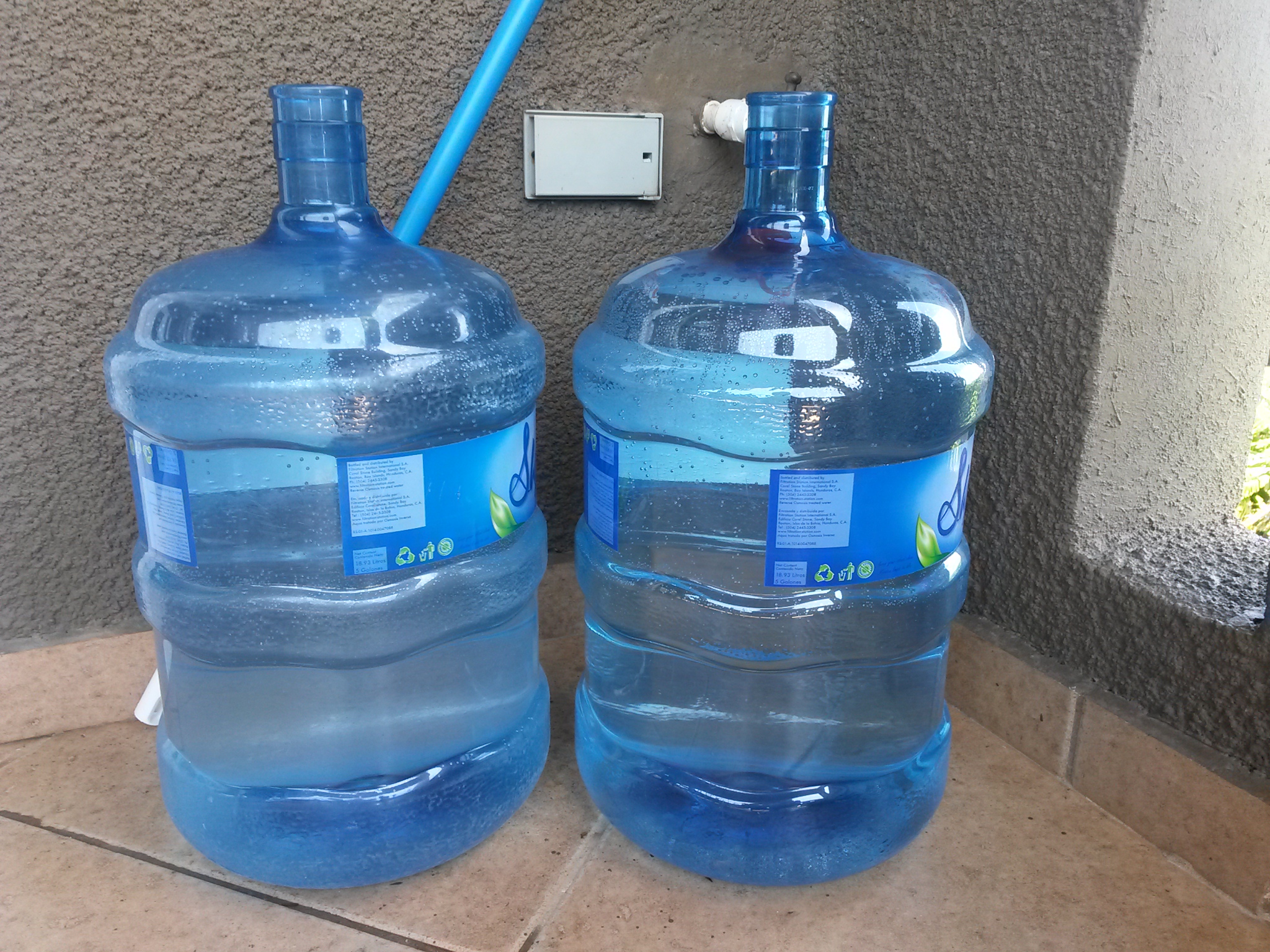
Denken Sie daran, auch gefiltertes Wasser zum Trinken bereitzuhalten. Selbst wenn Sie an einem Ort leben, an dem Sie Leitungswasser trinken können, können Sturmfluten alle möglichen Arten von bakterienhaltigem Wasser mit sich bringen, und auch stehendes Wasser kann ungenießbar werden. Halten Sie zur Sicherheit mehrere Gallonen gefiltertes Wasser bereit. Eine Magen-Darm-Erkrankung ohne Strom und ohne Wasser ist kein Spaß, daher ist Vorsicht besser als Nachsicht.
Tipp 5. Es werde Licht
Du hast also alles vorbereitet: ein selbstgekochtes Wohlfühlessen und reichlich Wasser, um den Sturm zu überstehen. Und dann fällt der Strom aus und du sitzt im Dunkeln. Das ist nicht gut. Sorge dafür, dass du sowohl aus Sicherheitsgründen als auch für mehr Komfort ausreichend Licht zur Hand hast.
Viele Menschen decken sich gerne mit Kerzen ein, da diese die günstigste Option sind. Allerdings geben Kerzen in der Regel viel Wärme ab, was zu stickiger Luft führen kann, wenn man in einem Raum festsitzt, die Fenster wegen Wind und Regen nicht öffnen kann und es daher an Luftzirkulation mangelt. Es gibt einige schöne solarbetriebene Alternativen, die sich schnell aufladen lassen und energieeffizient sind – und deren Designs von Jahr zu Jahr eleganter werden.

Solarbetrieben, aufblasbar und wasserdicht – ideal für alle möglichen Aktivitäten! https://mpowerd.com/
Wenn Sie eine noch effizientere Lichtquelle suchen, sollten Sie eine Stirnlampe in Betracht ziehen. So haben Sie beide Hände frei, egal ob Sie Gemüse schneiden oder ein Leck abdichten – und Stirnlampen sind so klein und praktisch, dass Sie im Alltag bestimmt auch noch andere Verwendungsmöglichkeiten dafür finden werden.
Tipp 6: Handydaten kaufen
Wenn der Strom ausfällt, fällt auch das WLAN aus. Stelle sicher, dass du genügend Datenvolumen auf deinem Handy hast, damit du nicht auf externes WLAN angewiesen bist. Soziale Medien eignen sich hervorragend, um andere in Notfällen auf dem Laufenden zu halten, und sind eine gute Möglichkeit, wertvolle Informationen zu verbreiten – insbesondere, wenn die Informationsinfrastruktur an deinem Standort nicht besonders gut ausgebaut ist.
Tipp 7: Laden Sie Ihre Akkus auf
Bevor der Sturm zuschlägt, sollten Sie sicherstellen, dass alle Ihre elektronischen Geräte vollständig aufgeladen sind. Das gilt für Handys, Computer und sogar für Batterien für Taschenlampen oder Radios. Die Nutzung von Daten auf Ihrem Handy kann den Akku schnell entladen, daher kann es nicht schaden, auch ein paar tragbare Ladegeräte als Notfallreserve bereitzuhalten. Tragbare Ladegeräte und solarbetriebene Ladegeräte sind heutzutage sehr erschwinglich und oft platzsparend gestaltet, und es kann auch im Alltag nicht schaden, zusätzliche tragbare Ladegeräte dabei zu haben (ich meine euch, Pokémon-Go-Spieler)!
Tipp 8. Erledige deine Hausarbeiten
Ich weiß nicht, ob das tatsächlich üblich ist, aber für mich war es das, also werde ich es hier erwähnen. Als wir wussten, dass ein Sturm oder Hurrikan auf uns zukommen würde, habe ich die gesamte Wäsche gewaschen, den ganzen Abwasch erledigt und dafür gesorgt, dass die Küche sauber war. War das notwendig? Nein. Aber ich habe mich auch auf die Möglichkeit vorbereitet, dass es für ein paar Tage keinen Strom und kein Wasser geben könnte, und nichts ist entmutigender, als nichts zu essen oder nichts zum Anziehen zu haben, weil alles schmutzig ist. Dafür zu sorgen, dass alles sauber und gebrauchsfertig war, bevor der Sturm zuschlug, diente vor allem meinem Seelenfrieden, aber ich bin besser vorbereitet in den Sturm gegangen.
Bonus-Tipp: Übe dich in Geduld
Nichts stellt deine Geduld so auf die Probe wie Strom- und Wassermangel. Glaub mir, ich weiß, wovon ich rede. Aber wenn den ganzen Tag der Strom ausfällt, versuche ich, meine Ungeduld im Zaum zu halten und mir vor Augen zu halten: So sehr es für mich als Verbraucher auch nervt, für die Mitarbeiter im Kraftwerk und die Monteure an den Stromleitungen, die versuchen, den Betrieb am Laufen zu halten, ist es noch viel schlimmer. Sie haben einen enorm harten Job, und einen ziemlich undankbaren dazu, wenn man bedenkt, dass wir alle mit den Hufen scharren, wenn unsere Stromversorgung unregelmäßig wird. Wenn es in Ihrer Gegend also Schwierigkeiten gibt, den Betrieb wieder in Gang zu bringen, oder wenn die Versorgung nicht so reibungslos läuft, wie sie könnte, üben Sie sich in Geduld und seien Sie nachsichtig.
Das waren also einige nützliche Tipps zur Vorbereitung auf einen Sturm. Welcher Sturm auch immer auf Sie zukommt – mögen Sie ihn gut überstehen.
5 Dinge, die in ein Reise-Erste-Hilfe-Set gehören
Erste-Hilfe-Maßnahmen werden unweigerlich Teil Ihres Urlaubs sein. Ob Insektenstich, Schürfwunde, allergische Reaktion oder Kopfschmerzen – ein gutes, reisefreundliches Erste-Hilfe-Set ist auf Reisen ein Muss. Lassen Sie uns besprechen, wie Sie ein gutes Erste-Hilfe-Set für unterwegs zusammenstellen können.
Reisen an unbekannte Orte können ein kleines Dilemma darstellen. Man möchte nicht zu viel einpacken und gezwungen sein, seine viel zu schweren Koffer überallhin mitzuschleppen – vor allem, wenn die Wahrscheinlichkeit groß ist, dass es am Reiseziel keine Aufzüge gibt –, aber man möchte auch nicht darauf verzichten müssen, etwas Wichtiges dabei zu haben.
Erste-Hilfe-Maßnahmen werden unweigerlich Teil Ihres Urlaubs sein. Ob Insektenstich, Schürfwunde, allergische Reaktion oder Kopfschmerzen – ein gutes, reisefreundliches Erste-Hilfe-Set ist auf Reisen ein Muss. Lassen Sie uns besprechen, wie Sie ein gutes Erste-Hilfe-Set für unterwegs zusammenstellen können.
Tipp 1: Informieren Sie sich gründlich
Informieren Sie sich im Voraus, ob es in der Gegend, die Sie besuchen, Apotheken oder Supermärkte gibt. Eine Dschungelwanderung durch den Amazonas? Nehmen Sie ein gut ausgestattetes Erste-Hilfe-Set mit und versuchen Sie, auf jede Situation vorbereitet zu sein. Sie besuchen Roatán? Hier bekommen Sie alles, was Sie brauchen, machen Sie sich also keine allzu großen Sorgen. Auf der Insel gibt es zahlreiche Apotheken, und in den Supermärkten wird grundlegende Erste-Hilfe-Ausrüstung verkauft, sodass Sie ziemlich gut versorgt sind.

Ein tolles Erste-Hilfe-Set für zu Hause, aber vielleicht zu groß für unterwegs und auf Roatán sicherlich nicht notwendig!
Tipp 2: Nehmen Sie alles aus den Kartons heraus
Auch wenn Sie sich mit Medikamenten und Erste-Hilfe-Artikeln eindecken möchten, um für jede (normale) Situation gewappnet zu sein, nimmt alles in den Originalverpackungen nur unnötig Platz weg. Nehmen Sie die Medikamente aus den Schachteln und zerkleinern Sie sie, um das Volumen zu reduzieren. Wenn Sie Pflaster und Desinfektionstücher dabei haben, gehen Sie clever vor. Es ist nicht nötig, eine 100er-Packung Pflaster mitzunehmen. Nehmen Sie eine angemessene Menge für Ihren Erste-Hilfe-Kasten mit und lassen Sie den Rest zu Hause.

Tipp 3. Bereiten Sie sich auf Reisemagen vor
Ich will ja kein Spielverderber sein (ha!), aber die Wahrscheinlichkeit ist sehr hoch, dass du oder deine Reisebegleiter im Urlaub eine Magenverstimmung bekommen. Überall auf der Welt kommen in Lebensmitteln unterschiedliche Bakterien vor, und obwohl das an sich nichts Schlimmes ist: Wenn dein Magen an diese speziellen Bakterien nicht gewöhnt ist oder dein Immunsystem geschwächt ist (was im Urlaub oft der Fall ist), wirst du Magenprobleme bekommen. Wenn du mit Magenproblemen rechnest, bist du darauf vorbereitet, falls es doch passiert – und wenn es nicht passiert, freust du dich umso mehr!

Tipp 4: Stellen Sie Ihre eigenen Ohrentropfen her
Wenn Sie einen Urlaub am Wasser planen und zu Ohrenproblemen neigen, stellen Sie Ihre eigenen Ohrentropfen her und nehmen Sie diese in einem Reisebehälter mit, anstatt fertige Ohrentropfen zu kaufen. Zur Vorbeugung von Ohrenentzündungen können Sie eine Mischung aus gleichen Teilen Reinigungsalkohol und Essig herstellen – beides sind Produkte, die Sie ohnehin zu Hause vorrätig haben dürften. Der Reinigungsalkohol trocknet die Haut aus, während der Essig den pH-Wert ausgleicht und so das Wachstum von Bakterien verhindert. Da Sie genau wissen, was in der Mischung enthalten ist, müssen Sie sich keine Sorgen machen, Ihren Körper mit seltsamen Chemikalien zu belasten. Sie werden zwar nach Salat riechen, aber dafür sind Sie vor Ohrentzündungen gefeit!

Tipp 5: Halte alles getrennt
Mein umweltbewusster Teil sagt mir, ich solle alles in eine Tasche packen. Mein praktischer, reisebegeisterter Teil rät mir, alles getrennt aufzubewahren. Besorgen Sie sich wiederverwendbare Beutel (achten Sie auf recycelte, wasserabweisende Materialien) oder Sandwichbeutel, die Sie vielleicht noch herumliegen haben, um Ihre Medikamente, Pflaster und Verbände, Pinzetten und alle flüssigen Gegenstände voneinander getrennt aufzubewahren. Sie können die Beutel so lange wiederverwenden, wie sie halten – das verursacht keine wiederkehrenden Kosten –, aber es erspart Ihnen, Ihr Erste-Hilfe-Set auf der Suche nach etwas auseinanderzunehmen, und Sie können das gefürchtete durchnässte Pflaster vermeiden.

Das sind also unsere fünf besten Tipps für die Zusammenstellung des perfekten Reise-Erste-Hilfe-Sets! Natürlich hoffen wir, dass Sie es nie brauchen werden, aber Vorsicht ist immer besser als Nachsicht. Gute Reise!
Top 5 Tips for Visiting Roatan with Babies
We have family visiting with a 15 month old baby, so we thought this would be the perfect opportunity for another Top Five Tips! We’ve talked about what to remember when visiting Roatan, but what about when you’re visiting Roatan with a baby?
We have family visiting with a 15 month old baby, so we thought this would be the perfect opportunity for another Top Five Tips! We’ve talked about what to remember when visiting Roatan, but what about when you’re visiting Roatan with a baby?
Roatan is a very family-friendly island. The locals love kids, the beaches are beautiful and the ocean is warm. It’s a great place for your kids to develop a love of the ocean and introduce them to different people and different cultures, all in a nice environment. Even if you’re only here for a week, you’ll see development and growth in your baby that you didn’t think was possible.
Word of warning, all the photos on this post feature the same baby. There are two reason for this, the first being that he is our nephew and is the most adorable baby in the history of histories, and you also can’t randomly approach people and ask to take photos of their babies to put on a website.
And on that note, Top Five Tips: The Baby Edition!

Tip #1: You don't have to bring everything and the kitchen sink
Roatan is quite a developed island. We have big supermarkets, Carrion, Ace Hardware, Bojangles, Pizza Inn, the works. You don’t have to bring every.single.thing that your child could possibly need during your time here.
Case in point: the airline lost our family’s bag filled with everything for their 15 month old (we managed to get it the next day). Formula, baby food, diapers, all of it. While it was an inconvenience, and not a great way to start a vacation (of all bags to lose, they chose THAT one?), we were able to pick up everything we needed at Eldon’s Supermarket. The only thing not available at Eldon’s was a stroller. You still won’t find one as high tech as what you can get back home, but you can find used strollers for cheap at some stores around the island if you’re in a pinch.
You can also buy water floaties (Spiderman keeps our nephew afloat), sand toys and all kinds of kids things here, so save your overweight baggage fees for all the rum you’re going to take home with you!
Tip #2: Bring your own sun wear
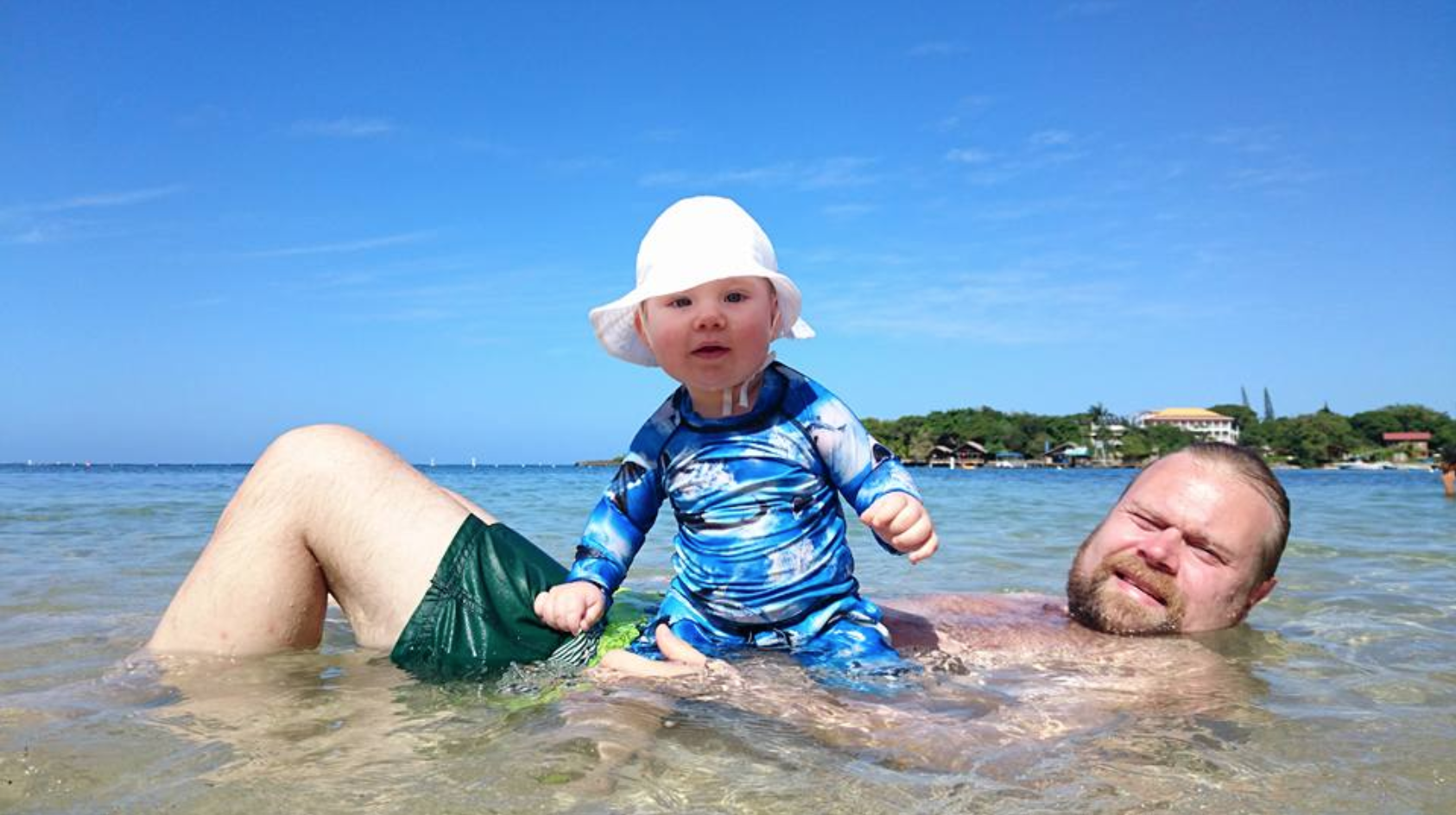
Yes, I know I just said you could buy pretty much everything you need for your kids on Roatan. The one thing the island is missing, though, is quality sun wear. Especially for toddlers, full body SPF rashguards just aren’t available, and if you manage to get your hands on one, they won’t be the quality you’re looking for. Sunscreen alone won’t protect your baby’s sensitive skin, and kids are shockingly resistant to being slathered up in sunscreen, so make sure to bring a hat and different sun wear options for them. If you can also accessorize your stroller with a sun canopy, do it.

Tip #3: Have a portable booster seat
A lot of restaurants won’t have booster seats or high chairs, so make sure your stroller can double as a chair, or bring a portable seat with you. Restaurants will try to be as accommodating as possible, but a lot of times they just don’t have the facilities.
Whether you’re staying in a hotel or renting a condo, it’s also highly likely that you’ll be feeding your baby at home, so you’ll want something that can keep your kid in place so that they don’t fall over while eating. I had never seen this before, but this In The Pocket Baby Seat may be the most useful, travel-friendly tool ever.

Tip #4: Netting is your friend
Nets are the best friend you will have as a parent of a toddler. Use mosquito netting over your baby’s stroller to make sure they don’t get bitten by mosquitoes and sand flies when you’re out having dinner. If you’re staying somewhere with open windows, cover your baby’s sleeping area with netting at night.
Use a netted bag to hold your baby’s belongings, like their diapers, formula and toys. Netted bags are great because they won’t collect the sand if you go to the beach, and you can see everything in the bag so you know if you’re missing something.
Tip #5: Car seats are hard to find on the island
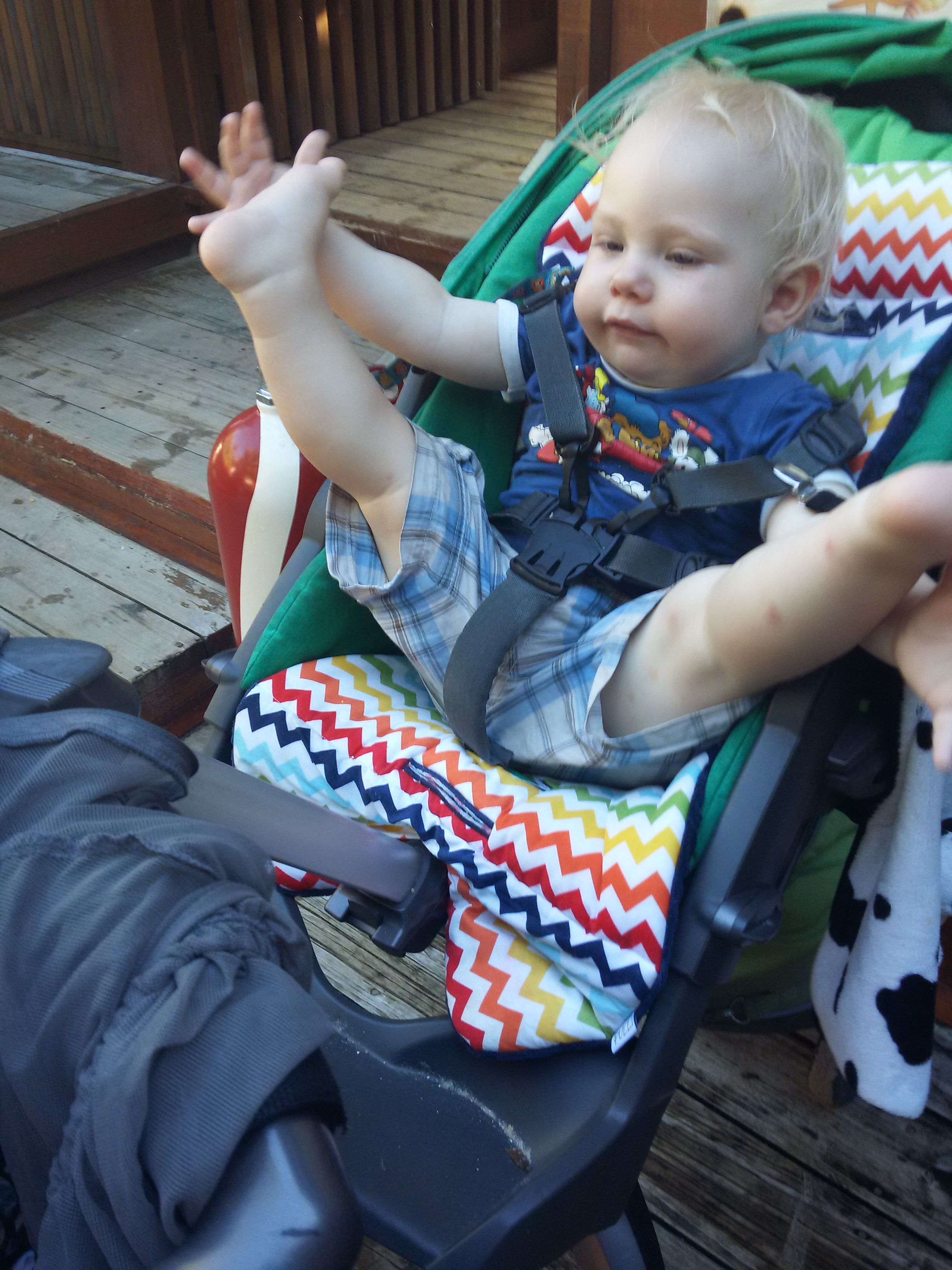
Based on what we’ve experienced so far, a lot of car rental companies on Roatan do not have car seats available. The bigger companies, like Avis, might have car seats, but the smaller companies probably won’t. If you have a stroller that can double as a car seat and a booster chair, that’s the best kind to bring to the island.
Bonus tip: Have fun and enjoy the moments with your little one. They're only this little once, so take advantage of the island of life and savor your time together.
3 interessante Fakten zur Geschichte von Roatán
Roatan ist eine coole Insel, das lässt sich nicht leugnen. Wir haben ein fantastisches, gut geschütztes Riff, eine interessante Vielfalt an Kulturen und eine üppige, hügelige Landschaft, die für die Karibik ungewöhnlich ist. Was macht Roatan noch einzigartig? Hier sind drei coole historische Fakten über Roatan, die du vielleicht noch nicht kanntest!
Fakt 1: Kolumbus „entdeckte“ die Bay Islands
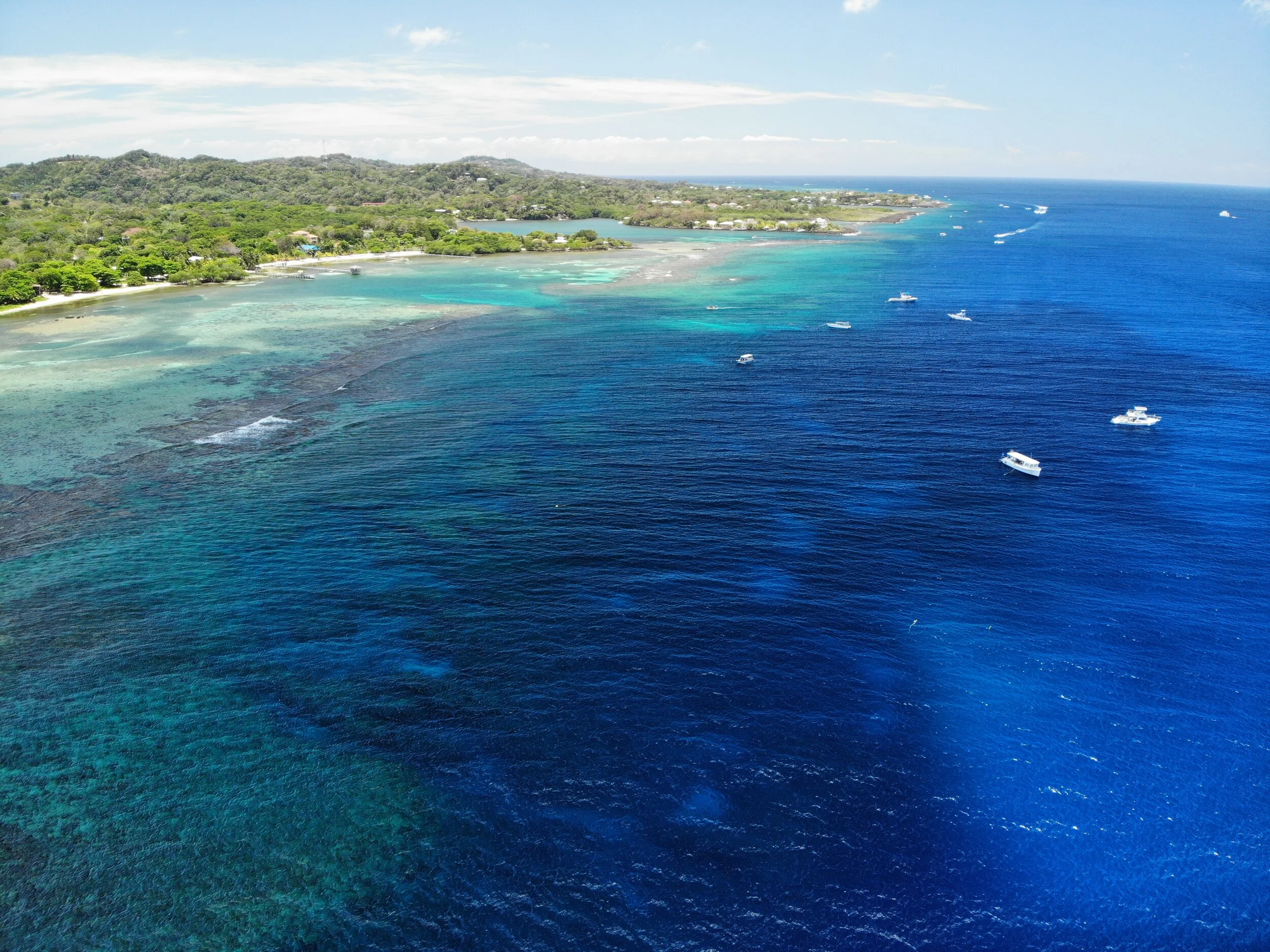
Roatán, Utila und Guanaja waren bereits dicht besiedelt, als Kolumbus sie 1502 entdeckte, doch erst durch seine „Entdeckung“ gelangten westliche Einflüsse auf die Inseln. Die Spanier und Briten begannen auf dem Festland mit dem Abbau von Silber und Gold, weshalb die Bay Islands nach Sklaven durchkämmt wurden, die in den Minen arbeiten sollten. Die ursprünglichen Bewohner der Bay Islands waren wahrscheinlich das Volk der Paya, und diejenigen, die nicht als Sklaven verschleppt wurden, erlagen den von den Spaniern eingeschleppten Krankheiten wie Masern und Pocken.
Der Name „Honduras“ bedeutet „Tiefen“ und leitet sich von den tiefen Gewässern vor der Küste des Landes ab. Christoph Kolumbus soll ausgerufen haben: „Gracias a Dios que hemos salido de esas Honduras! (Gott sei Dank, dass wir diese Tiefen hinter uns gelassen haben!)“, als er in Trujillo das später so benannte Cabo Gracias a Dios anlief, das ihm mitten in einem Sturm einen ruhigen Schutzort bot.
Fakt 2: Roatán war ein Treffpunkt für Piraten
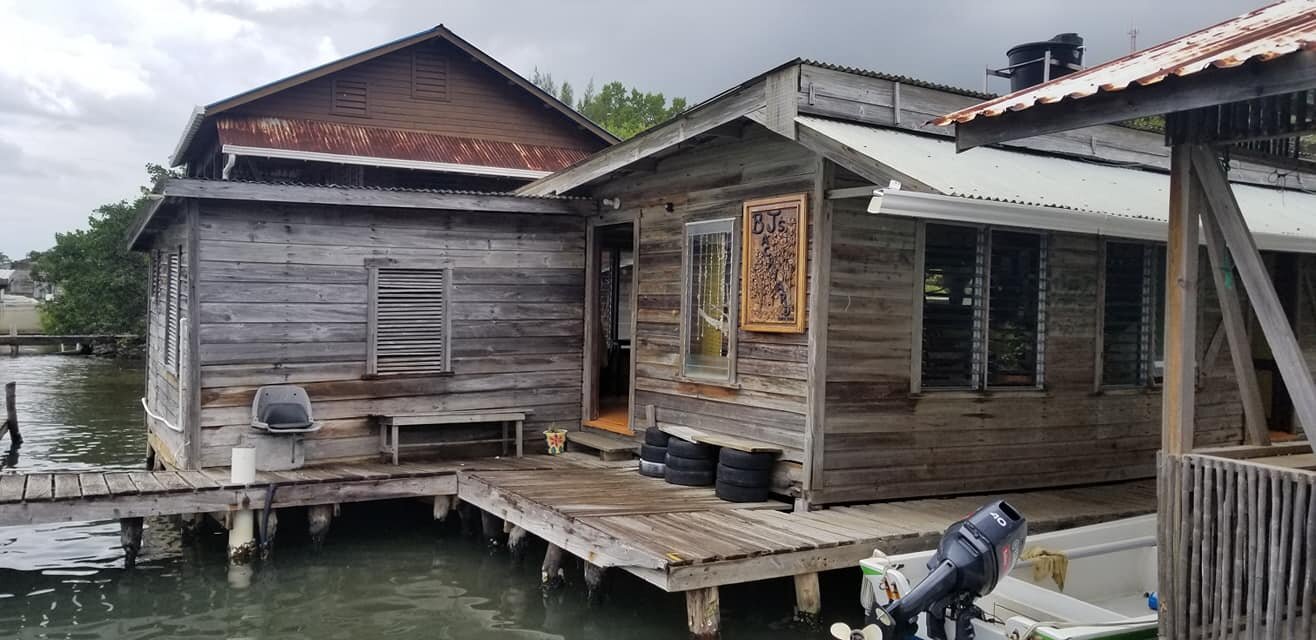
Piraten waren sicherlich nicht die ersten westlichen Bewohner von Roatán, aber sie waren wahrscheinlich die interessantesten. Französische und niederländische Piraten lauerten auf den Bay Islands auf vorbeifahrende spanische Galeonen, um deren Schätze zu rauben. Henry Morgan und Blackbeard gehörten zu den 5.000 Piraten, die im 17. Jahrhundert auf den Bay Islands zu Hause waren. Coxen Hole? Benannt nach einem weiteren berühmten Piraten, John Coxen.

Fakt 3. Die Garifuna wurden nach Roatán „deportiert“
Die Garifuna sind gemischte Nachkommen der Arawak-Indianer, der Insel-Kariben und afrikanischer Völker. Die britischen Kolonialisten bezeichneten sie auch als „Schwarze Kariben“.
Die Geschichte der Garifuna begann Ende des 18. Jahrhunderts, als etwa 2.500 Sklaven von den Briten auf der Insel zurückgelassen wurden (die Reise hatte mit 5.000 Menschen begonnen, doch die Hälfte von ihnen überlebte die Überfahrt nicht). Diejenigen, die nicht aufs Festland zogen, gründeten eine Siedlung namens Punta Gorda, die heute das kulturelle Zentrum der Garifuna auf Roatán ist. Als Kultur sind sie relativ jung – ihre Geschichte auf dieser Insel reicht nur etwa 200 Jahre zurück –, doch ihre Mischung aus britischer, spanischer und schwarzer Kariben-Kultur macht sie zu einem interessanten und wesentlichen Bestandteil der Geschichte von Roatán und Mittelamerikas.
Wusstest du diese coolen Fakten über Roatán schon, oder haben sie dich überrascht? Lass uns wissen, welche weiteren „3 coolen Fakten“ dich interessieren würden – sei es zum Thema Tauchen oder zu Honduras – und lass uns gemeinsam etwas Neues lernen!
5 köstliche Zubereitungsarten für Feuerfische
Egal, ob Sie Ihren Feuerfisch in Restaurants wie dem „Blue Marlin“ und dem „Cannibal Cafe“ im West End genießen oder ihn selbst zubereiten – hier sind 5 köstliche Zubereitungsarten für Feuerfisch!
Da das „Roatan International Lionfish Tournament and Cook-off 2019“ kurz bevorsteht, gibt es keinen besseren Zeitpunkt als jetzt, um Ihr Wissen über diese äußerst zerstörerischen, aber dennoch faszinierenden und schmackhaften Tiere aufzufrischen.
Der Feuerfisch ist ein so wunderschönes, prächtiges Tier, das leider schon seit einigen Jahrzehnten in die Karibik und nach Amerika vordringt. Für diejenigen unter uns, die in Australien und Südostasien mit dem Tauchen begonnen haben, sind Feuerfische ein willkommener Anblick, den wir unseren Tauchern gerne zeigen. Leider wurden sie durch menschliches Einwirken in unsere amerikanischen Gewässer freigesetzt, und nun stehen wir vor der Aufgabe, ihren Bestand zum Schutz unserer Riffe unter Kontrolle zu halten.
An einigen Orten, wie zum Beispiel auf Roatán, konnten wir die Invasion bis zu einem gewissen Grad eindämmen, zumindest innerhalb des Roatán-Meeresparks, doch an einigen Orten, die als erste betroffen waren und langsamer reagierten, kam es zu Invasionen apokalyptischen Ausmaßes.
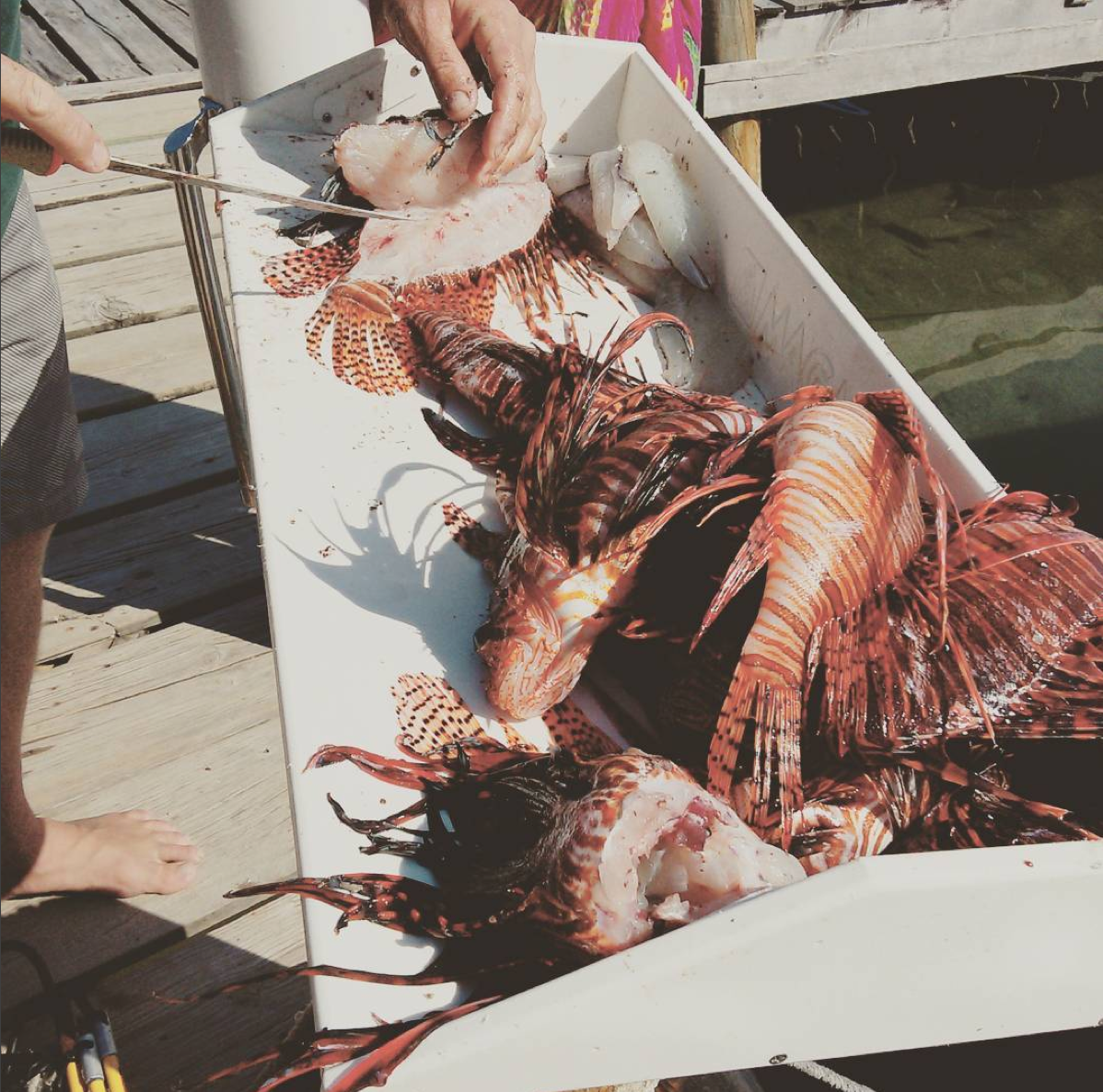
Nach einem erfolgreichen Ausflug zur Löwenfischjagd!
Zu unserem Glück – und zu ihrem Unglück – sind Feuerfische eine Köstlichkeit. Deshalb setzt man auf Roatán unter anderem darauf, Feuerfisch anstelle anderer, „traditionellerer“ Fischsorten wie Schnapper auf die Speisekarte zu setzen, um die Nachfrage zu steigern und es für die lokale Bevölkerung wirtschaftlich attraktiv zu machen, diesen Fisch anzubieten. Feuerfisch ist ein festfleischiger, weißer Fisch, der nicht besonders fettig ist und kaum nach Fisch schmeckt, sodass er auf unzählige köstliche Arten zubereitet werden kann.
Egal, ob Sie Ihren Feuerfisch in Restaurants wie dem „Blue Marlin“ und dem „Cannibal Cafe“ im West End genießen oder ihn selbst zubereiten – hier sind 5 köstliche Zubereitungsarten für Feuerfisch!
Rezept 1: Ceviche vom Feuerfisch
Ceviche ist ein Grundpfeiler der karibischen Küche, und dafür gibt es einen guten Grund. Es schmeckt köstlich, ist einfach zuzubereiten und muss nicht gekocht werden!
Den Feuerfisch in Limettensaft einlegen und eine Weile ziehen lassen, während Sie die anderen Zutaten vorbereiten. Zwiebeln, Tomaten, Paprika, Jalapeños (oder andere Chilischoten) und Knoblauch klein schneiden und miteinander vermengen. Den Feuerfisch und noch eine ordentliche Portion Limettensaft hinzufügen. Voilà! Als Dip für Chips oder als Beilage servieren.
Lust auf etwas Besonderes? Gib einfach etwas Mango oder Passionsfrucht dazu und zaubere ein echt tropisches Ceviche!
Rezept 2. Mit Speck umwickelter Feuerfisch
Mit Speck schmeckt doch alles besser, oder? Diese altbekannte Weisheit trifft auch auf den Feuerfisch zu. Schneide den Feuerfisch in kleine Scheiben, wickle sie in Speck ein und backe sie bei 350 Grad im Ofen, bis sie gar sind. Das ergibt eine hervorragende Vorspeise oder Beilage. Wenn du Lust auf etwas Ausgefallenes hast, verwende die Stacheln des Feuerfischs als Spieß, um alles zusammenzuhalten. Durch die Hitze werden die Giftstoffe in den Stacheln neutralisiert, und außerdem ist das ein cooler Gesprächsstoff. Sei nur vorsichtig beim Anfassen, denn die Stacheln sind so scharf wie Nadeln!
Rezept 3. Kokos-Feuerfisch-Curry
Da der Feuerfisch ein wunderbar festfleischiger, weißer Fisch ist, der weder fettig noch „fischig“ schmeckt, eignet er sich hervorragend für Currygerichte. Probieren Sie ihn doch einmal mit einem leichten Curry wie grünem oder rotem Curry anstelle eines schweren, dickflüssigen Currys, um den milden Geschmack des Fisches optimal zur Geltung zu bringen.
Wenn du kein großer Fan von Currys bist, kannst du auch etwas Kokosmilch mit Fischsauce, Ingwer, Knoblauch, Sesamöl, roten Chilischoten und schwarzem Pfeffer aufkochen und am Ende ein paar Feuerfisch-Schnitzel dazugeben, die du ein paar Minuten mitkochen lässt. Das passt hervorragend zu weißem Reis oder Reisnudeln mit einem Spritzer Limettensaft und Koriander.
Rezept 4. Panierter und frittierter Feuerfisch
Ich bin fest davon überzeugt, dass das Leben besser ist, wenn es paniert und frittiert ist. Das hält die Welt wirklich am Laufen. Man kann den Feuerfisch entweder vor dem Panieren marinieren oder ihn einfach nur mit Salz und Pfeffer würzen, dann mit Panko oder Kokosflocken panieren und frittieren. Mit Zitrone oder Tartarsauce garnieren. Guten Appetit!
Rezept 5. Pfannengericht mit Feuerfisch
Verleihen Sie Ihrem Gemüse-Pfannengericht mit etwas Feuerfisch das gewisse Etwas. Da der Feuerfisch nicht zu lange gegart werden sollte, braten Sie zunächst das Gemüse an und geben Sie den Feuerfisch erst gegen Ende hinzu. Probieren Sie doch einmal dunkelgrünes Gemüse wie Grünkohl, Pak Choi und Schnittlauch aus, um die wunderschönen weißen Fleischflocken des Feuerfischs besonders gut zur Geltung zu bringen. Ihr Magen wird es Ihnen danken.
Und das war’s auch schon: 5 köstliche Möglichkeiten, das Riff zu retten und einen Feuerfisch zu verspeisen!
Unsere Lieblingsquelle für alle unsere Lionfish-Rezepte ist das „Lionfish Cookbook“ von REEF. Wenn wir nach neuen kulinarischen Inspirationen suchen, ist das immer unsere erste Anlaufstelle – tun Sie sich also selbst einen Gefallen und kaufen Sie das Buch noch heute!
Wenn Sie während Ihres Aufenthalts auf Roatán lernen möchten, wie man Feuerfische jagt, bietet der Roatán Marine Park entsprechende Lizenzen an. Das Speerfischen ist auf Roatán grundsätzlich verboten, mit Ausnahme der Feuerfischjagd – dafür benötigen Sie jedoch eine Lizenz und einen zugelassenen Speer. Wenden Sie sich an Ihr Tauchzentrum oder besuchen Sie den Roatán Marine Park Eco Store in Half Moon Bay, um sich für den Kurs zur Erlangung der Feuerfisch-Lizenz anzumelden und mit der Jagd zu beginnen!
5 wichtige Tipps zum Packen für Roatan
Sind Sie schon einmal von einer Reise zurückgekommen und hatten das Gefühl, nur 10 % dessen genutzt zu haben, was Sie mitgenommen haben? Man packt leicht zu viel ein, besonders wenn man in heiße, tropische Gegenden reist. Auf Roatan herrscht eine sehr entspannte Atmosphäre und die Kleiderordnung ist leger. Um dir vor deiner Reise zu helfen, haben wir unsere 5 wichtigsten Packtipps für Roatan zusammengestellt. Einige dieser Tipps gelten allgemein für das Packen, andere speziell für Roatan. Schau dir also unsere fünf besten Tipps an und fang an zu packen!
Tipp 1: Legen Sie alles bereit
Bevor du anfängst, wahllos Dinge in deine Tasche zu stopfen, lege alles aus, damit du genau sehen kannst, was du mitnimmst. Erstelle eine Checkliste, am besten schriftlich, damit du genau notieren kannst, was du für deine Reise benötigst. 20 Hemden, ein Paar Pumps und nur eine kurze Hose einzupacken, ist für einen siebentägigen Urlaub auf einer Strandinsel vielleicht nicht ideal, aber wenn du nicht den Überblick behältst, merkst du vielleicht gar nicht, dass du all das eingepackt hast.
Sobald du alles ausgebreitet und einen Plan erstellt hast, rolle alles zusammen und packe es in deine Tasche. Hast du wenig Platz? Dann schau dir Tipp 2 an, um zu erfahren, wie es weitergeht!
Tipp 2: Bedürfnis vs. Wunsch
Es gibt eine Menge Sachen, die wir gerne mit in den Urlaub nehmen würden, aber wie viel davon brauchen wir wirklich? Wenn du nach Roatán reist, brauchst du eigentlich weder High Heels noch Wanderschuhe – ein Paar Flip-Flops und vielleicht Turnschuhe, falls du gerne Sport treibst, reichen völlig aus. Brauchst du wirklich ein schickes Kleid, wenn du in einem Hostel übernachtest, oder vier lange Hosen bei einer Luftfeuchtigkeit von 90 %? Wenn du diese Pumps oder diese schicken Kleider wirklich mitnehmen möchtest, nur zu – aber stelle sicher, dass du alle notwendigen Dinge bedeckt hast und genügend Platz hast, bevor du anfängst, deine Wunschsachen einzupacken.
Tipp 3: Auch ohne Schuhe wird der Service nicht beeinträchtigt!
Auf Roatán sind Schuhe eher eine Empfehlung als eine Vorschrift. Selbst in den gehobeneren Restaurants wie dem „Roatán Oasis“ oder dem „Ibagari“ sieht man mindestens einen Einheimischen, der barfuß dort sitzt. Nun sind Ihre Füße als Stadtmensch wahrscheinlich nicht robust genug, um hier ständig barfuß herumzulaufen, aber Sie müssen sich hier auch nicht an strenge Kleiderordnungen halten.
Dieser Tipp gilt zwar für alle, die sich für einen längeren Zeitraum auf Roatán aufhalten, jedoch nicht für Reisende auf Kreuzfahrtschiffen. Auf den meisten Kreuzfahrtschiffen findet ein Kostümabend statt, und wir sind uns ziemlich sicher, dass man die Restaurants auf dem Schiff nicht betreten darf, ohne zumindest ein Paar Flip-Flops zu tragen. Packen Sie also unbedingt mindestens ein Paar schicke Schuhe ein, wenn Sie eine Kreuzfahrt unternehmen.
Tipp 4: Wäsche waschen ist auf Roatán günstig
Wenn Sie für zwei Wochen nach Roatán kommen, müssen Sie nicht Kleidung für zwei Wochen einpacken. Überall auf der Insel gibt es Wäschereien, in denen Sie Ihre Kleidung abgeben können und die sie bis zum nächsten Tag gewaschen, getrocknet und gefaltet zurückbekommen. Und wir versprechen Ihnen: Niemand hier wird bemerken, dass Sie dasselbe Hemd zweimal in *oh Schreck* derselben Woche getragen haben. Sparen Sie sich also das schwere Gepäck und packen Sie leicht.
Nur zur Vorwarnung: Die Wäsche wird pro Pfund abgerechnet. Normalerweise kostet das etwa 45 Lempiras oder 2,00 bis 2,50 Dollar pro Pfund. Achten Sie also darauf, keine klatschnassen Kleidungsstücke abzugeben, sonst wird die Rechnung deutlich höher ausfallen. Außerdem gibt es hier keine chemische Reinigung, bringen Sie also besser keine edlen Seidenkleider mit. Baumwolle ist der Stoff, aus dem unser Leben gemacht ist.
Tipp 5: Lassen Sie Platz für Souvenirs
Egal, wohin du reist, du wirst bestimmt Souvenirs mit nach Hause nehmen wollen – entweder als Andenken für dich selbst oder als Geschenke für Familie und Freunde.
Wenn Sie nach besonderen, nicht alltäglichen Souvenirs suchen, sollten Sie bei „Rusty Fish“ vorbeischauen. Dort werden Einheimische darin geschult, Materialien aus der Müllhalde – wie beispielsweise Texaco-Ölfässer – zu coolen Wanddekorationen und Magneten zu verarbeiten. In den Geschäften des Roatan Marine Park werden T-Shirts und Sweatshirts mit dem Logo des Roatan Marine Park sowie lokal hergestellter Honig, Schmuck, Essig und Marmeladen verkauft, wobei der Erlös dem Meerespark und den lokalen Gemeinden zugutekommt. „Rusty Fish“ und der Roatan Marine Park haben Geschäfte im West End sowie an beiden Kreuzfahrthäfen. Egal, ob Sie nur einen Tag oder eine Woche bleiben – hier finden Sie ein tolles Andenken an Roatan, das keineswegs kitschig ist.
Und wenn du willst, dass deine Freunde dich wirklich lieben, besorg dir doch mal einen guten alten karibischen Rum!
Das waren sie also, unsere fünf besten Tipps zum Packen für Roatan! Viel Spaß beim Packen und bis bald!
5 Überlebenstipps für Zwischenstopps
Zwischenstopps sind nervig. Ob kurz oder lang – das spielt keine Rolle, Zwischenstopps machen keinen Spaß. Und selbst wenn man davon ausgeht, dass ein Zwischenstopp nur kurz sein wird, besteht eine hohe Wahrscheinlichkeit, dass der Anschlussverkehr Verspätung hat oder ausfällt. Deshalb ist es wichtig, auf jede Art von Verkehrsproblemen vorbereitet zu sein.
Mit dem technologischen Fortschritt ist die Welt kleiner geworden. Man kann mit Menschen aus verschiedenen Kulturen und mit unterschiedlichen Sprachen auf der ganzen Welt in Kontakt treten, das Smartphone hat Bücher und Münztelefone abgelöst, und man kann an Orte reisen, deren Namen man nicht einmal aussprechen kann!
Und wo wir gerade beim Thema Reisen sind … Zwischenstopps sind nervig. Ob kurz oder lang, das spielt keine Rolle – Zwischenstopps machen keinen Spaß. Und selbst wenn man davon ausgeht, dass ein Zwischenstopp nur kurz sein wird, besteht eine hohe Wahrscheinlichkeit, dass der Anschlussflug Verspätung hat oder ausfällt. Deshalb ist es wichtig, auf jede mögliche Verkehrskrise vorbereitet zu sein.
Ein wenig Hintergrund: Ich war auf dem Weg von Los Angeles nach Roatán und hatte einen geplanten 90-minütigen Zwischenstopp in San Salvador. Ich habe schon Reisen mit sehr langen Zwischenstopps erlebt und war darauf vorbereitet, aber dies war das erste Mal, dass sich mein Zwischenstopp in geradezu katastrophales Ausmaß verzögerte (katastrophal, das kann ich euch sagen!). Wir verbrachten zwei Tage lang jeweils etwa zehn Stunden am Flughafen (am ersten Tag von 7 Uhr bis 17 Uhr, am zweiten von 6 Uhr bis 15:30 Uhr), dazwischen eine Nacht in einem Flughafenhotel. Es gab viel Hin und Her mit dem Personal der Fluggesellschaft, eine Umleitung des Fluges und viele Menschen, die (zu Recht) in Panik gerieten und ziemlich wütend wurden, bevor wir eine Lösung finden konnten. Es war ein ziemliches Chaos und sehr anstrengend. Ich glaube, ich habe es besser verkraftet, weil ich nach Hause flog und nicht auf einen kostbaren einwöchigen Urlaub, der gerade um ein paar Tage gekürzt worden war. Ich geriet nicht in Panik, aber ich war ganz sicher nicht glücklich darüber, am Flughafen festzusitzen – fern von meinem Mann und meiner Arbeit – ohne nennenswerte Neuigkeiten oder Informationen.
Egal, ob du mit dem Flugzeug, dem Bus oder dem Schiff reist – wenn du reisen und die Welt entdecken willst, wirst du im Laufe deines Lebens immer wieder Zwischenstopps in Kauf nehmen müssen. Lass uns also unsere fünf besten Tipps zum Überstehen von Zwischenstopps besprechen!
Tipp 1: Packen Sie einen Satz Wechselkleidung in Ihr Handgepäck.
Wenn Sie kein Gepäck aufgeben möchten, können Sie gleich weitergehen. Der Nächste bitte!
Wenn Sie Gepäck aufgeben, sollten Sie unbedingt einen Satz Wechselkleidung in Ihrem Handgepäck verstauen – für den Fall, dass Sie am Flughafen festsitzen oder zu einem Hotel gebracht werden müssen, ohne Zugang zu Ihrem aufgegebenen Gepäck zu haben. Damit Ihr Handgepäck leicht bleibt und Sie effizient packen können, beschränken Sie sich einfach auf saubere Unterwäsche und ein Hemd aus leichtem, dünnem Material, das sich leicht zusammenrollen und irgendwo verstauen lässt. Verspätungen sind eher psychisch als körperlich anstrengend, und frische Kleidung zum Wechseln kann Ihnen einen kleinen Energieschub geben – und sei es nur für einen kurzen Moment.
Tipp 2: Schichten, Schichten, Schichten
Flughäfen, Busse und Flugzeuge sind furchtbar kalt. Ich friere jedes einzelne Mal fast zu Tode. Im Laufe der Jahre habe ich gelernt, dass ich, anstatt ein dickes Sweatshirt oder einen Hoodie mitzunehmen, lieber auf dünnere Schichten setzen sollte, damit sie weniger Platz in meiner Tasche wegnehmen und ich meine Kleidung je nach Temperatur ändern kann. Es ist nicht ungewöhnlich, dass die Temperatur in kleinen Schritten steigt und fällt, und man möchte nicht, dass die einzigen beiden Optionen darin bestehen, entweder heißer als die Hölle oder eiskalt wie in der Arktis zu sein. Ich habe immer eine dünne Strickjacke und einen Schal dabei, ebenso wie ein Paar Socken. Ich habe einen wunderschönen Schal, den mir eine Freundin vor 10 Jahren aus Saudi-Arabien mitgebracht hat; er ist groß genug, um auch als Kissen oder Decke zu dienen, und passt einfach zu allem, was ich besitze. Dieser Schal hat mich um die ganze Welt begleitet, und ich werde ihn mit auf Reisen nehmen, bis er sich in Luft auflöst.
Tipp 3: Bücher sind sexy
Ich hatte für diese Reise kein Buch mitgenommen (weil „der Zwischenstopp so kurz ist, dass ich keine Zeit zum Lesen haben werde“) und habe das zutiefst bereut. Ich war zwar so klug, meinen Laptop und mein Handy vor dem ersten Flug vollständig aufzuladen, aber nachdem ich 10 Stunden lang am Flughafen festsaß, musste ich sie schließlich doch wieder aufladen. Meine Akkus waren schneller leer als sonst, weil ich in dem ganzen Chaos oft zu Hause angerufen habe und außerdem versucht habe, etwas Arbeit zu erledigen, da ich ja sowieso festsaß. Ich hatte zwar das Glück, eine Steckdose in der Nähe zu finden, aber wenn ein Flug Verspätung hat und 100 Passagiere Strom brauchen, es aber nur zwei Steckdosen gibt, fließt Blut. Ein Buch hätte mir geholfen, die Zeit schneller zu vertreiben, und mir neben der Arbeit eine weitere Ablenkung von den endlosen Verspätungen geboten.
Wenn man kein schweres Buch mit sich herumschleppen möchte, ist ein E-Reader wie der Kindle eine tolle Möglichkeit, mehrere Bücher in einem schlanken Gerät mitzunehmen. Die Akkulaufzeit dieser Geräte ist normalerweise sehr gut, sodass man lange damit auskommt, und ihre Bildschirme sind so gestaltet, dass die Augen nicht so schnell ermüden! Ein Mitreisender hat mir außerdem sehr freundlicherweise sein tragbares Ladegerät geliehen, als ich keine Steckdose finden konnte, und das hat mir ebenfalls sehr geholfen. Ich denke, für meine nächste Reise werde ich mir auch ein tragbares Ladegerät zulegen, damit ich nicht in Panik gerate, wenn ich sehe, dass mein Akku-Stand sinkt.
Tipp 4: Tragen Sie immer einen Universaladapter bei sich
Und wenn wir schon beim Thema „Aufladen“ sind: Nehmen Sie auf Reisen immer einen Universaladapter in Ihrem Handgepäck mit. Man weiß nie, welche Steckdosen man unterwegs vorfindet, und Sie möchten sicher nicht, dass Ihnen der Akku ausgeht, Sie eine Steckdose finden und dann feststellen, dass Sie Ihr Gerät nicht anschließen können! Universaladapter sind relativ günstig, klein und können Ihnen so manchen Ärger ersparen.
Tipp 5: Halten Sie immer einen Snack griffbereit
Flughäfen können extrem teuer sein, und manchmal gibt es dort außer Bier, Burgern und Brezeln kaum etwas zu essen. Damit du nicht so hungrig wirst, dass du am Ende den ganzen Burger King aufkaufst, solltest du ein paar Snacks zum Mitnehmen wie Schokolade, Studentenfutter oder Nüsse in deiner Tasche haben. Sogar Sandwiches reichen schon aus! Sei aber rücksichtsvoll gegenüber den Menschen um dich herum und vermeide besonders stark riechende Speisen wie indisches Lammcurry. Oder gefüllte Eier. Oder Knoblauchtoast.
Bonus-Tipp: Sei freundlich
Das musste ich mir während meiner beiden 10-Stunden-Schichten am Flughafen immer wieder ins Gedächtnis rufen. Es ist nicht die Schuld des Personals, dass der Flug ausfällt oder Verspätung hat. Die Mitarbeiter stehen in der Schusslinie und müssen sich den Ärger und die Vorwürfe aller anhören, aber niemand reagiert besonders gut darauf, wenn man ihn anschreit, und wenn man seine Frustration an ihnen auslässt, führt das nur dazu, dass sie einem nicht mehr helfen wollen.
Und sei nicht nur zum Personal freundlich. Sei auch zu deinen Mitreisenden freundlich. Sei zuvorkommend. Wenn jemand Hilfe braucht, hilf ihm. Egal, wie schlecht dein Tag auch sein mag – jemand anderem geht es wahrscheinlich noch viel, viel schlechter, und schon ein kleines bisschen Freundlichkeit kann für diese Person der einzige Lichtblick des Tages sein. Es kostet dich nichts, freundlich zu sein, aber für jemand anderen kann es die Welt bedeuten.
Am Flughafen festzusitzen muss kein Ereignis sein, bei dem man sich isoliert fühlt oder das Menschen voneinander trennt. Die Passagiere unseres Fluges haben sich tatsächlich sehr gut miteinander angefreundet, und obwohl ich mir wünschte, ich wäre nicht so lange festgesessen, bin ich auch dankbar, dass ich die Gelegenheit hatte, einige fantastische Menschen kennenzulernen und ausnahmsweise einmal in der Lage war, anderen zu helfen.
Während dieses sehr langen Zwischenstopps habe ich viel über mich selbst gelernt – vor allem, dass ich tatsächlich in der Lage bin, mich nicht so sehr zu stressen und das große Ganze zu sehen, und dass es eben so ist, wenn etwas außerhalb meiner Kontrolle liegt. Ich habe gesehen, wie Menschen freundlich zueinander waren und sich umeinander gekümmert haben, und das hat mir wieder einmal vor Augen geführt, dass die Menschen in der Lage sind, über ihren eigenen Tellerrand hinauszuschauen und sich auf andere zu konzentrieren. Das war eine Erinnerung, für die ich dankbar war, und ich hoffe, dass ich diese Lektionen so schnell nicht vergesse.