
3 sitios de Roatán en los que deberías bucear con Nitrox
El aire enriquecido contiene un mayor porcentaje de oxígeno y un menor porcentaje de nitrógeno que el aire normal, lo que permite al buceador ampliar su límite sin descompresión (o tiempo de inmersión). En algunos de nuestros puntos de inmersión, dada su topografía y profundidad, nos resulta más agradable bucear con aire enriquecido Nitrox (EANx32).
Una de las muchas ventajas de bucear en Roatán es la gran cantidad de puntos de inmersión disponibles muy cerca de la costa, con condiciones tranquilas y arrecifes que comienzan a poca profundidad, lo que nos permite bucear fácilmente con aire.
A pesar de que la mayoría de nuestros puntos de inmersión son idóneos para bucear con aire, contamos con muchos buceadores certificados en Nitrox a los que les gusta bucear con aire enriquecido debido a sus numerosas ventajas. Aunque todo se reduce a una cuestión de preferencias personales, hay algunos puntos de inmersión aquí en Roatán en los que recomendamos encarecidamente bucear con Nitrox para poder disfrutar de tiempos de fondo más prolongados.

El aire enriquecido contiene un mayor porcentaje de oxígeno y un menor porcentaje de nitrógeno que el aire normal, lo que permite al buceador ampliar su límite sin descompresión (o tiempo de inmersión). En algunos de nuestros puntos de inmersión, dada su topografía y profundidad, nos resulta más agradable bucear con aire enriquecido Nitrox (EANx32). Contar con la certificación de buceador de aire enriquecido y bucear con Nitrox te permitirá explorar estos puntos al máximo y garantizar un perfil conservador.
1. El naufragio del Odyssey
Este buque de carga mide 300 pies/100 m de eslora y se encuentra a unos 20 minutos en barco desde West End. Hundido en 2002, el pecio yace sobre el lecho arenoso a 110 pies/30,5 m de profundidad, y bucear con Nitrox te permite explorar la eslora y la estructura de este buque con un amplio margen de tiempo sin descompresión.
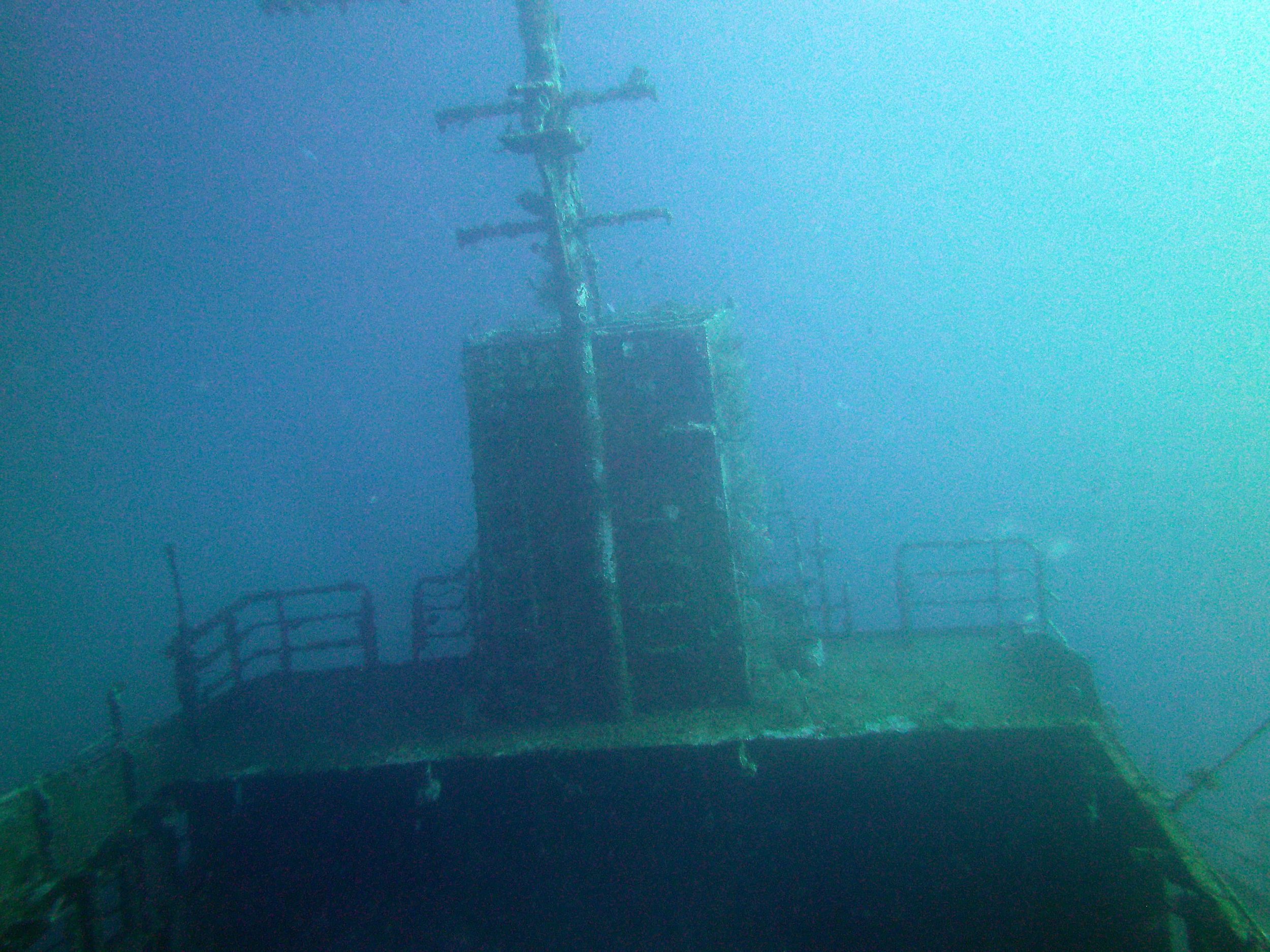
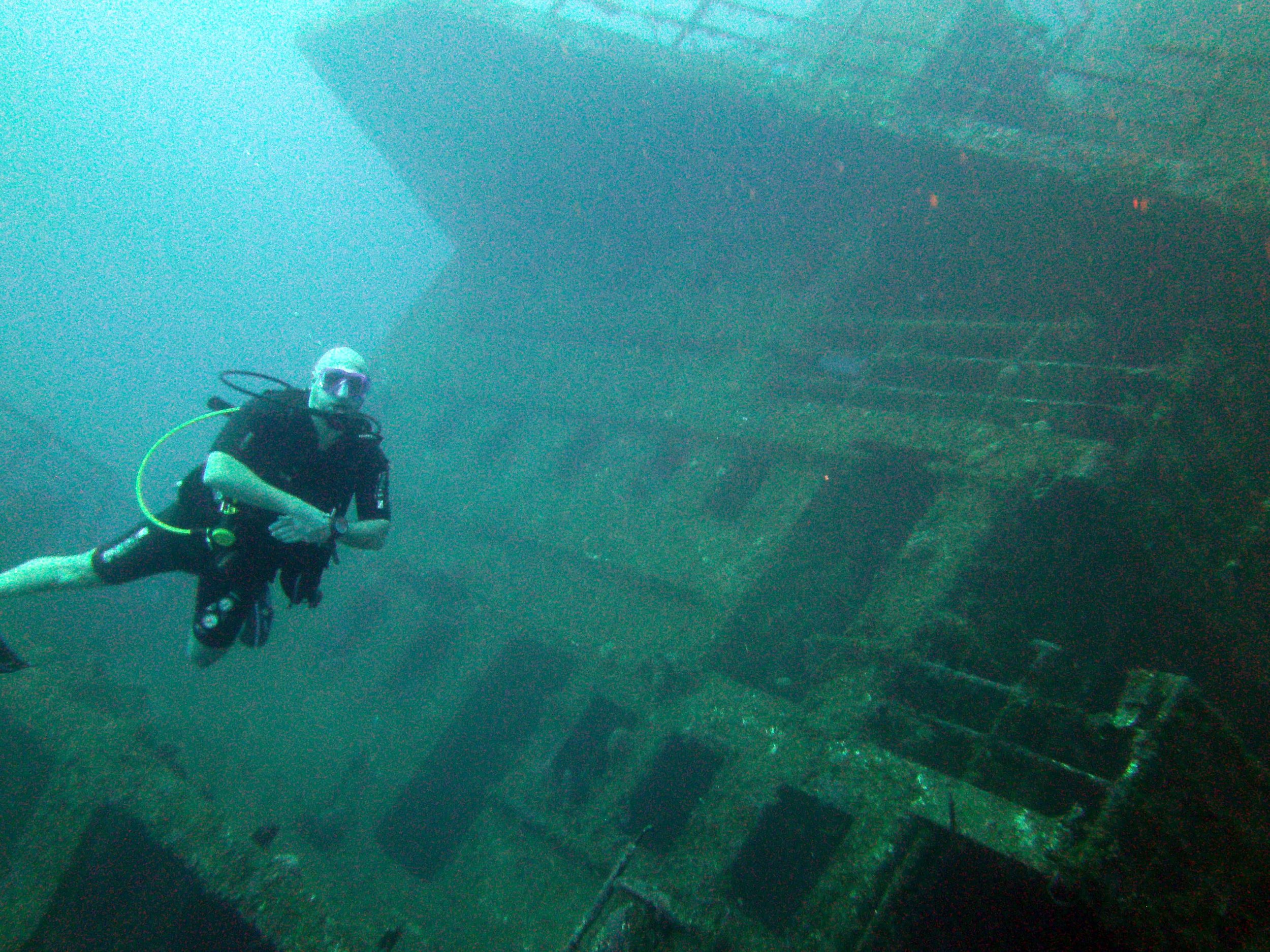
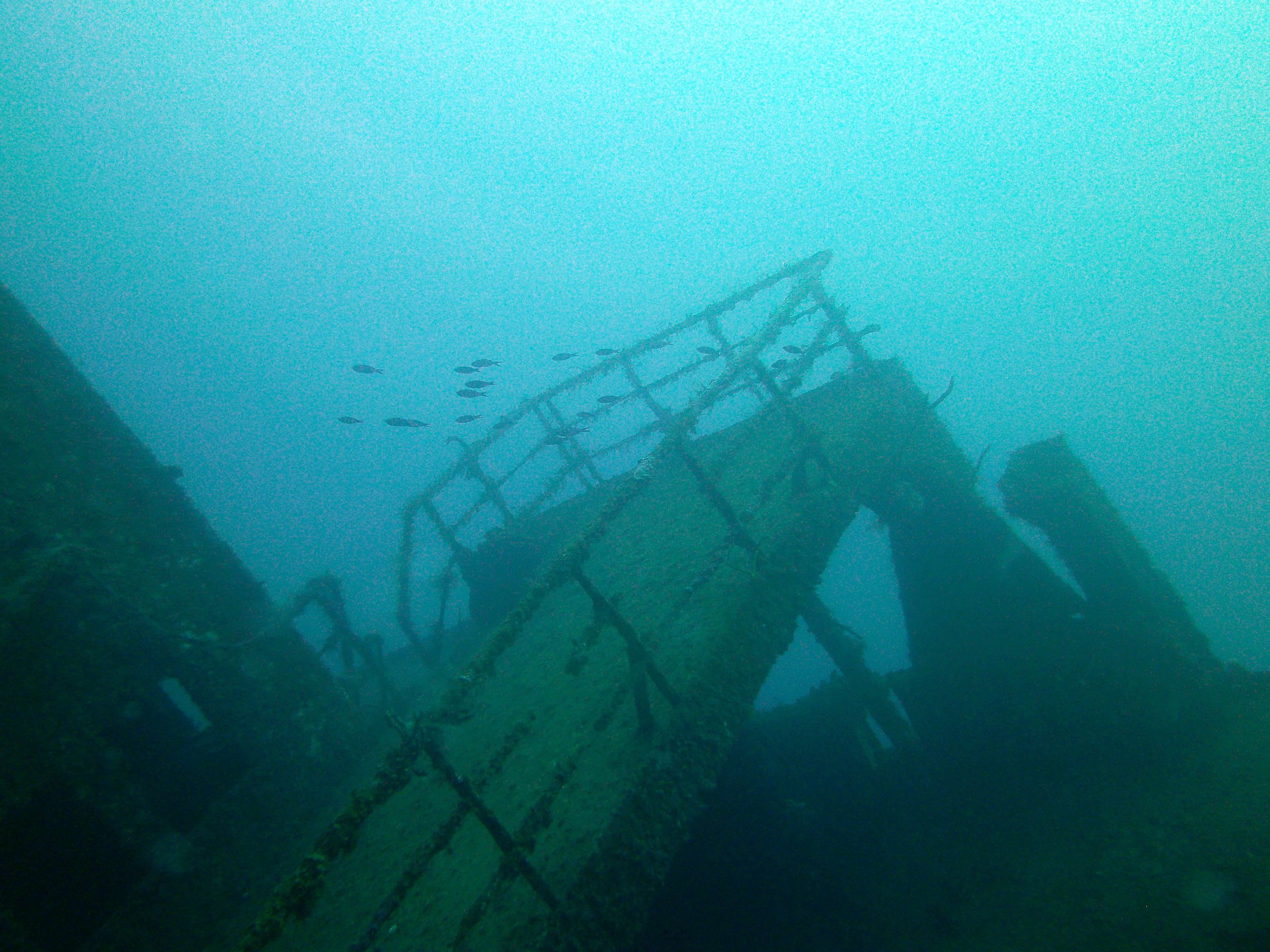
Por ejemplo, según las tablas de inmersión sin descompresión de la NOAA (Administración Nacional Oceánica y Atmosférica), un buceador que utilice Nitrox 36 (o Nitrox II de la NOAA) puede permanecer hasta 50 minutos a 90 pies/27 metros de profundidad en el mar, mientras que un buceador que utilice aire solo puede permanecer un máximo de 30 minutos a esa profundidad.
2. El punto
¡Este es uno de los puntos de inmersión más solicitados por los buceadores y también uno de los favoritos del equipo! A menos de 10 minutos en barco desde West End, este punto abarca el extremo sur de la isla. Es famoso por sus esponjas barril gigantes, sus gorgonias y sus aguas ricas en nutrientes, que atraen a montones de peces dispuestos a alimentarse. Debido a la topografía de este lugar, nos gusta bucear aquí con Nitrox, ya que nos permite explorar el acantilado, así como la amplia meseta (la zona por la que The Point es famoso) con una profundidad media de 50 pies/15 metros.
Las condiciones meteorológicas en este lugar pueden variar de un día para otro, por lo que nos gusta comprobarlas para asegurarnos de que el viento y las posibles corrientes sean adecuadas para que la inmersión siga siendo divertida y agradable.
3. Los montes submarinos de los Cayos Cochinos
Los montes submarinos de Cayos Cochinos se encuentran a 18 millas de la punta de Roatán y se puede llegar a ellos mediante una excursión especial en barco de alquiler con dos botellas (si el tiempo lo permite); la experiencia es sencillamente fenomenal cuando las condiciones son las adecuadas. Ninguno de los montes submarinos sobresale de la superficie, y los que se pueden explorar alcanzan profundidades que oscilan entre las 70 pies (21 m) y las 40 pies (12 m). Para aprovechar al máximo el tiempo de fondo en cada inmersión, recomendamos encarecidamente el uso de Nitrox, al menos en la primera inmersión. Los corales de los montes submarinos gozan de buena salud y son de colores vivos, y tendrás la oportunidad de ver multitud de bancos de peces de diferentes especies merodeando por el arrecife mientras se alimentan.
Ahora bien, el hecho de que recomendemos el Nitrox para estos puntos de inmersión no significa que no puedas bucear en ellos con aire. ¡Simplemente creemos que estos puntos en concreto se disfrutan más cuando puedes pasar más tiempo explorando su topografía más profunda!
¿Aún no eres buceador certificado en Nitrox? ¡No te preocupes, es un curso divertido, fácil y muy provechoso! La certificación PADI Enriched Air Diver se puede obtener en unas pocas horas, así que no tendrás que dedicarle todas tus vacaciones. Consulta en tu centro de buceo local o escríbenos, ¡y estaremos encantados de ayudarte a bucear con EANx32!
¿Estoy preparado para hacer el curso PADI Advanced Open Water?
Para muchos buceadores de aguas abiertas, el curso Advanced Open Water puede parecer una titulación difícil de conseguir o incluso intimidante. ¿Tengo lo que hace falta para ser un buceador avanzado? ¿Y por qué debería hacer un curso como este?
¡No os preocupéis, amigos buceadores! Vamos a aclarar qué se necesita para completar vuestro curso PADI Advanced Open Water.
Para muchos buceadores de aguas abiertas, el curso Advanced Open Water puede parecer una titulación difícil de conseguir o incluso intimidante. ¿Tengo lo que hace falta para ser un buceador avanzado? ¿Y por qué debería hacer un curso como este?
¡No temáis, amigos buceadores! Vamos a aclarar qué hace falta para completar vuestro curso PADI Advanced Open Water. El entusiasmo no es obligatorio, ¡pero es una gran ventaja!

El curso Advanced tiene una duración mínima de dos días y consta de cinco inmersiones de aventura PADI.
PADI ofrece muchos tipos de inmersiones de aventura entre las que elegir. Las inmersiones de «Navegación subacuática» y «Inmersión profunda» son obligatorias, por lo que te quedan otras tres inmersiones de aventura que puedes elegir. Aquí, en Roatan Divers, las inmersiones de aventura más populares que impartimos son la «Inmersión nocturna», la «Inmersión a la deriva», la «Inmersión naturalista» y la «Flotabilidad óptima».
Tiempo en el aula: En el curso Avanzado, debes completar los repaso de conocimientos correspondientes a las inmersiones de aventura que hayas elegido y, tras una sesión informativa exhaustiva a cargo de tu instructor PADI, realizarás una inmersión en aguas abiertas para poner en práctica lo aprendido. A diferencia del curso PADI Open Water Diver, no hay ejercicios en aguas confinadas.
¿Por qué debería hacer el curso de buceo PADI Advanced Open Water Diver?

¡Nos encanta que nos hagan esta pregunta! Uno de los motivos más habituales por los que los buceadores se decantan por esta certificación es su deseo de realizar inmersiones más complejas y aventureras. ¿Quizás una inmersión profunda al pecio del «El Águila», que se encuentra a 30 m/100 pies? ¿O tal vez una inmersión nocturna para contemplar la mágica bioluminiscencia? O bien, mejorar la flotabilidad para tener el control y la confianza necesarios para evitar el contacto no deseado con el arrecife al observar la fauna marina más pequeña.
Las inmersiones profundas y nocturnas, tan populares, pueden resultar un poco más complejas, por lo que requieren conocimientos adicionales y hay que tener en cuenta ciertos aspectos de seguridad. Este curso te permite ampliar tus habilidades y tu confianza para convertirte en un buceador más completo.
Una de las mayores dificultades para los buceadores noveles es lograr un mejor control de su posición y flotabilidad durante una inmersión. La inmersión de «flotabilidad óptima» (Peak Performance Buoyancy) es una gran oportunidad para experimentar y ponerte a prueba en este ámbito. ¡Incluso puede ayudarte a mejorar tu consumo de aire mientras lo practicas!
Ideas erróneas comunes
Aclaremos algunos de los mitos que podrían estar impidiéndote empezar tu curso PADI Advanced Open Water.

No hay un número mínimo de inmersiones obligatorio si ya tienes el título de PADI Open Water o Junior Open Water Diver.
Como buceador PADI Open Water, estás certificado para bucear hasta una profundidad de 18 m/60 pies, por lo que, si deseas bucear a mayor profundidad, te recomendamos encarecidamente que realices una formación adicional.
Los buceadores de Open Water mayores de 15 años pueden participar en TODAS las inmersiones de aventura disponibles en el curso PADI Advanced Open Water. Una vez completado el curso, estarán certificados para bucear hasta una profundidad de 30 m/100 pies.
Los buceadores Junior Open Water mayores de 12 años también pueden participar en muchas de las inmersiones de aventura. Tras completar el curso Advanced, obtendrán una certificación de hasta 21 m/70 pies, que se ampliará automáticamente a 30 m/100 pies cuando cumplan 15 años.
Ahora que ya sabes mejor en qué consiste el curso PADI Advanced Open Water, ¡puedes consultar en tu centro de buceo local si es el curso adecuado para ti!
Si te interesa hablar con nosotros o tienes alguna pregunta más, ¡ponte en contacto con nosotros hoy mismo!
¡Probemos el buceo!
Te encanta el mar y disfrutas haciendo snorkel. Sin embargo, a veces te gustaría poder acercarte un poco más al arrecife y a todos los peces, y te vendría bien que entrara menos agua salada en tu tubo de snorkel. Has oído que se tarda unos días en obtener el título de buceo, y no estás seguro de estar preparado para dar un paso tan grande. ¿Qué opciones tienes?
Te encanta el mar y disfrutas haciendo snorkel. Sin embargo, a veces te gustaría poder acercarte un poco más al arrecife y a todos los peces, y te vendría bien que entrara menos agua salada en tu tubo de snorkel. Has oído que se tarda unos días en obtener el título de buceo, y no estás seguro de estar preparado para dar un paso tan grande. ¿Qué opciones tienes?
¡No te preocupes, ya está aquí el programa «Discover Scuba Diving» de PADI! Del mismo modo que puedes probar un coche antes de comprarlo, puedes probar el buceo antes de realizar el curso de certificación. El programa PADI Discover Scuba Diving es un curso de medio día de duración que te introduce en el mundo submarino, al tiempo que te enseña a manejar el equipo y las habilidades básicas de seguridad bajo el agua. Podrás vivir una inmersión real, igual que los buceadores certificados, todo ello bajo la supervisión de un instructor PADI para garantizar tu seguridad y comodidad.

En Roatan Divers, nuestro programa PADI DSD habitual es el siguiente:
1. Tu instructor te explicará lo esencial que debes saber sobre el buceo, tu equipo y algunas técnicas básicas de buceo. También verás un breve vídeo del programa PADI DSD que te ayudará a visualizar tu experiencia submarina.
2. ¡Ahora es el momento de empezar a hacer burbujas! Entrarás en aguas poco profundas con tu instructor para practicar algunas habilidades subacuáticas. Normalmente lo hacemos en la preciosa Half Moon Bay, situada justo al lado del centro de buceo, donde podrás familiarizarte con tu equipo de buceo y practicar cómo será bucear en aguas abiertas.
3. Ya has ganado algo de confianza y ahora te dispones a realizar una inmersión a una profundidad máxima de 12 m/40 pies en el mar Caribe. Tu instructor evaluará las condiciones meteorológicas y del agua y elegirá un punto de inmersión que se adapte perfectamente a tu nivel de experiencia. Contamos con más de 30 puntos de inmersión a menos de 10 minutos en barco desde el centro de buceo, ¡así que hay un montón de posibilidades!

Cuando te embarques en tu experiencia «Discover Scuba Diving» de PADI, siempre contarás con la compañía de tu instructor PADI, un profesional con amplia experiencia, que se encargará de que todo salga a la perfección y de que disfrutes de la mejor experiencia posible mientras buceas y exploras el saludable y vibrante arrecife mesoamericano.
Si te ha gustado tu experiencia «Discover Scuba Diving» de PADI y quieres bucear un poco más, ¡dínoslo y organizaremos más inmersiones DSD contigo y tu instructor! Y si te has aficionado al buceo y estás listo para ampliar tus habilidades y tu formación, el curso PADI Open Water Diver es lo que necesitas. Ponte en contacto con nosotros si tienes alguna duda o estás listo para empezar tu aventura de buceo, ¡y déjanos ayudarte a planificar la experiencia de tu vida!
Cómo prevenir las infecciones de oído
How much of a bummer is it to get an ear infection partway through your scuba diving holiday? A big bummer, that's how much.
How much of a bummer is it to get an ear infection partway through your scuba diving holiday? A big bummer, that's how much. The best treatment for an outer ear infection (a skin rash) is to stay out of the water, and the treatment for an inner ear infection is antibiotics and staying out of the water, and neither of these bode well for a hard earned holiday under the sea.
However, there's hope: like with most other things, prevention is easier than treatment. If your ears are especially sensitive, letting seawater, which contains bacteria, just sit in your ear all day creates an ideal environmental for more bacteria and fungus to grow, so you need to make sure to clean your ears out after each dive. There are ear drops on the market that you can purchase, or it's easy to make your own as well.
The best homemade ear treatment is a 50/50 mix of rubbing alcohol and white vinegar. Pour some of the mix into your ear, let it sit for a minute while you massage it around, then pour it out. The rubbing alcohol dries your ear out, while the vinegar balances the pH so that it's harder for bad bacteria and fungus to grow. You'll smell like a salad, but your ears will be fresh and clean.
If you don't have rubbing alcohol and vinegar on hand, you can also at least rinse your ears out with warm water. If you don't have access to a hot shower, mix hot and cold drinking water and pour it into your ear. The most important thing is to get rid of the salt water.
And no matter what anyone says, please don't pour hydrogen peroxide in you ear. The bubbles might feel cool, but you may be doing irreversible damage to your ear.
So there you go, it's super easy to prevent ear infections! We hope you have a wonderful holiday filled with lots of diving, and with none of that painful ear nonsense.
¡Que disfrutes del buceo!
4 buenas razones para hacer tu inmersión PADI Deep Adventure
Como buceador autónomo y certificado, puedes descender a cualquier profundidad que desees, y muchos centros de buceo de todo el mundo te permitirán superar los límites de tu certificación; sin embargo, hay varias razones por las que deberías realizar tu inmersión PADI Deep Adventure antes de descender a más de 18 metros/60 pies.
¡Enhorabuena, ya eres buceador certificado! Como PADI Open Water Diver, estás cualificado para planificar y realizar una inmersión por tu cuenta con un compañero hasta una profundidad máxima de 18 metros/60 pies. Estás en el buen camino hacia una emocionante aventura submarina y una profunda conexión con las aguas del planeta.

Aunque en muchos lugares, sobre todo en Europa y Norteamérica, planificarás y realizarás las inmersiones solo con un compañero de buceo o bajo la supervisión indirecta de un profesional del buceo, también hay muchos lugares en todo el mundo en los que un profesional te guiará en todas tus inmersiones. Los centros de buceo te prepararán el equipo, lo desmontarán, te darán las instrucciones necesarias y te guiarán. Es muy fácil caer en la complacencia tras el curso, cuando ya no tienes que mover un dedo ni planificar tus inmersiones.
En Roatan Divers, nos centramos en inmersiones de 60 minutos, por lo que normalmente programamos nuestras inmersiones a una profundidad máxima de 18 metros/60 pies, a menos que un lugar de buceo concreto justifique una profundidad mayor, para un mejor consumo de aire y límites sin descompresión más prolongados. También somos muy estrictos a la hora de respetar los límites de profundidad correspondientes a los niveles de certificación de cada buceador, por lo que elegimos los lugares de buceo en función de los niveles de certificación y experiencia.
Cuando tenemos buceadores con certificación Open Water que quieren ir al pecio de El Águila (u otros lugares de gran profundidad), siempre realizamos la inmersión como una inmersión PADI Deep Adventure, por la seguridad de nuestros buceadores y para que tengan más oportunidades en el futuro.
¿En qué consiste la inmersión «Deep Adventure» de PADI?
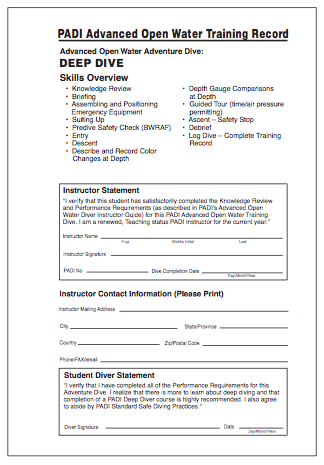
La inmersión «PADI Deep Adventure» es una de las inmersiones obligatorias del curso PADI Advanced Open Water Diver y es la que te certifica para una profundidad máxima de 30 metros/100 pies. Como buceador autónomo y certificado, puedes descender a la profundidad que desees, y muchos centros de buceo de todo el mundo te permitirán superar los límites de tu certificación, pero hay varias razones por las que deberías realizar tu inmersión PADI Deep Adventure antes de descender a más de 18 metros/60 pies:
1. Un poco de entrenamiento extra siempre viene bien
Hay riesgos adicionales que hay que tener en cuenta al bucear a mayor profundidad, por lo que siempre es recomendable recibir la formación adecuada. En la parte teórica de la inmersión «PADI Deep Adventure», aprenderás más sobre los límites sin descompresión, la enfermedad por descompresión, la narcosis por nitrógeno y los protocolos para el buceo a mayor profundidad, todo lo cual te será de gran utilidad para tu práctica del buceo y tu seguridad en el futuro.
2. Tendrás más oportunidades para practicar el buceo en el futuro
Muchos centros de buceo dividen a los grupos en función de su certificación y nivel de experiencia. Si eres un buceador Open Water con 50 inmersiones, pero no tienes la formación necesaria para descender a mayor profundidad, es posible que te asignen a un grupo de buceadores con menos experiencia y te lleven a lugares de buceo más sencillos. Si tienes la formación necesaria para descender hasta los 30 metros/100 pies, eso sin duda te abrirá nuevas oportunidades de buceo.
3. Se reconoce como crédito para futuros cursos
La inmersión PADI Deep Adventure cuenta como crédito para tu curso PADI Advanced Open Water Diver, así como para tu curso de especialidad PADI Deep Diver. Así que, además de la formación adicional que recibes y las oportunidades que te brinda, ¡también tienes la posibilidad de obtener más certificaciones en el futuro! Es una situación en la que todos salen ganando.
4. A efectos del seguro
Aunque un buen seguro de buceo te cubrirá en caso de accidentes de buceo, hay muchas posibilidades de que no te cubra si superas los límites de tu formación; así pues, si eres un PADI Open Water Diver y sufres un accidente a 30 metros/100 pies y no has completado la inmersión PADI Deep Adventure, es posible que tu seguro no te cubra porque has decidido superar tus propios límites. Es una razón un poco decepcionante para hacer la inmersión Deep, pero es un factor importante a tener en cuenta.
Como buceador, nunca debes dejar de aprender. No dejes nunca de formarte ni de practicar. El buceo es una experiencia divertida que une a grupos de personas, pero también es un deporte, por lo que es importante mantener tus habilidades al día. Siempre hay algo más que puedes aprender para convertirte en un mejor buceador.
¡Que disfrutes del buceo!
5 Ways to Find the Right Fins for You
It's important to have good fins, both for diving comfort and safety, so let's discuss how to pick the right fins for you!
Last time, we discussed the importance of finding a good mask for you. Fins are a pretty important of your scuba diving set-up, too. They are the reason you can move about easily underwater, and without them, you would certainly be much less graceful underwater and on the surface! It's important to have good fins, both for diving comfort and safety, so let's discuss how to pick the right fins for you!
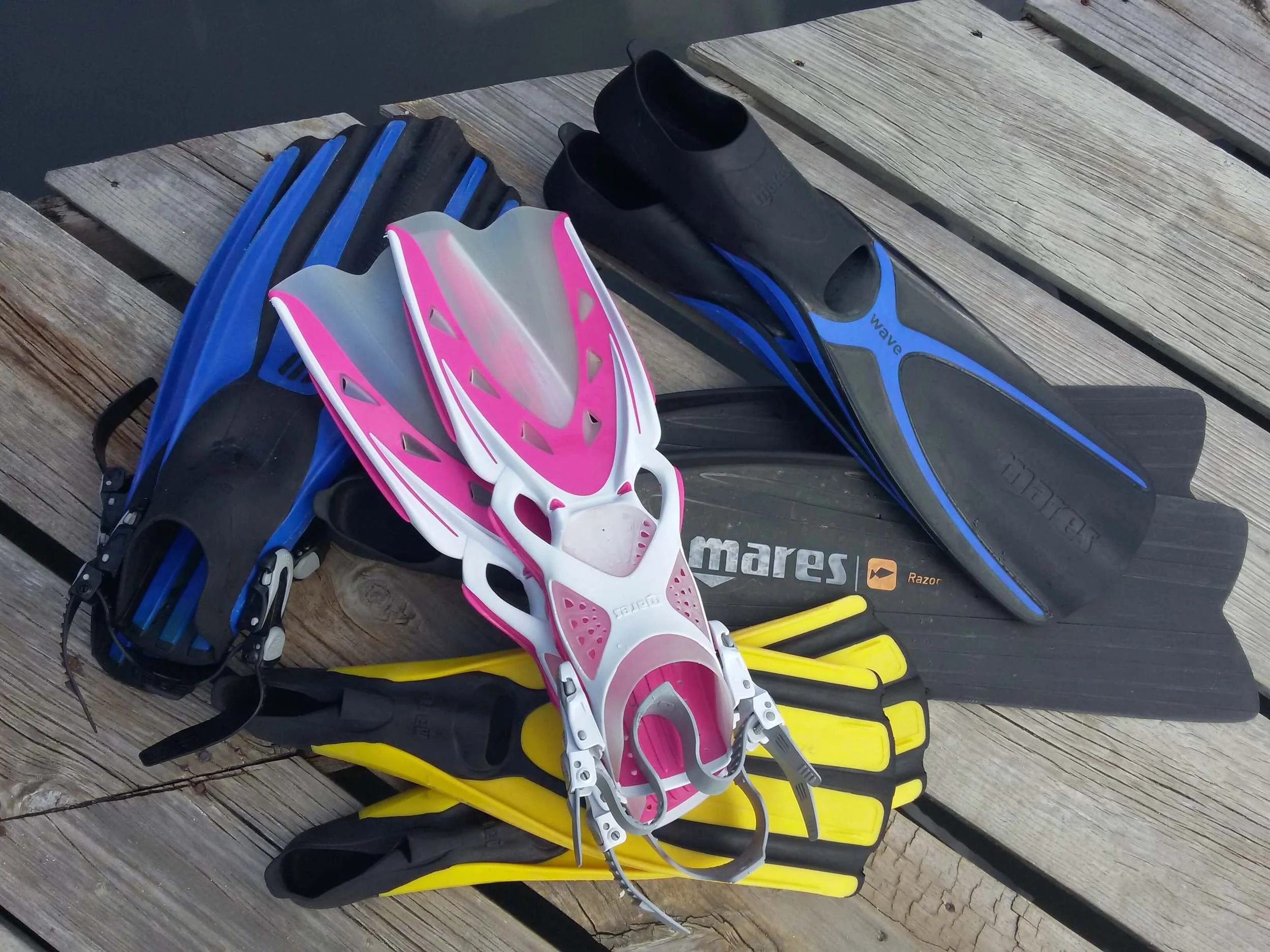
Tip 1. Full foot vs open heel
Ah, the great debate. Full foot fin versus open heel fin - which is better? Well, that really depends on your preferences. We're going to weigh the pros and cons of each fin type, but remember, in the end it all comes down to preference.
Full foot fins tend to be light and flexible, so they're great for travel and don't put much strain on your legs when you kick. Each fin manufacturer has different foot pocket shapes and sizes, so it's easy to find a pair that will fit your foot shape. The downside is that since they're flexible, they don't have the same propulsion as an open heel fin, and it's safer to shore dive with boots on. Until your feet get used to them, full foot fins can also cause rubbing on your feet, but it's pretty easy to deal with it by wearing socks (while neoprene socks are ideal, you can also use gym socks). Full foot fins tend to be more affordable than open heel fins, so if you're just wearing them a few times a year and diving in mostly tropical places, they're perfect.
Open heel fins are great in colder waters because you need to wear boots with them and ideal for shore diving or diving in more difficult climates with strong currents. They're versatile, because you can have one pair of fins and then multiple boots to match each environment (3mm booties for warmer waters, 5mm boots for colder), and tend to be more durable than full foot fins. The downside is that they're not as easy to travel with because they are bulkier, they are generally more expensive than full foot fins and you have to have boots. The nice thing is that their sizing is more broad, so they are incredibly versatile in that sense.
Tip 2. The newest fins on the market are not always the best
Some fins are classics for a reason. The fins that we consider to be the best on the market are the Mares Avanti series. You'll notice a lot of instructors use the Mares Avanti open heel fins, and that's because they are good, strong, and never break. The Avanti series has been around for years and years, and their style hasn't changed (for good reason). Personally, I feel like the more bits and bobbles the fins have, like high-tech hinges, the quicker they are to break. Talk to your experienced diver friends and dive professionals to see what they recommend.
For us, when it came to rental fins, it was always going to be the Mares Avanti full foot fins, regardless of what other brand we were going to use for the rental equipment. The Avantis, whether they're full foot or open heel, are the ideal fins for long term use and rental because they are just.so.durable. We've had our Avanti full foot fins in commission as rental for over two years now, and not single foot pocket has ripped. The fins still look and feel new, and that's saying a lot considering the amount of use they give us.
Tip 3. The perfect fit may not be perfect for you
For some of you, having fins that fit perfectly before your dive are exactly what you need. For others, including myself, fins that fit too perfectly at the beginning will only cause problems as your dive progresses. Your feet might swell a bit when you dive, same as any other form of exercise, and those fins that fit oh-so-perfectly at the start of the dive might start cutting off your circulation 40 minutes in. For those of you whose feet swell, you should aim for fins that are a little loose, but not so loose that your heel pops out when you lift your heel. If you're between sizes, get a pair of socks and size up. Your feet will thank you.
Tip 4. Take your environment into consideration
You need to take your environment into consideration when getting fins. Think past the point of just full foot fins and open heel fins and start thinking about whether you're diving tropical water, cold water, caves, technical, currents or leisure. If you know that you are planning on doing mostly tropical, easy diving, then you don't need to get heavy duty cave diving fins. In the same way, if you plan on doing mostly technical and wreck diving, you shouldn't get long free diving fins because they aren't the best suited for your needs.
Tip 5. Take your travel style into consideration
If you're a light traveler, a backpacker or are a leisure diver, then getting heavy, cumbersome fins are probably not the best option for you. If you're a hard core diver that's going specifically on a dive trip, you're planning on stay in one place for your an extended period of time and you have the appropriate bag for it, then your fin options are greater. Figure out what kind of trips you'll be going on most and plan your fins accordingly.
And there you have it, our Top Five Tips for finding the right fins for you!
5 Ways to Pick the Right Mask for You
So you're about to go off on a grand dive adventure. To make sure you can see crystal clear on every dive, you want get to get your own mask before you go! What should you look for when you buy a scuba mask?
So you're about to go off on a grand dive adventure. To make sure you can see crystal clear on every dive, you want get to get your own mask before you go! What should you look for when you buy a scuba mask?

So many masks, so little time!
Tip 1. Price is not top priority
There are millions of masks out there to fit millions of faces. Some brands are better than others, of course, but don't assume that just because it carries the highest price tag, that it's the best mask for you. My first scuba mask was a $100 thing that leaked so I had to basically cement it to my face. I later discovered a $25 mask that fit my face like a glove, so I've been using that one for six years now.
Tip 2. How you test fit is important
When you're testing a mask at the store, don't put the strap on. The best way to test for fit is to hold the mask up to your face without putting the strap on, suck in and see how it seals to your face. If it makes a suction-y noise when you pull it off, that's the ideal fit.
Of course, things might change when you're underwater and under pressure, but the on-land fit test is a pretty accurate one. Ideally, you'll find a rental mask that you just love when you're on vacation, and then you know exactly which one to buy when you get home!
Tip 3. Don't wear the mask too tight
If a mask fits you properly, it should actually stick to your face when you're under pressure without having the strap on. The strap is essentially there so that the mask doesn't come off on land, and so that you can clip it to your BCD, but your mask shouldn't fall off your face if your strap happens to break underwater.
Unfortunately, too many people wear their masks way too tight, and that can alter the grooves in your face, which can cause leaking. So you wear your mask tight so that it doesn't leak, and then it has the opposite effect. No bueno.
Tip 4. De-fog your mask the right way
When manufacturers make masks, they line the inside of the mask with silicone to preserve the masks in transit. If you don't get rid of it, your new mask will fog up every time you dive, even if you put the most expensive de-fog in the world in it.
Use toothpaste to get rid of the silicone inside the mask. You don't want a gel toothpaste because there are no abrasives in it, you basically want whatever cheap toothpaste you can find. Put it in the mask and rub it around for a while. We've discovered that using ScotchBrite to rub the toothpaste around speeds the process up significantly, but make sure the gentle kind so that you don't scratch the mask.
You'll often hear people recommending burning the mask with a lighter, but unless someone is really, really experienced and really, really careful with it, I would strongly advise against it. If you burn too much, you'll ruin the temper of the glass and it's not as strong as it's supposed to be.
Tip 5. Store your mask properly
Rinse your mask after every dive. After every dive or snorkel trip, you should wash the mask with dishwashing soap, let it dry, then store it in a cool, dry area. Sunlight and heat age the silicone skirt of the mask really quickly, so you want to avoid that. If you treat your mask well, you'll get years and years out of it, so it's just good investment practices to keep it well-maintained.
And those are our Top Five Tips for buying a scuba mask! We'll have more posts coming up about other pieces of scuba equipment as well, so stay tuned!
5 formas infalibles de ser una belleza del buceo
Let's face it, scuba diving is not the most glamorous sport. I don't know who decided that sexy was the way to go in all those scuba equipment ads in the magazines, but it is a big fat lie. Mask marks, snot on your face and a saggy wetsuit is what defines a true diver.
Let's face it, scuba diving is not the most glamorous sport. I don't know who decided that sexy was the way to go in all those scuba equipment ads in the magazines, but it is a big fat lie. Mask marks, snot on your face and a saggy wetsuit is what defines a true diver.
There are, however, some ways that we can come out of our dives not looking like the Tasmanian Devil. So ladies, I give you Five Surefire Ways to be a Scuba Beauty!
Tip 1. Keep your hair back with a headband or hoods
There's nothing worse than getting your hair snagged in your mask strap or having it floating all around your face. Headbands are cheap and something you can find anywhere. Preferably go for a thick headband so that it doesn't slide around as much, or there are some headbands specifically designed for swimming and scuba diving that are made from more durable materials, like silicone.
For hairstyles, braids seems to be the best option to avoid your hair from going all over the place. You can do a french braid and not need a headband at all, or use a headband and braid your hair normally.
Another option is to wear a hood. That way, all your hair is contained and you don't have to worry at all! If you're worried about feeling constricted, opt for a thin "beginner" hood instead of a neoprene one.
Tip 2. Soak your hair in fresh water before your dive
Our hair is porous, and that's one of the reasons that salt water wreaks such havoc on your hair, because the salt water soaks in completely. If you soak or rinse your hair in fresh water before you go diving, your hair will be maxed out on what it can absorb, so the salt water won't be able to soak into your hair. It won't prevent of salt water damage completely, but it will certainly limit the damage!
Tip 3. Rinse your hair with fresh water right after you dive
You don't even have to use conditioner, just make sure to rinse your hair with fresh water after you dive. If there are no showers or hoses available after your dive, then you can even use your water bottle as an impromptu shower as well. Rinsing the salt water off as soon as possible will help prevent damage.
On the plus side, salt water in your hair means that your hair will start to bleach, so if you're going for a lighter look, this is certainly an au naturel way to do it!
Tip 4. Waterproof is your friend
I wouldn't advise wearing make-up when you dive because it's all just going to come off, but if you have to wear make-up, please go for waterproof options. Your eyes may look lovely and lined before the dive, but you're just going to end up looking like a panda afterwards.
In general, I would advise against foundation, concealer, blush and lipstick, even if they're waterproof. The foundation will just end up all over your mask, so you'll have a weird, make-up-less circle around your eyes where it's come off, and you'll have more lipstick on your mouthpiece than on your lips.
Tip 5. Don't worry, be happy!
We're all going to have bad hair or skin days, even when we're not diving. We're going to have nights that we didn't get enough sleep, or our noses are runny. It happens.
The best thing about diving is that we're all in the same boat (figuratively speaking). When we're diving, all of us, no matter what, are going to come up with snot all over our faces and salt water in our mouths. Don't worry about how you look, just focus on how you feel and how awesome that dive was and how accomplished you feel. That's the key to making you a true Scuba Beauty!