
3 sencillas mejoras medioambientales que hemos llevado a cabo con Go Blue Bay Islands
As you guys know by now, Roatan Divers joined Go Blue Central America Geotourism recently, and completed our first environmental assessment last month. We discussed the things we were doing well on environmentally and things that could be improved on, and after the assessment we decided to grab the bull by the horns and implement what we could as soon as possible (before the results even came out!). We have our next assessment coming up in a week, and we're excited to show you some of the changes we've already implemented and to learn more ways that we can promote responsible tourism on Roatan.
Como ya sabéis, Roatan Divers se ha unido a Go Blue Bay Islands en colaboración con National Geographic y el mes pasado completamos nuestra primera evaluación medioambiental. Hablamos de lo que estábamos haciendo bien en materia medioambiental y de los aspectos que se podían mejorar, y tras la evaluación decidimos tomar el toro por los cuernos y poner en práctica lo que pudiéramos lo antes posible (¡incluso antes de que se publicaran los resultados!). Tenemos nuestra próxima evaluación dentro de una semana, y estamos deseando mostraros algunos de los cambios que ya hemos puesto en práctica y aprender más formas de promover el turismo responsable y las prácticas empresariales respetuosas con el medio ambiente en Roatán.
1. Hemos instalado un cabezal de ducha de bajo consumo de agua

Sabemos que a todos os encanta nuestra ducha de agua caliente y su increíble presión, así que queríamos asegurarnos de poder tener un cabezal de ducha que ahorrara agua sin perder presión. Hemos encontrado el cabezal perfecto, que sigue ofreciendo mucha potencia, pero que consume 1,5 galones de agua por minuto en su ajuste medio, mucho menos que nuestro cabezal anterior, que era prácticamente como si te cayera una tormenta amazónica encima. Aún no hemos recibido la nueva factura del agua desde que lo instalamos, pero tenemos curiosidad por ver cómo cambia la situación el mes que viene.
2. Hemos montado una exposición informativa sobre la caza furtiva

Hace un tiempo, un huésped compró una caracola a un vendedor ambulante sin darse cuenta de que se trata de una especie amenazada, y la devolvió al centro de buceo. Teníamos la opción de devolverla al mar o utilizarla como herramienta educativa, y decidimos optar por la vía educativa para asegurarnos de que todos nuestros huéspedes sean conscientes de los peligros del comercio ilegal de fauna silvestre. El Parque Marino de Roatán tuvo la amabilidad de donarnos algunos artículos confiscados más para completar mejor nuestra exposición, pero antes no contábamos con un cartel que explicara por qué se exhibían estos objetos, y simplemente se colocaban en un rincón sin mucho revuelo.
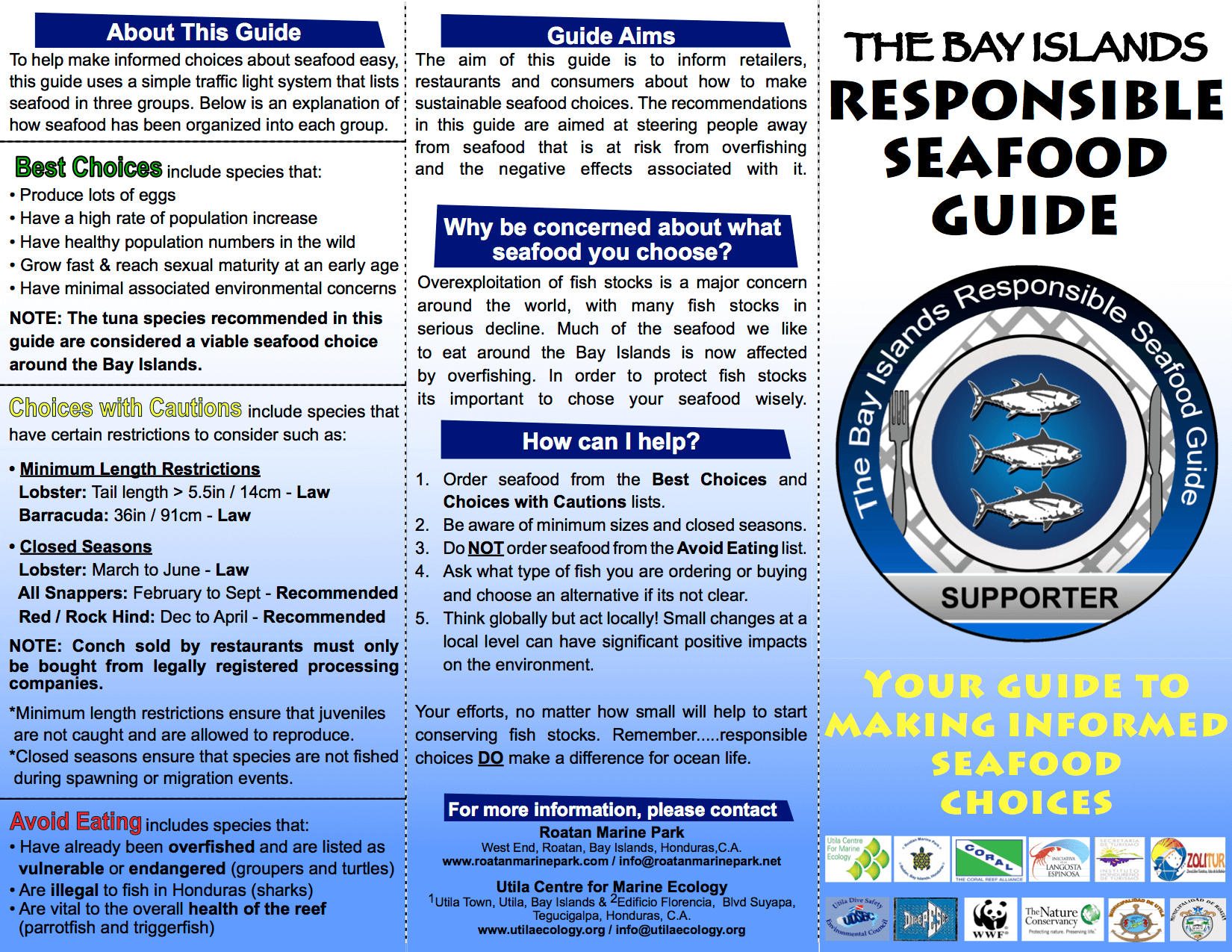
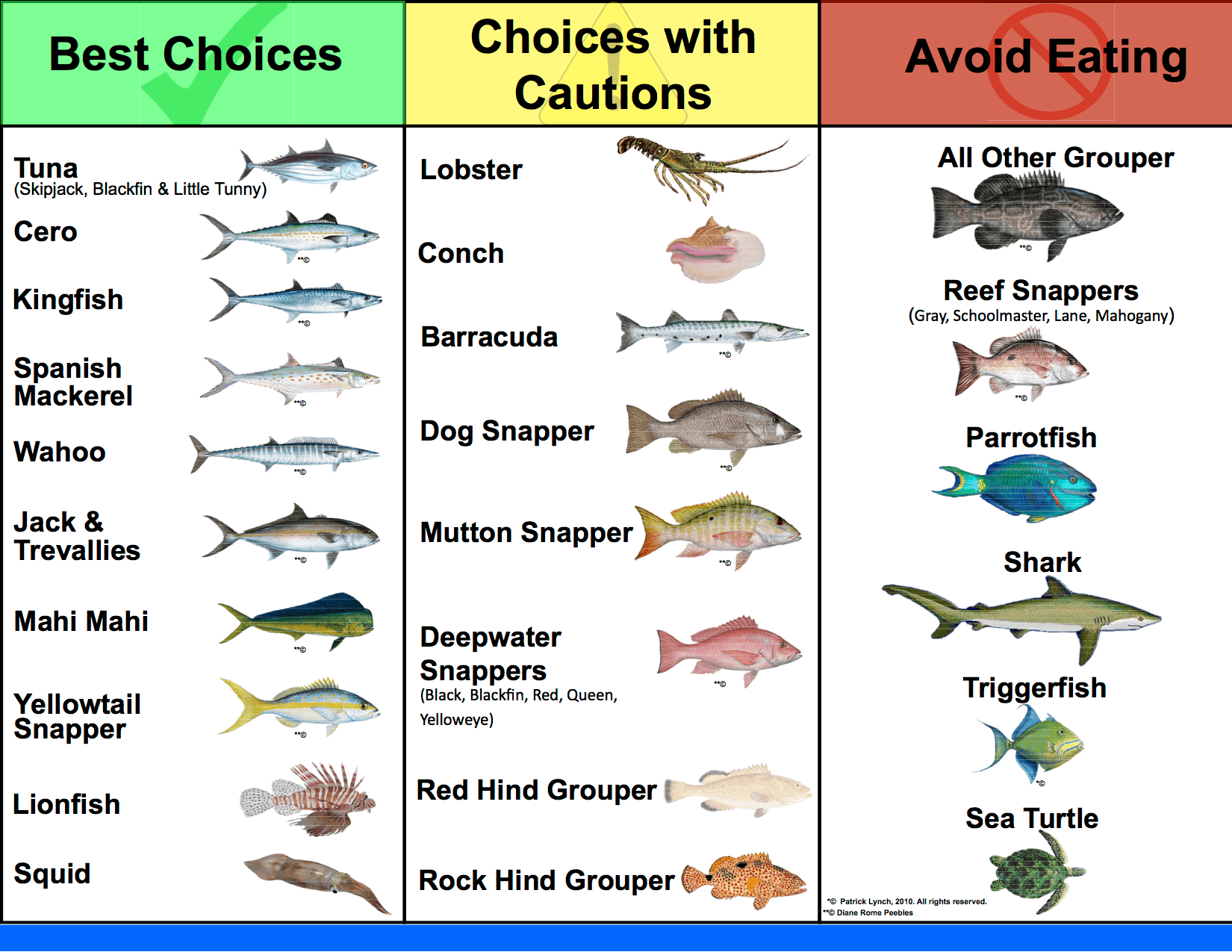
Tras nuestra primera evaluación medioambiental con Go Blue Central America, hemos montado un expositor con información sobre la caza furtiva, con el objetivo de concienciar al mayor número posible de personas sobre la importancia del turismo responsable. También hemos colocado un póster con la «Guía de productos del mar responsables» e información para reducir al mínimo el consumo de plástico, lo que ha dado lugar a numerosas conversaciones sobre la conservación, por lo que estamos muy ilusionados con el rumbo que tomará todo esto.
3. Hemos reducido el consumo de agua en el cuarto de baño
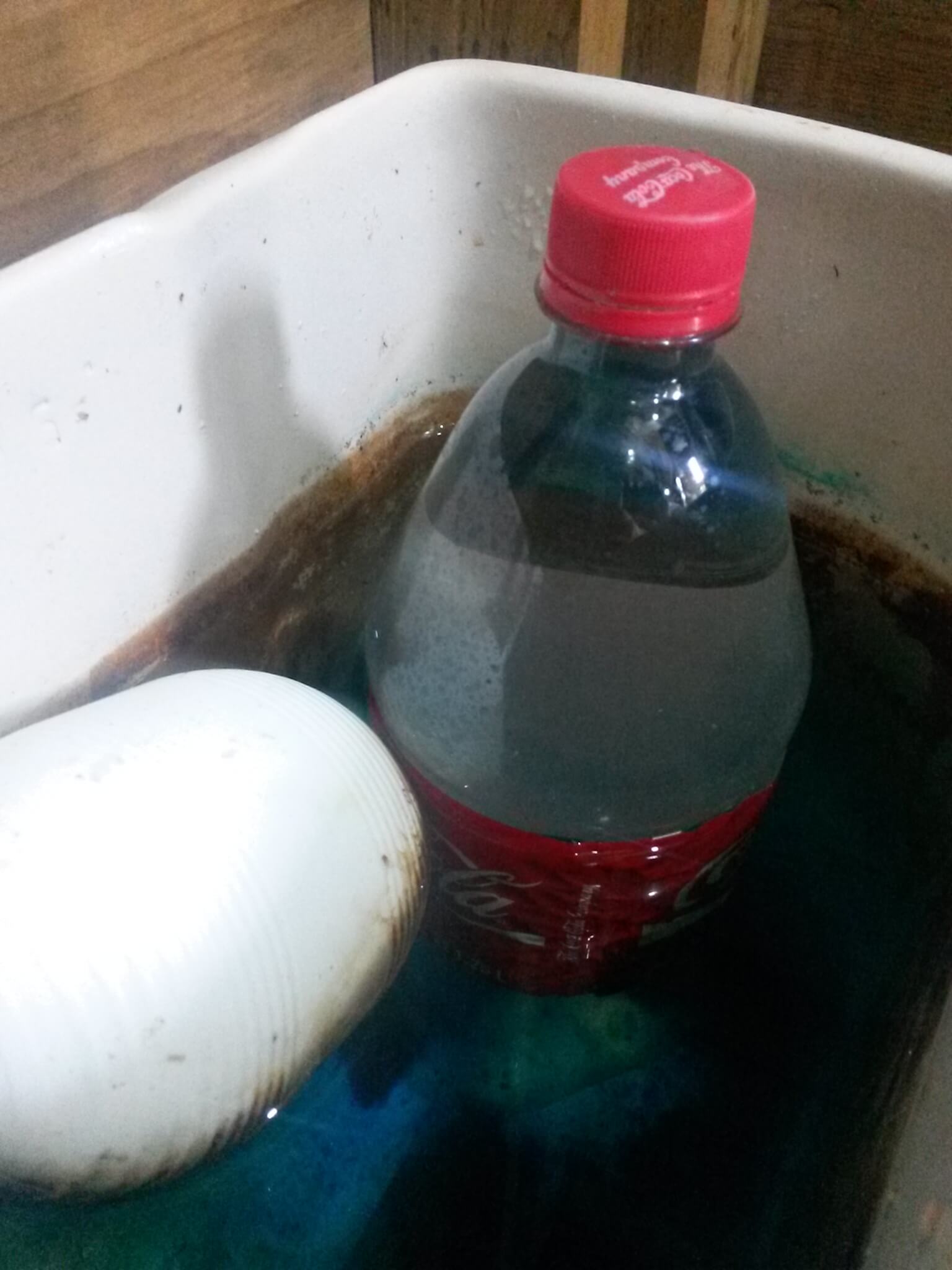
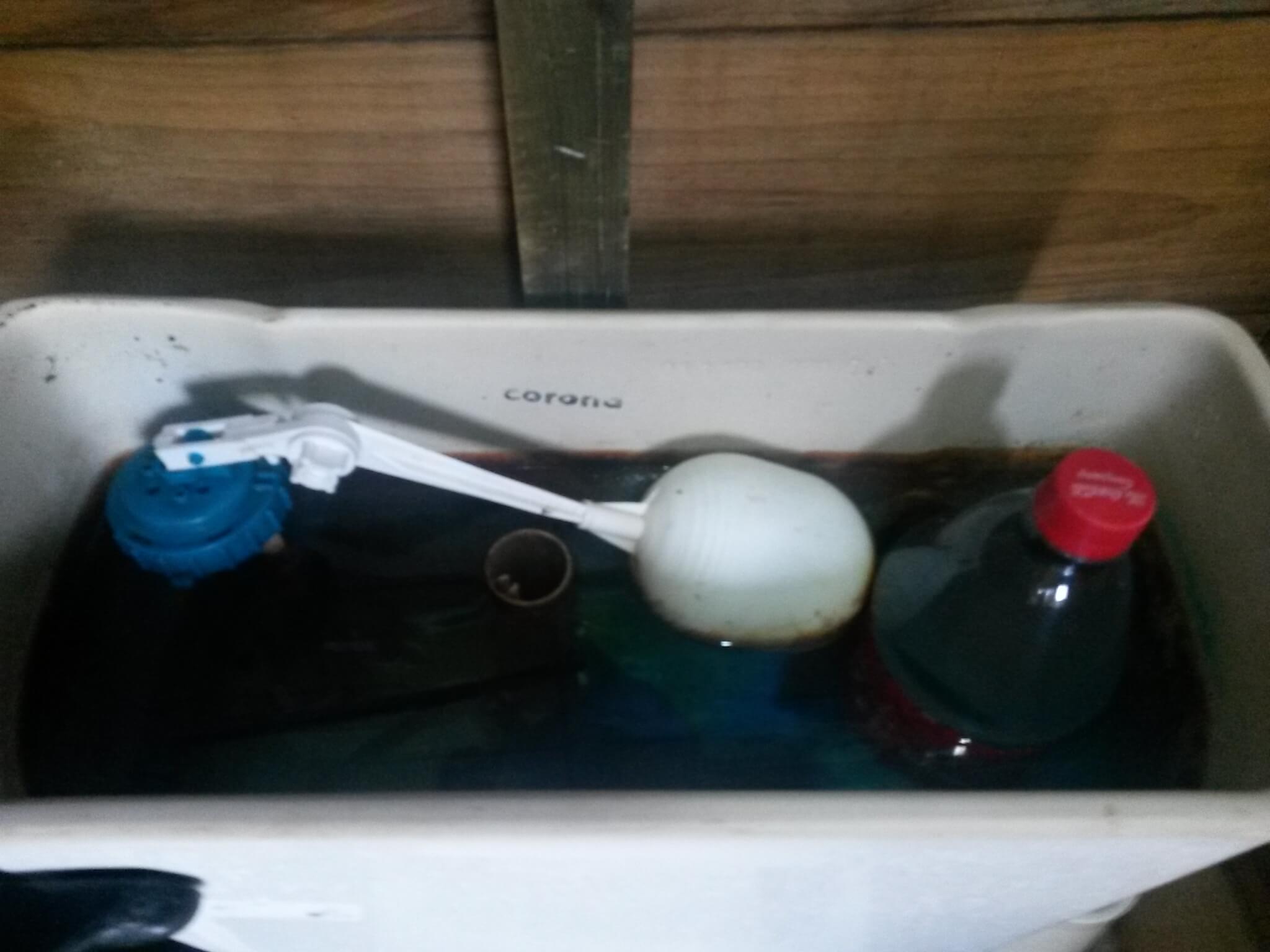
Como centro de buceo, tenemos mucha gente que utiliza los aseos y consumimos mucha agua cada día entre el inodoro, el lavabo y la ducha. Ya estamos reduciendo nuestro consumo de agua gracias al cabezal de ducha de bajo consumo, pero queríamos dar un paso más allá. Para reducir el consumo de agua del inodoro, colocamos una botella llena de agua en la cisterna para aumentar el desplazamiento, de modo que la cisterna tenga que llenarse con menos agua para alcanzar su capacidad máxima.
Estas han sido tres formas muy sencillas de reducir nuestro impacto medioambiental y fomentar la concienciación sobre el turismo responsable. Cada cambio ha requerido muy poco esfuerzo y dinero, pero tendrá un mayor impacto a largo plazo. Aunque intentamos ser lo más respetuosos posible con el medio ambiente, es estupendo contar con una fuente externa y profesional que nos ofrezca ideas diferentes para aumentar aún más nuestra concienciación medioambiental, y esperamos seguir colaborando con Go Blue Central America para apoyar un destino turístico responsable con el medio ambiente.
¡No te olvides de visitar la página web y la página de Facebook de Go Blue Central America para descubrir más consejos medioambientales y ver qué empresas se están sumando a la iniciativa!
5 formas sencillas de llevar una vida más respetuosa con el medio ambiente
Living a more eco friendly life doesn't mean you have to change to entirely hemp clothing and only bathe with rainwater. There are a lot of small, yet mindful changes that you can incorporate into your current lifestyle that can have a big effect on the future, so let's discuss some easy ways to live more eco friendly.
We humans consume and dispose of far too much. This much is clear. Now is the time to take a stand to reduce our impact on this beautiful planet of ours in order to preserve it for generations to come. It's a tall task, for sure, but if we face it collectively and each take the time to do our small part, we will, if nothing else, slow down the negative impact we are having on the environment.
Living a more eco friendly life doesn't mean you have to change to entirely hemp clothing and only bathe with rainwater. There are a lot of small, yet mindful changes that you can incorporate into your current lifestyle that can have a big effect on the future, so let's discuss some easy ways to live more eco friendly.
1. Carry reusable bags
A lot of grocery stores have stopped offering disposable plastic bags and are working to encourage bringing your own bags or purchasing their reusable ones. This is a great step in the right direction, and hopefully more governments and stores will start offering and enforcing this as well. At Eldon's Supermarket on Roatan, you can purchase their reusable bags (we currently have about 30 because we went through a period of time where we kept forgetting to bring our own bags and they are actually wildly useful) or request a box in lieu of plastic bags, which is also an easy way for them to get rid of all the boxes that their produce arrived in.
Now, no matter where in the world I'm at, I always make sure to keep at least one reusable bag with me (at home, it's for groceries, on holiday it's for unnecessary window shopping!). There are all sorts of fun styles available these days that are incredibly space efficient, and they often are easier to carry than disposable plastic bags because you can actually carry them on your shoulder. If I'm just buying one thing that I can just throw into my bag, I'll forgo using a bag altogether.


2. Your new life partner is a water bottle
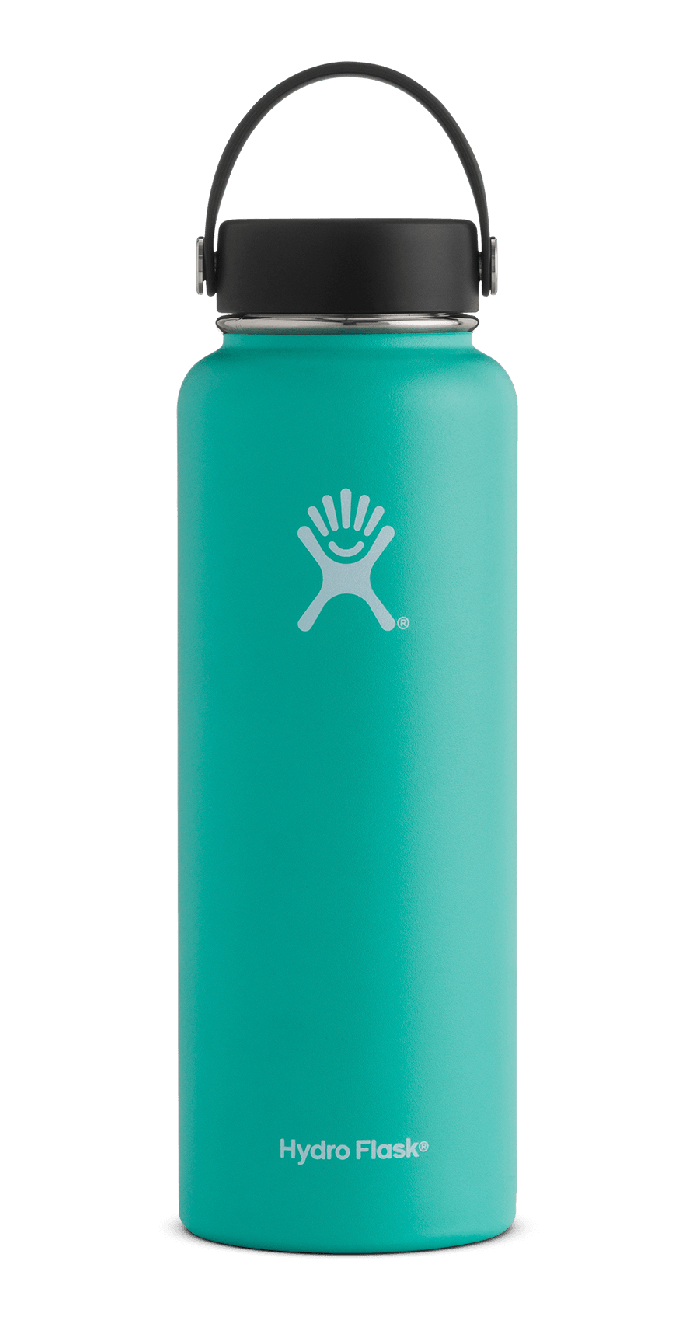
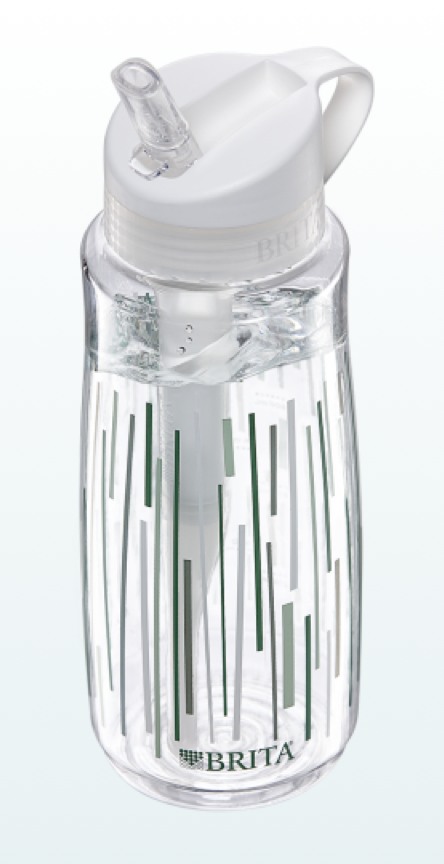
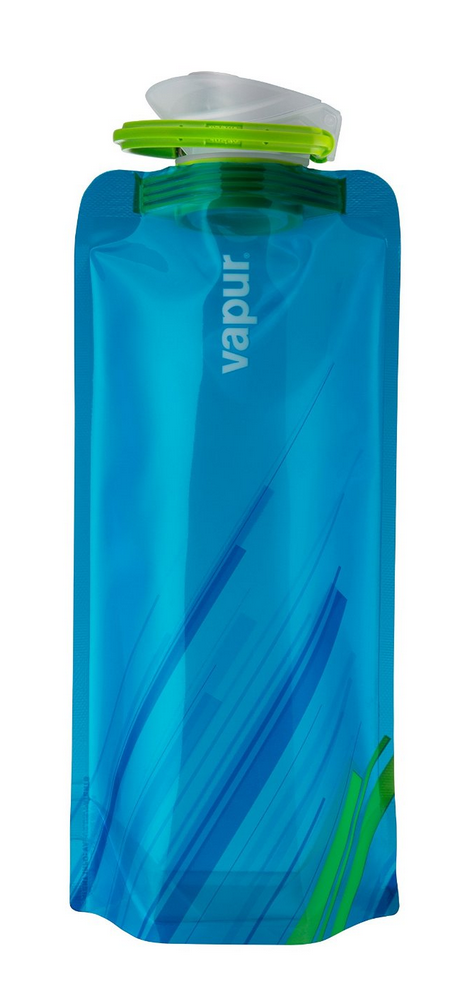
Constantly buying bottles of water is both wasteful and expensive. Buy a water bottle that you can use for a long time and refill as you go with tap water (if it's safe to drink), filtered water (you can keep a Brita in your fridge) or from a water fountain. You can get different styles to match whatever your type is. There are some great foldable (or are they rollable?) water bottles out there that are super space efficient when they're empty, insulated stainless steel bottles so that you don't get the dreaded "sweating", and even water bottles with filters in them. A good water bottle will cost you between $20 and $40 and can last you years, and if you use it 10 or 20 times in lieu of buying bottled water, you've already broken even! And before you get all self-righteous about only being able to drink Swiss mountain water spiked with angels' tears, let me remind you that Dasani is just glorified tap water.
3. Say "no" to styrofoam
Is it weird that I go to my favorite restaurants with tupperware in tow? Maybe, but I get to go home with a box full of goodies, a clean conscience, and the restaurant doesn't have to waste a container on me! Win-win-win, guys. I obviously don't take tupperware to every single restaurant we go to, but if I know they have big portions and I know for a fact that I will be taking food home, then it's pretty easy to just bring along a box. Container technology has come quite far, so there are a lot of foldable silicone styles out there that will flatten when empty so you don't have to cart around bulky containers everywhere.
An even greater upside to using containers is that you don't have that awkward spillage that happens when you carry the styrofoam box funny and all the sauces spill out. So many wins!

4. No straws for you!
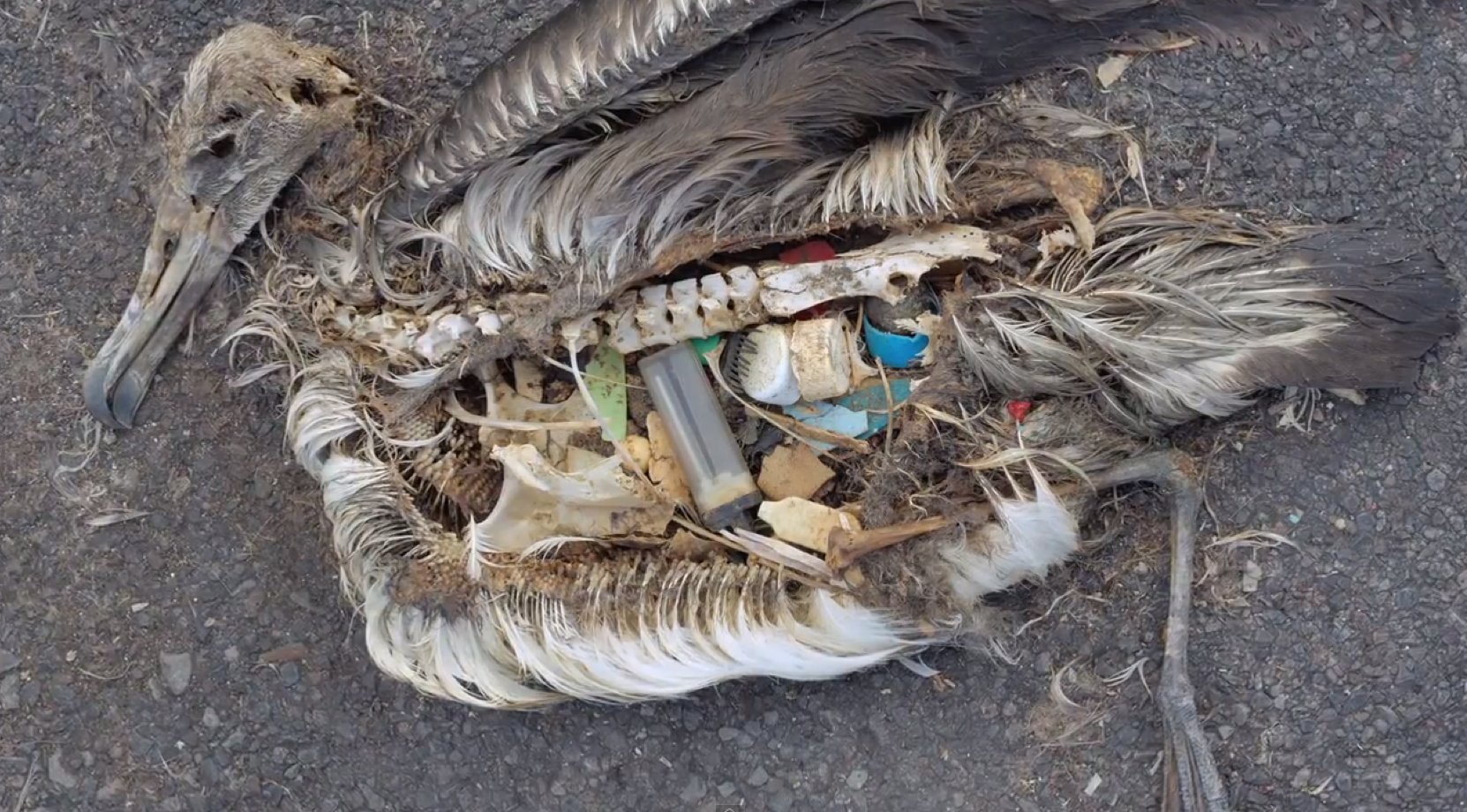
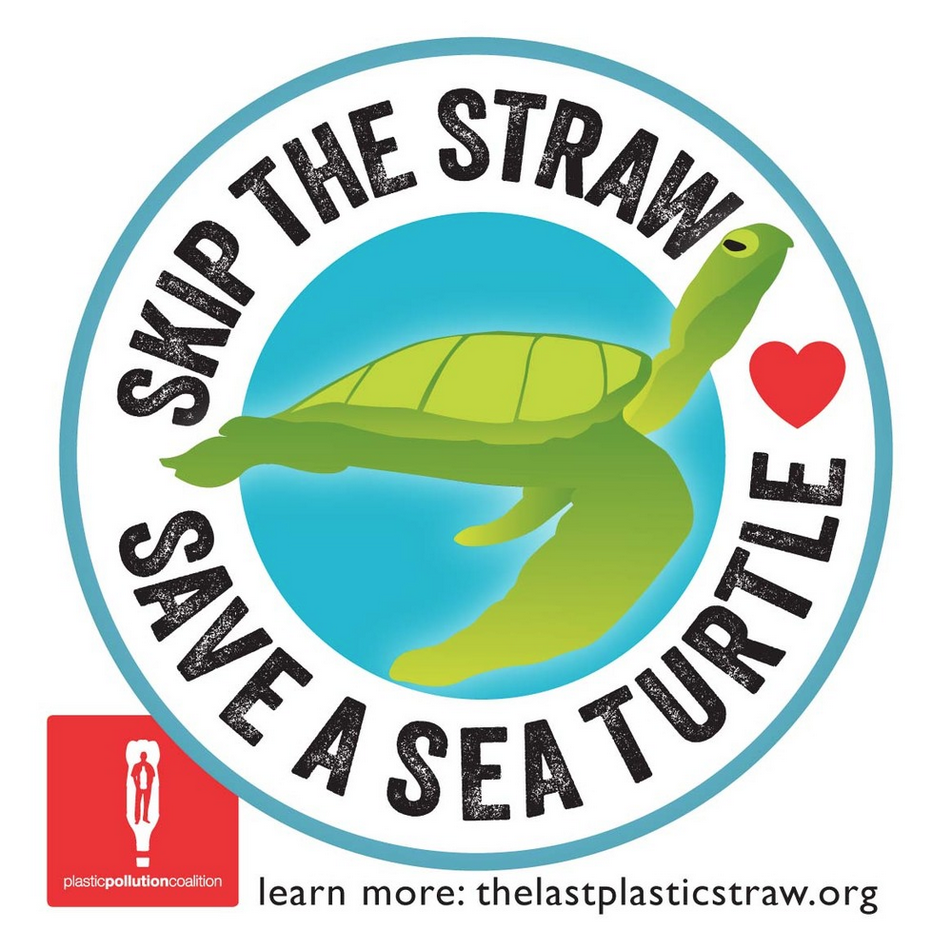
In the United States alone, we use and dispose of 500 million straws a day. That is insanity. Madness. Straws and other small plastic items aren't contained very easily and will inevitably end up in our oceans, where they will be consumed by marine animals, and even sometimes get lodged in their body parts (remember the video of the turtle with a straw painfully stuck in its nose?). All it takes is the very simple request of "no straw, please", and you can help prevent the death of turtles, dolphins and sea birds. You can do eet!
5. Be mindful
Becoming more eco conscious and lowering your waste all comes down to mindfulness. There are so many things you can do to help the planet, and most of it takes little to no effort. Take that extra second to pack a fork with your lunch. Be okay that it will take an extra few seconds to wash your resuable container. Learn to live with the extra ounce that your resuable bag will weigh. It doesn't take much effort on your part, but if everyone in the world took a little more effort, it would make an enormous impact on the planet, and our future.
So there we are, our five easy ways to live a more eco friendly life. We have very little time and a long way to go to reverse our detrimental impact on the planet, but I believe that if everyone plays a small part it in, we can create an enormous movement.
Pulseras anuales del Parque Marino de Roatán
Por si no te has dado cuenta, el Parque Marino de Roatán es una parte muy importante del buceo y de la vida en Roatán.
Por si no te has dado cuenta, el Parque Marino de Roatán es una parte muy importante del buceo y de la vida en Roatán.
El Parque Marino de Roatán es único, ya que está gestionado por una organización no gubernamental sin ánimo de lucro que surgió hace diez años como un movimiento de base impulsado por los centros de buceo y la comunidad local.

El Parque Marino de Roatán se encarga de instalar los amarres para embarcaciones, realizar patrullas para proteger el arrecife y la vida marina, y colaborar con la comunidad local para convertir nuestra isla en un lugar más comprometido con la conservación. Pueden llevar a cabo su labor gracias a subvenciones, cuotas de socios y la venta de pulseras.
Cada año, el Parque Marino de Roatán pone a la venta una pulsera de un color diferente como parte de su colección anual. En 2013 era blanca, en 2014 amarilla, en 2015 negra y este año ¡es morada! Aunque no es obligatorio comprar las pulseras para entrar en el parque, es lo más responsable, ya que gracias a su labor nuestros arrecifes son tan bonitos. Asegúrate de que, cada vez que lo visites, compres otra pulsera para apoyar al parque. Puedes comprarla en la Eco Store del Parque Marino de Roatán, en West End, o a través de tu centro de buceo.
¡Que disfrutes del buceo!
La importancia de los manglares
El Parque Marino de Roatánha compartido en su página de Facebookun vídeo estupendo sobre la importancia de los manglares, y nos ha parecido una excelente oportunidad para hablaros a todos vosotros de la importancia de los manglares, tanto para Roatán como para cualquier lugar donde existan.
El Parque Marino de Roatánha compartido en su página de Facebookun vídeo estupendo sobre la importancia de los manglares, y nos ha parecido una excelente oportunidad para hablaros a todos vosotros de la importancia de los manglares, tanto para Roatán como para cualquier lugar donde existan.
Los manglares son muy importantes porque constituyen tanto una fuente de protección como de sustento. Los manglares protegen el litoral de la erosión y las tormentas, y son un refugio donde los alevines pueden pasar su vida antes de adentrarse en el mar. En todo el mundo se talan manglares para dar paso a urbanizaciones frente al mar y playas de arena, sin tener en cuenta las consecuencias a largo plazo; incluso aquí mismo, en Roatán, hemos sido testigos de los efectos devastadores que supone la pérdida de nuestros bosques de manglares.
Además, los manglares podrían ser la clave para combatir el cambio climático. Los manglares almacenan dióxido de carbono bajo sus raíces y liberan una enorme cantidad de oxígeno, lo que los convierte en un elemento fundamental para el futuro del planeta.
La labor del Parque Marino de Roatán no se limita únicamente al fondo del mar. Se han hecho cargo de la protección y la replantaciónde manglares en la isla de Roatán, y estamos deseando ver cómo cada vez más manglares vuelven al lugar al que pertenecen. Los manglares son hermosos y necesarios, y para que nuestra isla prospere, debemos permitir que protejan nuestras costas, los corales y la vida marina.
Recuerda apoyar al Parque Marino de Roatánpara que puedan seguir realizando la importante labor que llevan a cabo. Puedes comprar entradas diarias por 3 dólares o pulseras anuales por 10 dólares; todos los ingresos se destinan a la buena labor que realiza el Parque Marino de Roatán.
Aviso: Antes de ver «Buscando a Dory»
efore you watch Finding Dory and get caught up in the Blue Tang hullabaloo, please remember that Blue Tangs belong in the ocean, not in your personal aquarium.
Well, the day that everyone has been waiting for, for literally years has arrived - Disney Pixar's Finding Dory will soon hit theaters!
Now, based on the trailers, it looks like Finding Dory has a pretty strong anti-captivity message, which we are grateful for. As dive instructors and conservationists (the two should really go hand in hand), it pains us to see animals that don't do well in captivity, like whalesharks and dolphins, held in a confined space. While some aquariums work hard to educate the public and are picky about the animals that they keep in captivity, a great deal are not and will capture anything that brings in customers and money.
So before you watch Finding Dory and get caught up in the Blue Tang hullabaloo, please remember that Blue Tangs belong in the ocean, not in your personal aquarium. Just like Clownfish sales spiked after Finding Nemo came out, the animals featured in Finding Dory, especially the Blue Tang, will be in higher demand. The biggest difference between Clownfish and Blue Tangs is that they still haven't figured out a way to breed Blue Tangs in captivity, so any Blue Tangs that you get for your aquarium will be taken off the reef somewhere, away from where they belong. Blue Tangs have a bigger travel radius than Clownfish do so they don't do well in captivity, and they are incredibly important for coral health because they eat the algae that risks suffocating the coral if left to grow unchecked, so it will be devastating to any reef system to lose them.

So please, if you watch the movie and feel inclined to see more Blue Tangs, go see them in the wild. They're actually very quirky and funny, just like Dory, although hopefully not as forgetful! We love watching the big schools of Blue Tangs descending on the reef and eating up a storm, without a care in the world if anyone else is around. If you love Dory (or Nemo, or Hank, or Destiny, or Bailey), let them just keep swimming!

Always dive with a buddy!
Just because you don't want to see Dory in captivity doesn't mean you can't have fun with it, either! For those of you more inclined to give in to Disney magic, you can also bring Dory diving with you! Nemo and Dory have been our dive buddies for five years now, following us as we dive all around the world. Just keep swimming, indeed.
5 Really Good Reasons To Protect Sharks
As scuba divers, snorkelers, surfers and spearfishermen, we make the active choice to enter their territory and therefore (should) accept the consequences of what happens to us.
We love sharks. Sharks are amazing. And despite the irrational fear that people have of sharks (damn you, Jaws!), sharks would honestly rather do their own thing and are actually afraid of people. I've been on many dives where a shark comes gliding along, minding its own business, then sees me and goes "nope, nope" and jets off in the other direction.

But even if sharks weren't wary of us and even if they weren't misunderstood, who are we to cull them? Who are we to go on a massacre when there's a shark attack somewhere? Aren't we in their territory? Aren't we imposing on them? As scuba divers, snorkelers, surfers and spearfishermen, we make the active choice to enter their territory and therefore (should) accept the consequences of what happens to us.
So without further ado, here are 5 really good reasons why we should protect sharks.
Reason 1. Sharks help maintain the reef
Sharks are an incredibly important part of the ecosystem. They keep the reef eating fish populations in check, which prevent the reef eating fish from overeating the reef. If the sharks go, then the fish populations will run rampant and the reef will get eaten away pretty quickly. The reef actually produces a huge amount of the oxygen in the air that we breathe, so without the reef, on-land populations will die as well. Grim.
Reason 2. Sharks are worth more alive than dead
Studies have shown that the worth of a shark is far more when its alive than when it's dead. While the numbers vary for each location, on average, you get roughly $100 for a dead shark (they normally just take the fins), while a living shark will bring in over 1.5 million dollars over the average lifetime. Sharks are not only good for the reef, they're good for tourism. They're good for local communities. This theory doesn't just apply to sharks, it also applies to pretty much every other animal, both on land and under the sea, like elephants, rhinos, gorillas, whales, turtles, lions...the list goes on.
Reason 3. Shark finning is incredibly cruel
Imagine you're walking down the street, minding your own business, when someone drags you onto a dinghy, cuts your limbs off and leaves you face down in shallow water, shallow enough that you can sort of lift your head out of the water so you don't drown immediately, but still enough water that you will eventually bleed out and drown at the same time. That is the closest thing I can relate to a shark's experience when it gets finned.
With the exception of nurse sharks, all sharks need to be constantly moving forward so that they can push water through their gills and breathe. When sharks are finned, their bodies are pulled up onto the boat, their fins are hacked off and then their bodies are thrown back into the water to leave more space on the boat. The sharks then slowly drown. All of this cruelty for a substance that has no flavor and no nutritional value. Shark fin is cruel and useless.
Reason 4. They're more afraid of you than you are of them
There were 12 fatal shark attacks in 2015. Do you want to know how many sharks we killed that year? Over 100 million. One hundred million sharks. 100,000,000. Versus 12 humans. Are you getting it? And every time there is a shark attack somewhere, we go on a rampage and kill every shark in the area. Why?
Sharks are misunderstood. They genuinely want nothing to do with us. The reason that shark attacks are increasing is because humans have taken a large part of their food supply because of our unsustainable fishing techniques and consumption, and so sharks are now moving closer to land to find food. We are the reason that they are moving closer to shore, and then we get upset when we see them close to shore. Does that make any sense at all?
Reason 5. Sharks are just amazing
Sharks are exquisite animals. They are the best. Hundreds of thousands of years of evolution to create the perfect marine predator, moving effortless through the water. Honestly, watching sharks cruise through the current is an incredibly life affirming event. Sharks are extraordinary, and deserve to be seen as such.
So there you have it, 5 really good reasons why we should protect sharks. I apologize for getting a little heated on this one, but shark conservation is one of the topics I'm most passionate about when it comes to the marine conservation realm. Save our sharks!
¿Debería comprar una pulsera anual del Parque Marino de Roatán?
Respuesta breve: Sí. Sí, deberías.
¿Ah, querías una respuesta larga? ¡Sigue leyendo!
Respuesta breve: Sí. Sí, deberías.

Respuesta larga: ¿Por qué no comprarías una pulsera anual del Parque Marino de Roatán? Solo cuestan 10 dólares y todos los ingresos se destinan al funcionamiento del parque. El Parque Marino de Roatán es una organización sin ánimo de lucro que instala todos los amarres de buceo, lleva a cabo patrullas para proteger la fauna local y colabora con la comunidad local para convertir nuestra isla en un lugar orientado a la conservación.
Así que, si amarras tu barco en un amarre, o ves una tortuga, una langosta o una caracola, o te fijas en cómo los manglares están empezando a crecer de nuevo… entonces, por supuesto, deberías apoyar al Parque Marino de Roatán. Las pulseras solo cuestan 10 dólares y todos los beneficios se destinan directamente a ayudar al parque a continuar con su buena labor. El parque es uno de los mejor gestionados que hemos visto, y creemos que tiene mucho que ver con el hecho de que lo dirija una organización no gubernamental sin ánimo de lucro llena de gente apasionada, y nos gustaría seguir apoyándolo.
¡Pon tu granito de arena y apoya al parque!
