

¿Puedo bucear en Roatán sin tener el título de buceo?
Seguro que ya has oído hablar de lo fantástico que es bucear en Roatán, así que no te lo puedes perder. Pero, ¿se puede bucear en Roatán sin tener el carné de buceo? ¡Respondemos a todas tus dudas sobre la certificación y mucho más en nuestra última entrada del blog!
¡Planificar tus vacaciones tropicales en Roatán es muy emocionante! Al fin y al cabo, hay un montón de actividades increíbles que puedes disfrutar. Desde relajarte en playas de arena blanca hasta jugar con perezosos y monos… ¡yno te olvides del pasatiempo más popular de la isla: el buceo! Para quienes no estén familiarizados con este deporte, parece tan fácil como ponerse el equipo de buceo y meterse en el agua, ¿verdad? Pues no tanto.
El buceo requiere ciertas habilidades, conocimientos y comprensión del equipo, los procedimientos de seguridad y los posibles riesgos que conlleva.
Por suerte, PADI ha facilitado las cosas a quienes estén interesados en practicar el buceo. Así que, aunque no puedes simplemente subirte a un barco y bucear en Roatán sin una certificación, tienes varias opciones a tu disposición.
Opción uno: PADI Discover Scuba Dive
El curso «Discover Scuba Dive» (DSD) es perfecto para los amantes de la aventura que disponen de poco tiempo o que simplemente quieren «mojarse los pies» en el agua. Un DSD es una experiencia de medio día que consiste en una introducción al equipo de buceo y a la teoría del buceo, seguida de una práctica de habilidades básicas en Half Moon Bay, y que culmina con tu primera inmersión en el océano hasta los 40’.
Aunque el programa «Discover Scuba Dive» no te otorga ninguna certificación, sí te permite descubrir en qué consiste el buceo en Roatán, sin el compromiso de tiempo y económico que supone el curso completo de Open Water. Dicho esto, si te gusta el buceo y tienes disponibilidad, puedes continuar con la certificación completa PADI Open Water o PADI Scuba Diver.

Opción dos: ¡Consigue tu certificación PADI!
Si has decidido que lo que realmente quieres es obtener tu certificación de buceo, puedes conseguir la certificación PADI durante tu estancia en Roatán. Actualmente ofrecemos dos cursos de certificación para principiantes: PADI Scuba Diver y PADI Open Water.
El curso PADI Scuba Diver dura aproximadamente dos días completos y, al finalizarlo, obtendrás la certificación para bucear hasta los 40’ acompañado de un profesional. El curso PADI Open Water requiere un poco más de tiempo y esfuerzo, ya que dura entre 2,5 y 3 días. Sin embargo, al finalizarlo, obtendrás la certificación para bucear hasta los 60’ acompañado de un compañero o de un profesional.
Sea cual sea el curso que elijas, ambos abordarán temas como la planificación de las inmersiones, el uso del equipo, la física del buceo, la fisiología, la comunicación submarina y la seguridad en el buceo. ¡Y todo ello mientras exploras el magnífico mundo submarino de Roatán!
Requisitos previos para bucear en Roatán
Tanto si solo quieres probarlo como si quieres obtener la certificación completa, hay algunos requisitos previos que debes tener en cuenta antes de poder bucear en Roatán. Debes:
Para participar en cualquiera de los programas mencionados, es necesario tener al menos 10 años.
Goza de buena salud física y posee las habilidades necesarias para nadar
Por lo demás, ¡lo único que necesitas es una actitud positiva y espíritu aventurero! Ah, y crema solar respetuosa con los arrecifes.
¿Estás listo para practicar submarinismo en Roatán?
¡6 consejos para bucear con seguridad en tiempos de la COVID!
En marzo de 2020, Roatan Divers, al igual que la mayor parte del resto del mundo, se vio obligada a hacer un intervalo en superficie muy largo e inesperado.

En marzo de 2020, Roatan Divers, al igual que la mayor parte del resto del mundo, se vio obligada a tomarse un intervalo en superficie muy largo e inesperado. Tras cinco meses de desaturación, Roatán ha abierto por fin sus fronteras a los vuelos internacionales y nacionales. Si estás listo para volver a meter las aletas en el agua, echa un vistazo a estas seis medidas para bucear con seguridad durante la pandemia de COVID-19 antes de reservar tu viaje con nosotros.
1. Deja que nos ocupemos del equipo.
En RD somos un taller que ofrece un servicio integral, así que deja que nos encarguemos del montaje, desmontaje y desinfección de todo el material. Hemos implantado nuevas medidas de desinfección, incluido el enjuague individual de las boquillas, para garantizar que todo quede debidamente limpio.
2. ¡No seas egoísta, ponte la mascarilla!
El equipo de RD está deseando ver vuestras caras sonrientes... y tendremos que confiar en que eso es precisamente lo que estáis haciendo debajo de esa mascarilla. Nuestras mascarillas os protegen a vosotros, vuestras mascarillas nos protegen a nosotros, y Además, las mascarillas «Plus 1» os protegen a vosotros y a quienes más lo necesitan en Roatán (si buscáis un recuerdo de la COVID con estilo que, además, contribuya a una buena causa).
3. ¡Haz como el camarón limpiador y lávate las manos!
Hay algunas cosas que podemos evitar tocar, como la fauna marina. Hay otras que no podemos evitar, como los pomos de las puertas. Asegúrate de lavarte las manos o de utilizar desinfectante de manos (que hemos colocado estratégicamente por toda la tienda) después de entrar en contacto con superficies de uso frecuente.
4. Respeta el espacio de tu compañero... y su aire
¡Deja espacio a tu compañero para que haga la patada de rana! El distanciamiento social es importante a la hora de reducir el riesgo de contagio. Y, aunque es muy poco probable, podrías encontrarte en una situación en la que tengas que compartir aire. En lugar de respirar por tu regulador alternativo durante la comprobación de seguridad previa a la inmersión, ¡simplemente purga el aire mientras respiras por la primera etapa!
5. ¡Ten cuidado por dónde sueltas esas pompas!
Y esa mucosidad que te sale de la nariz. Ten en cuenta dónde limpias el tubo de buceo o enjuagas la máscara mientras estás en el agua, y evita expulsar esos… fluidos… cerca de otros buceadores.
6. No te sumerjas si presentas síntomas de COVID.
Si tú, o alguien con quien hayas estado en contacto, presenta síntomas de COVID, aíslate inmediatamente y ponte en contacto con profesionales sanitarios. ¡El precioso arrecife de Roatán te estará esperando cuando te recuperes!
¿Quieres más información sobre cómo bucear con seguridad tras la COVID? Echa un vistazo a los recursos de DAN en su página web.

¿Cuánto cuesta alojarse en West End, Roatán, durante una semana?
Así que vas a venir a visitar Roatán durante una semana más o menos, ¡genial! En cuanto a los gastos del viaje, como la comida, el transporte, el alojamiento y las actividades, muchos viajeros quieren hacerse una idea de cuánto deben presupuestar. Hay algo que debes tener en cuenta: es posible que los precios aquí en Roatán no sean los que esperas.
Así que vas a venir a visitar la zona de West End, en Roatán, durante una semana más o menos. ¡Genial! En lo que respecta a los gastos del viaje, como la comida, el transporte, el alojamiento y las actividades, muchos viajeros quieren hacerse una idea de cuánto deben presupuestar. ¡Atención, spoiler! Puede que las cosas aquí, en West End, no sean lo que esperas.
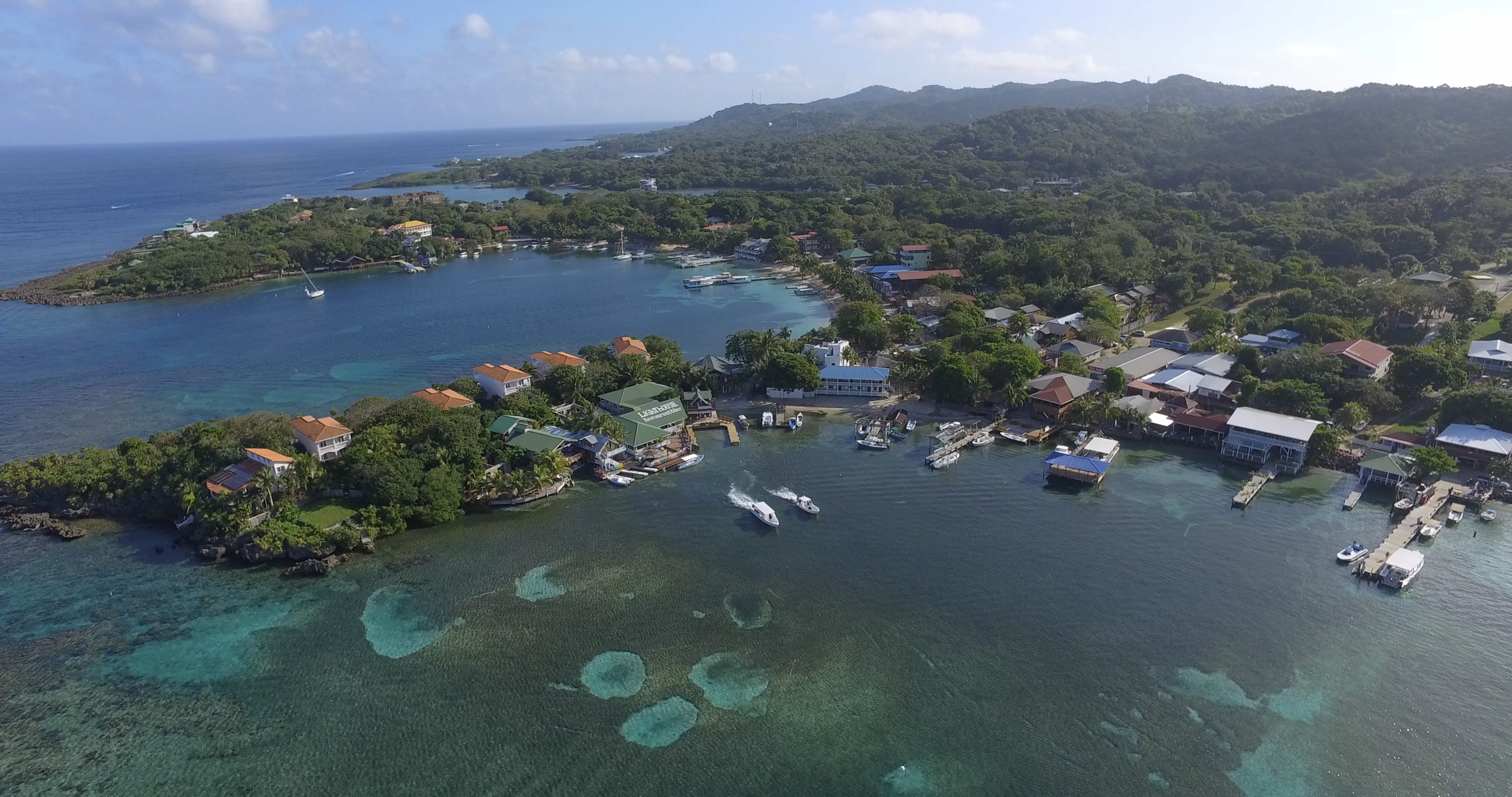
Cuando se piensa en Roatán como parte de Honduras, muchos viajeros esperan que todo sea muy barato, ya que estamos en Centroamérica. La realidad es que Roatán es una isla y casi todo lo que se consume aquí es importado. Nuestros alimentos, productos y suministros han tenido que recorrer un camino mucho más largo para llegar a nuestra alegre isla y, por lo tanto, eso encarece el precio de prácticamente todo.
Hagamos un breve repaso de los gastos más habituales al viajar a West End, en Roatán. Ten en cuenta que, en comparación con otras islas y lo que cuestan las cosas allí, Roatán sigue siendo una de las opciones más asequibles y en las que más se saca partido al dinero.
Gastos en comida y bebida
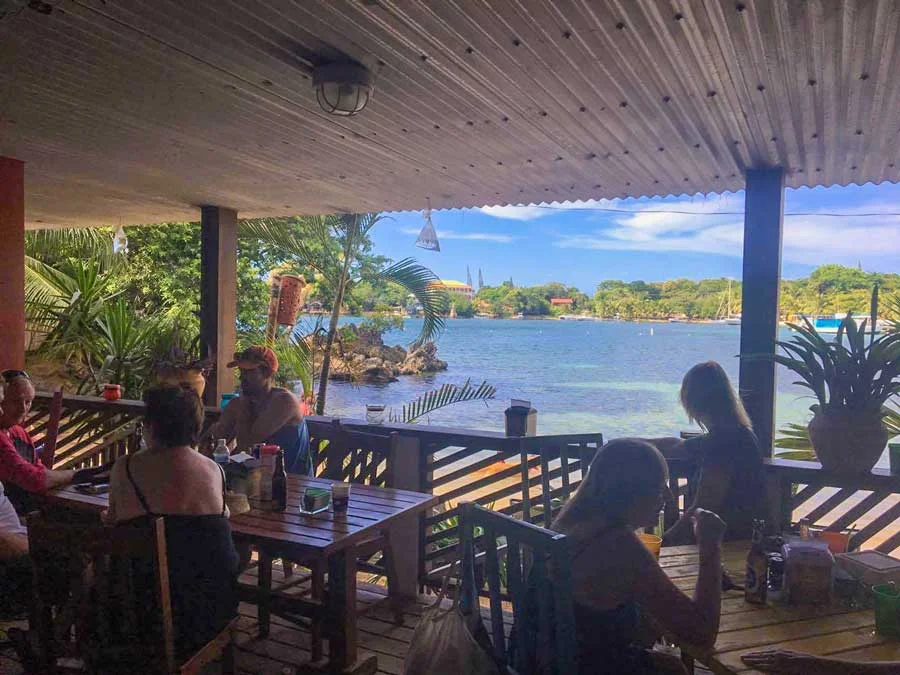
Las vistas desde el Ginger's Caribbean Grill, al otro lado de la playa, frente a Roatan Divers
Tanto si vas a comer a un restaurante como si vas a hacer la compra, ten en cuenta que los precios serán los que suelen pagarse en Estados Unidos. En Coxen Hole y French Harbor hay grandes supermercados que ofrecen muchas de las marcas estadounidenses más conocidas, que la mayoría de los turistas reconocen. Por lo general, estos productos te costarán lo mismo, o incluso más, que si los compraras en tu supermercado habitual.
Si sales a comer a la mayoría de los restaurantes del West End, calcula que gastarás entre 8 y 13 dólares por persona (sin incluir la propina). En algunos de los locales más exclusivos, la comida puede costar entre 15 y 20 dólares por persona. Para obtener más información sobre las normas relativas a las propinas y otras preguntas frecuentes aquí en la isla, consulta esta guía tan útil.
Y claro, es posible encontrar comida más barata dependiendo de lo que te guste (¡piensa en comida frita y muchos hidratos de carbono!). Aquí, en West End, tenemos puestos callejeros locales que sirven comida típica hondureña, como baleadas y platos típicos (carne, alubias y arroz) por unos 5 dólares.
Ya lo sabemos, ya lo sabemos: lo que más te preocupa es cuánto cuesta una cerveza, ¿verdad? A muchos nos gusta valorar la asequibilidad de un destino turístico en función del precio de la cerveza. En Roatán, el precio medio de una cerveza local ronda los 3 dólares, el del vino y las cervezas importadas (como las estadounidenses) es de 5 dólares, y el de los cócteles oscila entre 5 y 7 dólares.
Alojamiento
West End tiene una extensión de aproximadamente 1 milla, y en esa zona hay una amplia variedad de opciones de alojamiento para los viajeros. Tanto si prefieres un hotel más consolidado en el corazón de West End como si te decantas por una casa o un piso de alquiler en las afueras, si te gusta alejarte un poco de los circuitos turísticos habituales, siempre encontrarás un lugar que se adapte a tus necesidades.
Hoteles
Los precios de los hoteles en West End pueden oscilar entre 35 y 200 dólares por noche (sin contar los albergues), por lo que hay opciones para todos los bolsillos. Los factores importantes a tener en cuenta a la hora de elegir un hotel son la época del año (precios de temporada alta frente a precios de temporada baja) y si el precio incluye aire acondicionado o alguna opción de comida. Los hoteles de aquí suelen ser bastante pequeños y aportan gran parte del encanto y el ambiente de pequeña comunidad que tanto gusta a la gente de Roatán.
Es importante tener en cuenta que, aunque en West Bay hay hoteles con todo incluido, los de West End no lo son. La mayoría de los hoteles tampoco incluyen el desayuno, así que asegúrate de tenerlo en cuenta y lee bien la letra pequeña cuando busques alojamiento.

El interior de The Beach House Roatán
¿Qué opciones de hotel recomendables hay?El Beach House Roatán es un hotel boutique de lujo situado en el centro de West End, a orillas de Half Moon Bay. Los precios empiezan en 175 $ por noche + 19 % de impuestos e incluyen el desayuno. Para los viajeros que busquen un alojamiento más económico y sencillo, os invitamos a echar un vistazo a Anderson Sunset Villas. Ofrecen habitaciones tipo estudio y apartamentos de dos dormitorios por entre 45 y 75 dólares por noche.Contactad con nosotros para consultar la disponibilidad.
Alquileres vacacionales
Dependiendo del tamaño de tu grupo, un apartamento o una casa de alquiler vacacional podría ser justo lo que estás buscando. Con precios que oscilan entre los 600 y los 1.200 dólares a la semana para opciones de 1, 2 o 3 dormitorios, los apartamentos pueden reducir tus gastos de alojamiento (un apartamento de 2 dormitorios puede resultar más barato que reservar dos habitaciones de hotel) y te ofrecen la libertad de preparar tus propias comidas. Caribbean Colorsofrece una gran variedad de alojamientos en West End y sus alrededores, y sus propiedades cuentan con comodidades modernas, excelentes ubicaciones y un servicio inmejorable.
Transporte
Si te alojas en la zona del West End, ¡la buena noticia es que puedes ir andando a prácticamente cualquier sitio! Los alojamientos, los centros de buceo, los restaurantes y los bares se encuentran todos en un área reducida. Sin embargo, a la hora de desplazarte al aeropuerto, a Coxen Hole o a las zonas del este de la isla, necesitarás un medio de transporte. Los taxis son una opción estupenda y segura a tener en cuenta. Serán más caros si quieres un taxi privado, pero si no te importa compartir el viaje con otras personas, puedes solicitar un «collectivo». Aquí los taxis no tienen taxímetro, por lo que normalmente acordarás un precio antes de subir y salir. El precio variará en función de la ubicación y del número de personas. ¡Recuerda llevar billetes pequeños, ya que aquí los taxistas rara vez tienen cambio!
Actividades

Echa un vistazo a algunas actividades divertidas en las islas en Go Blue Bay Islands
Roatán ofrece una amplia variedad de actividades, ¡pero, por supuesto, lo que más nos caracteriza es el buceo! Los precios del buceo en Roatán se encuentran entre los más asequibles del mundo, sobre todo si se tiene en cuenta lo sano y vibrante que es nuestro arrecife y la gran cantidad de puntos de inmersión que ofrecemos.
También hay disponibles otras actividades como tirolinas, snorkel, spas, pesca, golf o excursiones en barco. El precio varía según el operador, pero animamos a los visitantes a optar por un ecoturismo responsable. Para obtener más información sobre cómo apoyar a las empresas con conciencia ecológica, visita Go Blue Bay Islands, que, junto con National Geographic, puede orientarte hacia proveedores y operadores que demuestran su compromiso con el medio ambiente. ¡Son geniales!
¡Esperamos haberte dado una buena idea de los precios aquí en West End y haber despertado tu interés por alojarte en nuestra preciosa isla! Para más información sobre la moneda en Roatán, echa un vistazo a nuestra otra publicación: «5 cosas que debes saber sobre la moneda en Roatán». Como ya hemos mencionado, aunque Roatán quizá no sea el destino más barato que existe, sigue ofreciendo una excelente relación calidad-precio si se tiene en cuenta el coste total de un viaje hasta aquí, junto con el increíble valor que supone formar parte de una pequeña comunidad isleña con una agradable mezcla de ambiente moderno y rústico.
¿Quieres saber más? Estaremos encantados de ayudarte a planificar tus próximas vacaciones en Roatán, así que no dudes en enviarnos un mensaje. ¡Estamos deseando saber de ti!

5 buenas razones para practicar buceo en Roatán
A Roatán se la suele llamar la joya del Caribe por sus numerosas y maravillosas características: su exuberante paisaje montañoso, sus aguas azules, la amabilidad de su gente y su rica y variada cultura. Con vuelos internacionales directos desde Houston, Miami, Atlanta, las Islas Caimán y San Salvador, llegar a este paraíso nunca ha sido tan fácil. ¡Aquí tienes 5 razones de peso por las que creemos que deberías practicar buceo en Roatán!
A Roatán se la suele llamar la joya del Caribe por sus numerosas y asombrosas características: su exuberante paisaje montañoso, sus aguas azules, la amabilidad de su gente y su cultura rica y diversa. Con vuelos internacionales directos desde Houston, Miami, Atlanta, las Islas Caimán y San Salvador, ¡nunca ha sido tan fácil llegar al paraíso! Lo que hace famosa a Roatán son, por supuesto, sus impresionantes arrecifes y su vida marina, por lo que practicar submarinismo debería ser una de las prioridades de tu lista de cosas que hacer cuando la visites. Aunque hayas viajado a otros destinos populares para bucear sin llegar a sumergirte, ¡aquí tienes cinco razones de peso por las que creemos que deberías practicar submarinismo en Roatán!
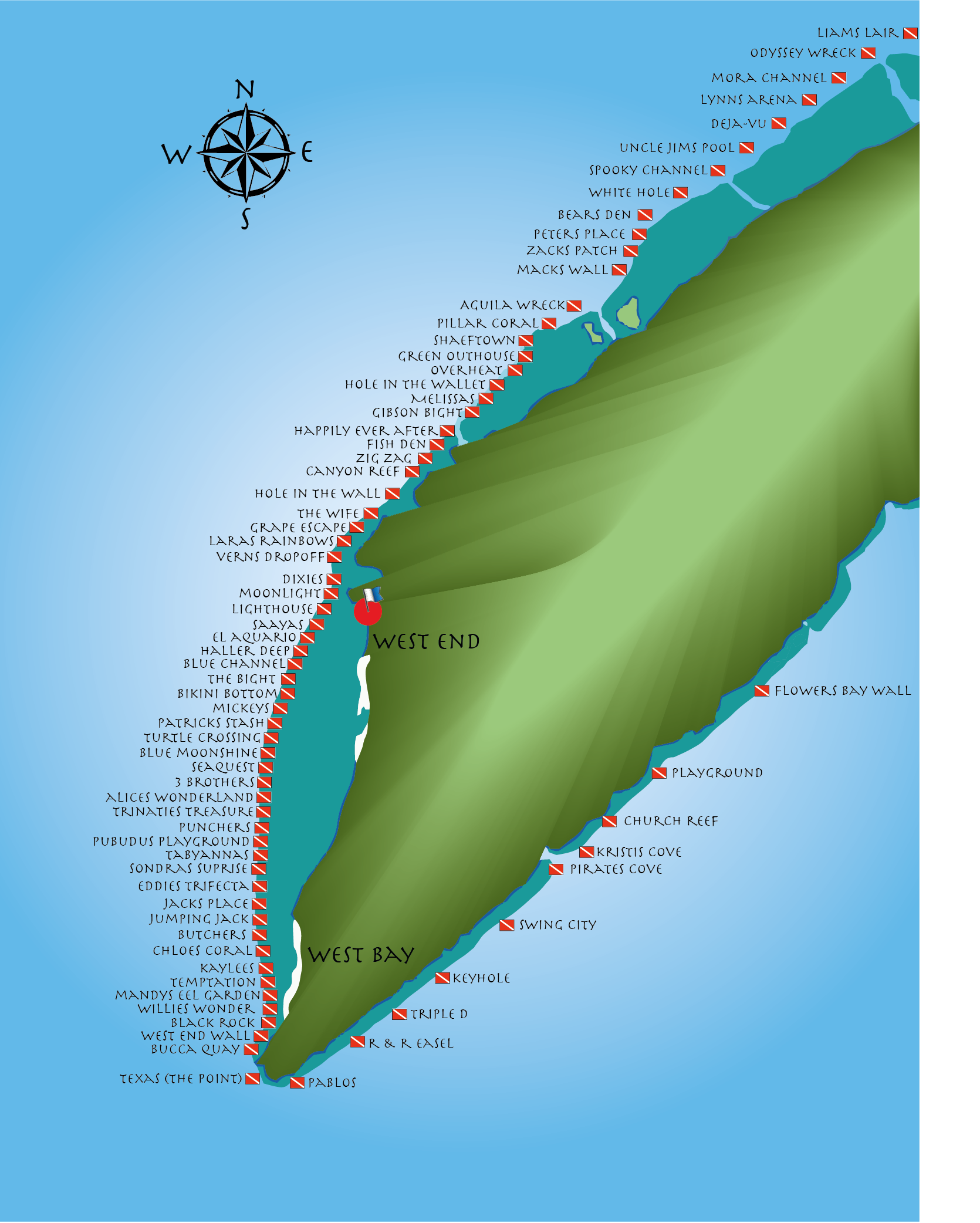
Estos son solo algunos de los puntos de buceo que hay en el West End de Roatán; si intentáramos incluirlos todos, ¡necesitaríamos un mapa mucho más grande!
Razón n.º 1. Los puntos de inmersión están muy cerca
Dado que el arrecife comienza a solo unos cientos de pies de la costa, toda la isla es, básicamente, un gigantesco punto de buceo. Solo desde West End, contamos con más de 30 puntos de buceo a menos de 10 minutos en barco, ¡lo que significa menos tiempo en el barco y más tiempo en el agua! La mayoría de los centros de buceo organizan salidas de una sola botella debido a la proximidad de los puntos de inmersión a los centros, por lo que puedes elegir entre una, dos o tres inmersiones al día y pasar tus intervalos en superficie cómodamente en la playa con una limonada bien fría (o una cerveza, ¡pero solo después de bucear!) en la mano.
Razón n.º 2. Son muy chulas, pero no hace falta hacerlas dos veces
La ventaja de contar con tantos puntos de inmersión tan próximos entre sí es que, a menos que pidas volver a un sitio concreto, no tienes por qué hacerlo. Obviamente, si vas a hacer 50 inmersiones desde West End, entonces sí, acabarás repitiendo algunos puntos, pero es muy fácil aportar variedad a tu experiencia de buceo. La zona de West Bay está repleta de canales de arena, mesetas de coral y mini-paredes, mientras que, a medida que te adentras hacia Sandy Bay, te encuentras con impresionantes cañones y paredes profundas, por lo que hay un montón de topografías interesantes y puntos de interés que explorar.
Razón n.º 3. Bucear en un arrecife en buen estado dentro de un parque marino protegido
El Parque Marino de Roatán surgió hace diez años como un movimiento popular con el objetivo de reforzar la protección de la reserva marina ya establecida por el Gobierno hondureño. Los últimos diez años han supuesto una larga lucha para el Parque Marino de Roatán, pero los frutos de su esfuerzo ya se están haciendo evidentes. En el informe «Healthy Reefs 2015» sobre el Arrecife Mesoamericano, Roatán obtuvo la mejor puntuación en cuanto a la salud de los corales y las poblaciones de peces. Muchos otros destinos de buceo famosos, como la Gran Barrera de Coral, no tuvieron tanta suerte.
La labor constante que realiza el Parque Marino de Roatán en materia de conservación es lo que ayuda a preservar nuestro precioso arrecife durante muchos años más, así que no dejes de apoyarles comprando una entrada diaria de 3 dólares o una pulsera anual de 10 dólares.
Razón n.º 4. Condiciones tranquilas y despejadas, con corrientes suaves

Un mero preñado
Durante la mayor parte del año, disfrutamos de aguas relativamente tranquilas y sin oleaje en la superficie, con una visibilidad submarina media de unos 100 pies/30 metros. Aunque las corrientes pueden variar de un día para otro, solemos tener corrientes suaves que hacen que el buceo sea una experiencia mucho más relajante y agradable.
Cuando el tiempo se pone adverso en la costa norte de la isla, muchas tiendas de buceo de Roatán tienen la flexibilidad de bucear en la costa sur, donde se pueden volver a encontrar condiciones tranquilas y con el mar en calma para practicar el buceo. Este tipo de flexibilidad es prácticamente inaudito en la mayoría de los destinos de buceo populares. En nuestro caso, contamos con un centro de buceo asociado con el que colaboramos para poder seguir ofreciendo a nuestros huéspedes la misma experiencia de buceo de calidad en ambas costas de la isla.
Razón n.º 5. Diversidad de la vida marina
Aunque nuestra colorida fauna marina guarda un estrecho vínculo con la razón n.º 3, no hemos podido resistirnos a dedicar una mención especial a los habitantes submarinos de Roatán. Tanto si te gustan las criaturas más grandes como si disfrutas observando los invertebrados más pequeños y ocultos, ¡aquí lo tenemos todo! Un arrecife sano atrae a su vez una gran variedad de peces, crustáceos, especies de fondo, camarones y peces pelágicos a estas cálidas aguas del Caribe.
¡Ahí lo tienes: 5 razones fantásticas para practicar buceo en Roatán! Si no tienes título de buceo, hay muchas otras formas de disfrutar de nuestro mundo marino, ya sea haciendo snorkel o con el programa «Discover Scuba Diving» de PADI. Nuestra vida en tierra tampoco está nada mal, así que ¡empieza ya a planificar tu viaje a Roatán para disfrutar de las vacaciones de tu vida!

Volar antes y después de bucear
An important thing to take into account when you're planning your dive holiday is your flight dates and times, which will determine your diving schedule.
Unless you're super lucky (like we are), you have to travel by air to go scuba diving. An important thing to take into account when you're planning your dive holiday is your flight dates and times, which will determine your diving schedule. When you scuba dive, you get nitrogen build-up in your body, and you need to make sure you expel it to a healthy amount before going up to altitude. We get a lot of e-mails about this and there is often confusion about the rules, so we're going to break it down really simply to make your holiday scheduling even easier (hint on the guidelines: they're more relaxed than you think they are)!


Rule #1: You need 18 hours before you go to altitude
Different organizations will say different things when it comes to the hours required on land before going to altitude, but PADI currently states that you need 12 hours before you fly if you do one dive and 18 hours if you're doing multiple dives over multiple days. This means that if you've been diving for a week and you're flying out at 1PM, you can dive up to 7PM the day before safely.
A lot of people like giving themselves 24 hours to be on cautious side, and because they'd like to just spend some time relaxing on the beach on their last day of holiday, and you are of course welcome to give yourself as many hours as you want. But if you're a dive freak, 18 hours is what you need, even if you're diving a lot from a liveaboard. As always, though, make sure to practice conservative dive practices and avoid pushing your no-decompression limits when you dive.
Rule #2: Altitude doesn't just mean flying
If you dive, and then are planning on driving up the mountains to get to your next destination, this still counts as altitude. Anything above 300 meters/1000 feet counts as altitude because the atmospheric pressure drops, so keep this in mind when you're planning your post-diving travels. If you need to drive over the Colorado Rockies to get home, give yourself the appropriate time before making the trip to make sure you're safe.
Rule #3: You can dive right after flying
There is a common misconception that, similar to needing time before you fly, you also need to wait after flying as well. The reason you shouldn't fly right after diving is because of the nitrogen build-up in your body, but you won't have that if you just got off a plane. You can literally jump from the plane into the water directly if you want to, although we wouldn't recommend doing that unless you're a professional stunt person.
So that's it, the 3 super simple rules to follow when it comes to flying and diving. Easy, right? Have a great dive holiday, and we hope we can dive with you all some day.
¡Que disfrutes del buceo!
Come to dive with Roatan Divers!

Fun Dive
Are you a certified diver? Come to dive with us. As a boutique dive center, we cater to small groups and focus on personal attention.

Open Water Course
Do you want to learn how to dive? In only 3 days you can complete your PADI Open Water Course and become a certified diver.

Specialties Courses
Do you want to be a better diver? Add a Specialty Course in your vacation and increase your knowledge and learn new skills
5 consejos importantes para hacer la maleta para Roatán
¿Alguna vez has vuelto de un viaje y has tenido la sensación de que solo has usado el 10 % de lo que te llevaste? Es muy fácil llevar demasiado equipaje, sobre todo cuando vas a climas cálidos y tropicales. Roatán tiene un ambiente muy relajado y el código de vestimenta es informal, así que, para ayudarte antes de tu viaje, hemos recopilado nuestros cinco consejos más importantes a la hora de hacer la maleta para Roatán. Algunos de estos consejos son válidos para cualquier viaje en general y otros son específicos de Roatán, ¡así que echa un vistazo a nuestros cinco consejos principales y empieza a hacer la maleta!
Consejo n.º 1. Coloca todo delante de ti
Antes de empezar a meter cosas sin orden ni concierto en la maleta, coloca todo delante de ti para que puedas ver exactamente lo que te vas a llevar. Haz una lista de control, a ser posible por escrito, para que puedas anotar exactamente lo que vas a necesitar para tu viaje. Llevarte 20 camisetas, un par de zapatos de tacón y solo un par de pantalones cortos puede que no sea lo ideal para un viaje de 7 días a una isla con playa, pero es posible que ni siquiera te des cuenta de que has metido todo eso en la maleta si no llevas un control.
Una vez que lo hayas colocado todo y hayas hecho un plan, enróllalo todo y mételo en la mochila. ¿Te falta espacio? ¡Pasa al consejo n.º 2 para saber qué hacer a continuación!
Consejo n.º 2. Necesidad frente a deseo
Hay un montón de cosas que queremos llevarnos de vacaciones, pero ¿cuántas de ellas necesitamos realmente? Si vas a visitar Roatán, no necesitas unos zapatos de tacón ni botas de montaña; con unas chanclas y, quizá, unas zapatillas deportivas si te gusta hacer ejercicio, será suficiente. ¿De verdad necesitas un vestido elegante si te vas a alojar en un albergue, o cuatro pares de pantalones largos cuando la humedad es del 90 %? Si de verdad quieres llevarte esos zapatos de tacón o esos vestidos elegantes, adelante, pero asegúrate de haber cubierto todas tus necesidades y de tener espacio suficiente antes de empezar a meter en la maleta todo lo que te apetece.
Consejo n.º 3. ¡Aunque no lleves zapatos, te atenderemos igual!
En Roatán, llevar zapatos es una recomendación, no una obligación. Incluso en los restaurantes más elegantes, como el Roatán Oasis o el Ibagari, verás al menos a un lugareño sentado allí descalzo. Ahora bien, es probable que tus pies de urbanita no estén lo suficientemente acostumbrados como para pasear descalzo por aquí todo el tiempo, pero tampoco tienes por qué cumplir con ningún código de vestimenta estricto.
Aunque este consejo es válido para cualquiera que visite Roatán durante un periodo prolongado, no se aplica a quienes viajan en crucero. La mayoría de los cruceros organizan una noche de disfraces, y estamos bastante seguros de que no se puede entrar en los restaurantes del crucero sin llevar, como mínimo, unas chanclas, así que asegúrate de llevar en la maleta al menos un par de zapatos bonitos si vas a viajar en crucero.
Consejo n.º 4. Lavar la ropa es barato en Roatán
Si vienes a Roatán para pasar dos semanas, no hace falta que te traigas ropa para dos semanas. Tenemos lavanderías por toda la isla, donde puedes dejar tu ropa y te la lavan, secan y doblan para el día siguiente. Y te prometemos que aquí nadie se dará cuenta de que has llevado la misma camiseta dos veces en *¡qué horror!* la misma semana, así que ahórrate el esfuerzo de cargar con mucho peso y viaja ligero.
Como advertencia, la lavandería se cobra por libra. Normalmente cuesta unas 45 lempiras, o entre 2,00 y 2,50 dólares por libra, así que asegúrate de no llevar ropa empapada o, de lo contrario, la factura será mucho más elevada. Además, aquí no hay servicio de limpieza en seco, así que no te molestes en traer prendas elegantes de seda. El algodón es el tejido de nuestras vidas.
Consejo n.º 5. Deja espacio para los recuerdos
Vayas donde vayas, siempre te apetecerá traerte algún recuerdo a casa, ya sea para ti mismo o como regalo para tus familiares y amigos.
Si quieres llevarte algún recuerdo especial, que no sea lo de siempre, puedes pasarte por «Rusty Fish», donde enseñan a los lugareños a aprovechar materiales de origen local que se encuentran en el vertedero, como bidones de petróleo de Texaco, y convertirlos en originales adornos de pared e imanes. Las tiendas del Parque Marino de Roatán venden camisetas y sudaderas con la marca del parque, así como miel, joyas, vinagres y mermeladas de fabricación local; todos los beneficios se destinan al parque marino y a las comunidades locales. Tanto Rusty Fish como el Parque Marino de Roatán tienen tiendas en West End y en los dos puertos de cruceros, así que, tanto si vienes a pasar un día como una semana, encontrarás un recuerdo fantástico de Roatán sin caer en lo kitsch.
¡Y si quieres que tus amigos te quieran de verdad, hazte con un buen ron caribeño de los de toda la vida!
¡Y ahí lo tenéis, nuestros cinco mejores consejos para hacer las maletas para Roatán! ¡Que disfrutéis haciendo las maletas y nos vemos pronto!
5 consejos de supervivencia que necesitas para las escalas
Las escalas son un rollo. Ya sean cortas o largas, da igual: las escalas no son nada divertidas. Y aunque creas que una escala va a ser corta, hay muchas posibilidades de que tu medio de transporte se retrase o se cancele, por lo que es importante estar preparado para cualquier imprevisto relacionado con el transporte.
Con los avances tecnológicos, el mundo se ha hecho más pequeño. Puedes conectar con personas de diferentes culturas e idiomas de todo el mundo; el móvil ha sustituido a los libros y a los teléfonos públicos, ¡y puedes viajar a lugares cuyos nombres ni siquiera sabes pronunciar!
Y ya que hablamos de viajes... las escalas son un rollo. Ya sean cortas o largas, da igual: las escalas no son nada divertidas. E incluso si crees que una escala va a ser corta, hay muchas posibilidades de que tu medio de transporte se retrase o se cancele, así que es importante estar preparado para cualquier imprevisto relacionado con el transporte.
Un poco de contexto: iba a coger un vuelo desde Los Ángeles a Roatán, con una escala prevista de 90 minutos en San Salvador. Ya había hecho viajes en los que las escalas habían sido muy largas y siempre me había preparado para ellas, pero esta fue la primera vez que mi escala se retrasó hasta alcanzar proporciones prácticamente catastróficas (¡catastróficas, te lo aseguro!). Pasamos unas diez horas cada día durante dos días en el aeropuerto (de las 7:00 a las 17:00 el primer día, y de las 6:00 a las 15:30 el segundo), con una noche en un hotel del aeropuerto de por medio. Hubo muchas idas y venidas con el personal de la aerolínea, un vuelo desviado y mucha gente entrando en pánico (con razón) y enfadándose bastante antes de que pudiéramos encontrar una solución. Fue un auténtico caos y muy agotador. Creo que lo llevé mejor porque volvía a casa, no porque me fuera a unas preciadas vacaciones de una semana que acababan de verse recortadas en unos días. No entré en pánico, pero desde luego no me hizo ninguna gracia quedarme atrapada en el aeropuerto, lejos de mi marido y del trabajo, sin ninguna información o novedad sustancial.
Así que, tanto si viajas en avión, en autobús o en barco, las escalas son algo que tendrás que soportar muchas veces a lo largo de tu vida si quieres viajar y conocer el mundo. ¡Vamos, pues, a repasar nuestros cinco mejores consejos para sobrevivir a las escalas!
Consejo n.º 1. Lleva un cambio de ropa extra en el equipaje de mano
Si no tienes pensado facturar ninguna maleta, ya puedes irte. ¡El siguiente!
Si vas a facturar una maleta, asegúrate de llevar una muda de ropa extra en tu equipaje de mano, por si acaso te quedas atrapado en el aeropuerto o tienes que ir a un hotel sin poder acceder a tu equipaje facturado. Para que tu equipaje de mano sea ligero y puedas hacer las maletas de forma eficiente, céntrate simplemente en ropa interior limpia y una camiseta de un tejido ligero y fino, que se pueda enrollar fácilmente y guardar en cualquier sitio. Los retrasos son más agotadores mentalmente que físicamente, y tener un conjunto de ropa limpia para cambiarte puede darte un poco de ánimo, aunque solo sea por un segundo.
Consejo n.º 2. Capas, capas y más capas
Los aeropuertos, los autobuses y los aviones son terriblemente fríos. Me muero de frío cada.vez. Con los años he aprendido que, en lugar de llevar una sudadera gruesa o una con capucha, es mejor optar por capas más finas, para que ocupen menos espacio en mi bolso y pueda adaptarlas a medida que cambia la temperatura. No es raro que la temperatura suba y baje poco a poco, y no quieres que tus únicas dos opciones sean pasar más calor que en el infierno o congelarte como en el Ártico. Siempre llevo conmigo un cárdigan fino y una bufanda, además de un par de calcetines. Tengo una bufanda preciosa que una amiga me trajo de Arabia Saudí hace 10 años; es tan grande que puede servir como almohada o manta, y parece que combina con todo lo que tengo. Esa bufanda ha recorrido el mundo entero conmigo, y viajaré con ella hasta el día en que se desintegre.
Consejo n.º 3. Los libros son atractivos
No me traje ningún libro para este viaje (porque «la escala es tan corta que no tendré tiempo para leer») y me arrepentí muchísimo. Tuve la sensatez de cargar completamente el ordenador y el móvil antes de subir al primer vuelo, pero tras 10 horas atrapada en el aeropuerto, al final tuve que recargarlos. Agoté las baterías más rápido de lo habitual porque me ponía en contacto con casa muchas veces en medio del caos y también intentaba sacar algo de trabajo adelante, ya que, de todos modos, estaba atrapado allí; y, aunque tuve la suerte de encontrar una toma de corriente cerca, cuando un vuelo se retrasa y hay 100 pasajeros que necesitan recargar sus dispositivos y solo hay dos tomas de corriente, se arma un buen lío. Llevar un libro me habría ayudado a pasar el tiempo más rápido y me habría dado algo más que el trabajo para distraerme de los interminables retrasos.
Si no quieres ir cargando con un libro pesado, una tableta de lectura, como el Kindle, es una forma estupenda de llevar varios libros en un dispositivo delgado. La duración de la batería de estos dispositivos suele ser muy buena, por lo que te durarán mucho tiempo, ¡y sus pantallas están diseñadas para que no se te cansen los ojos! Además, un compañero de viaje tuvo la amabilidad de prestarme su cargador portátil cuando no encontraba una toma de corriente, y eso también me ayudó mucho. Creo que para mi próximo viaje también me compraré un cargador portátil, para no entrar en pánico cuando vea que se me agota la batería.
Consejo n.º 4. Lleva siempre contigo un adaptador universal
Y ya que hablamos de cargar dispositivos, lleva un adaptador universal en tu equipaje de mano cuando viajes. Nunca se sabe qué tipo de enchufes habrá en los sitios, ¡y no querrás quedarte sin batería, encontrar un enchufe y darte cuenta de que no puedes enchufarlo! Los adaptadores universales son bastante baratos, ocupan poco espacio y pueden ahorrarte un buen disgusto.
Consejo n.º 5. Ten siempre a mano algo para picar
Los aeropuertos pueden ser carísimos y, a veces, no ofrecen más opciones para comer que cerveza, hamburguesas y pretzels. Para asegurarte de que no te entre tanta hambre como para comprarte todo el Burger King, lleva en el bolso algunos tentempiés fáciles de llevar, como chocolate, mezcla de frutos secos o nueces. ¡Incluso unos bocadillos valen! Eso sí, sé considerado con la gente que te rodea y evita la comida especialmente olorosa, como el curry indio de cordero. O los huevos rellenos. O las tostadas de ajo.
Consejo extra: sé amable
Esto es algo que tuve que recordarme constantemente durante mis dos jornadas de 10 horas en el aeropuerto. No es culpa del personal que el vuelo se haya cancelado o se haya retrasado. Son ellos los que están en primera línea y reciben el enfado y las culpas de todo el mundo, pero a nadie le gusta que le griten, y descargar tu frustración sobre ellos solo hará que no quieran ayudarte.
Y no te limites a ser amable con el personal. Sé amable con tus compañeros de viaje. Muéstrate cordial. Si alguien necesita ayuda, ayúdale. Por muy mal que te vaya el día, es probable que a otra persona le vaya mucho, mucho peor, y mostrar aunque sea un poco de amabilidad puede ser lo único positivo del día de esa persona. Ser amable no te cuesta nada, pero puede significar mucho para otra persona.
Quedarse atrapado en el aeropuerto no tiene por qué ser una experiencia que te haga sentir aislado ni que divida a la gente. De hecho, los pasajeros de nuestro vuelo acabamos creando un gran vínculo entre nosotros y, aunque ojalá no hubiera estado allí tanto tiempo, también estoy agradecido por haber tenido la oportunidad de conocer a gente fantástica y de poder, por una vez, echar una mano a los demás.
Aprendí mucho sobre mí misma durante esta escala tan larga; sobre todo, que en realidad soy capaz de no estresarme tanto y de ver el panorama general, y que, si algo escapa a mi control, pues así son las cosas. Vi a gente que se trataba con amabilidad y se cuidaba mutuamente, y fue un buen recordatorio de la capacidad de la humanidad para ver más allá de sí misma y centrarse en los demás. Fue un recordatorio por el que me sentí agradecida, y espero no olvidar esas lecciones aprendidas en mucho tiempo.